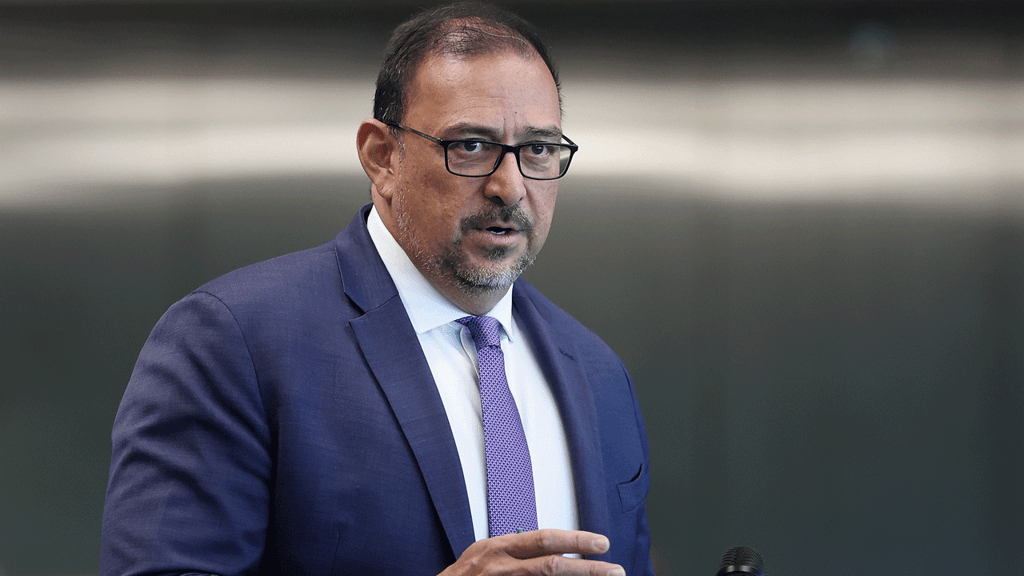
Supporters of Arizona's proposed SAVE Act constitutional amendment, known as Proposition 144, have filed a lawsuit against Secretary of State Adrian Fontes. The lawsuit alleges that the official ballot language misrepresents the measure and omits key provisions, potentially misleading voters ahead of the November election.
Explainer Voter ID Laws: Securing Elections While Debating Accessibility and Integrity
The central issue in the dispute is whether the ballot summary provided to voters is neutral and accurate. Plaintiffs argue that the summary contains political commentary and unsupported claims about the amendment's legal effects, rather than simply describing what the amendment would do if approved.
The lawsuit was filed by a group of Arizona voters represented by America First Legal, a conservative legal advocacy group. According to the complaint, Fontes's office failed to include the Legislature's original language, which stated that "only citizens may register and vote in Arizona’s elections." Instead, the ballot summary refers to requirements for "proof of citizenship" and voter ID, but omits the explicit provision that only citizens are allowed to vote. Supporters of the measure say this omission could confuse voters about the amendment’s intent.
Lawsuit Claims and Ballot Language
In addition to the citizenship issue, plaintiffs allege that the ballot summary omits the amendment's proposed ban on foreign campaign donations in ballot referendums. Instead, the summary asserts that such prohibitions already exist in federal law. The lawsuit points to a 2021 Federal Election Commission determination that federal law does not prohibit foreign contributions to ballot measures, only to candidates. Plaintiffs argue that by stating the ban is already in place, the ballot summary misleads voters about the amendment’s actual impact.
Another point of contention is the ballot language’s statement that Proposition 144 would "lower the legal standard for judicial review of election laws, making it harder to challenge election laws in state court." Plaintiffs dispute this characterization, arguing that the amendment simply affirms the right of voters and lawmakers to enact election laws and does not increase the difficulty of legal challenges. They contend that the summary’s language could bias voters against the measure by suggesting it would undermine legal recourse.
James Rogers, senior counsel at America First Legal, criticized the ballot summary, stating:
"Secretary Fontes had one job here: tell Arizona voters the truth about what’s on their ballot. Arizona law requires official ballot language to be impartial, accurate, and free from advocacy. Secretary Fontes’s description of Proposition 144 fails all these requirements."
The full ballot language presented to voters outlines several provisions: requirements for proof of citizenship and voter ID, a ban on certain foreign expenditures, counting ballots at polling places, affirming the right of the people and Legislature to enact election laws, a presumption of constitutionality for election laws, and a lower legal standard for judicial review. Supporters of Proposition 144 argue that these provisions are intended to strengthen election integrity and clarify the state’s authority over election procedures.
Context and Broader Debate
The legal challenge over Proposition 144’s ballot language comes amid ongoing national debates about election security, voter eligibility, and the role of state legislatures in setting election rules. In recent years, several states have considered or enacted measures requiring proof of citizenship and photo identification to vote, citing concerns about non-citizen voting and election integrity. Opponents of such measures argue they can disenfranchise eligible voters and are unnecessary given existing safeguards.
At the federal level, the SAVE America Act, which would require proof of citizenship and photo ID for federal elections, has passed the U.S. House of Representatives multiple times but has stalled in the Senate. The bill’s fate reflects the broader partisan divide over voting laws, with Republicans generally supporting stricter requirements and Democrats warning of potential voter suppression.
Arizona has been at the center of many of these debates, with lawmakers and advocacy groups frequently clashing over changes to election law. The outcome of the Proposition 144 lawsuit could set a precedent for how ballot measures are described to voters and how much discretion state officials have in summarizing complex amendments.
Response from Secretary of State
Secretary of State Adrian Fontes, a Democrat, has not responded to requests for comment regarding the lawsuit or the ballot language. Plaintiffs are seeking a court order to revise the ballot summary before early voting begins in October, arguing that voters deserve a clear and impartial explanation of what they are being asked to approve or reject.
Supporters of Proposition 144 maintain that accurate and neutral ballot language is essential for maintaining voter trust in the electoral process. They argue that any misrepresentation, whether intentional or not, could influence the outcome of the vote and undermine public confidence. Critics of the lawsuit have not publicly addressed the claims, and Fontes’s office did not provide a statement by publication time.
As the legal process unfolds, the case highlights the ongoing tensions in Arizona and across the country over how election laws are written, interpreted, and presented to the public. The resolution of the lawsuit may have implications not only for Proposition 144 but for future ballot measures and the standards used to inform voters about proposed changes to state law.