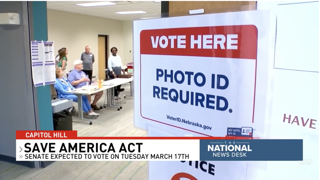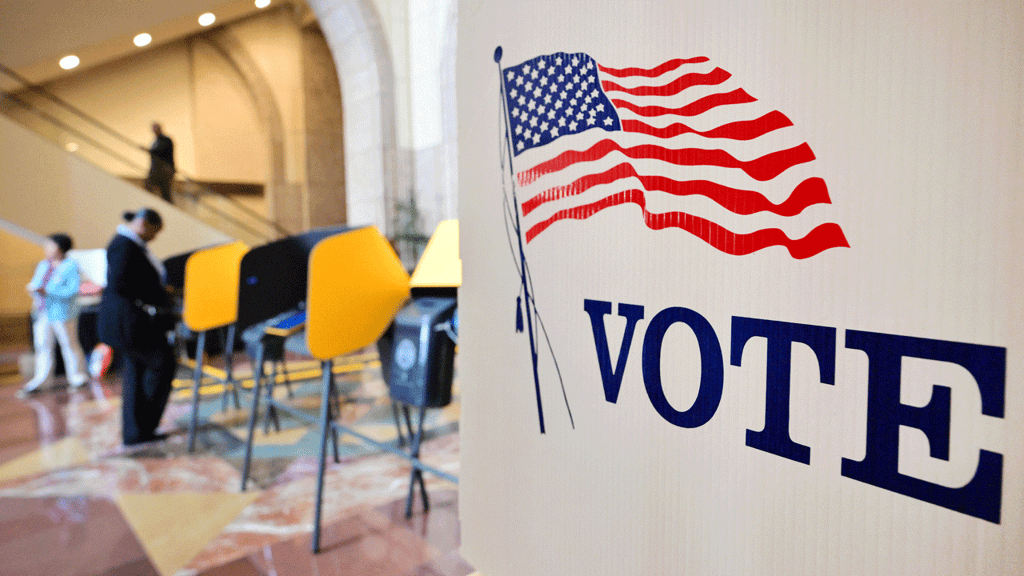
Voters in several states will face significant decisions on election security this November, as ballot initiatives addressing voter ID requirements, citizenship verification, and related election procedures are set to appear in states including California and Arizona. According to a Daily Signal report, these measures reflect a growing national debate over how to balance election integrity with voter access.
Explainer Voter ID Laws: Securing Elections While Debating Accessibility and Integrity
The push for these state-level ballot initiatives comes amid a stalemate in Congress over the SAVE America Act, which has left states to address election security on their own. In recent years, voters have approved citizenship requirements in 15 states, while voter ID measures have seen more mixed results at the ballot box. The ongoing debate underscores a broader divide over the best ways to ensure fair and secure elections while maintaining broad participation.
State Ballot Initiatives and Language Disputes
California's Proposition 39 and Arizona's Proposition 144 are among the most closely watched measures this year. Both proposals include requirements for voters to present identification at the polls and provisions for verifying citizenship status and maintaining accurate voter lists.
In California, the language used to describe Proposition 39 has become a point of contention. Attorney General Rob Bonta recently revised the official ballot language, changing it from "Establishes additional voter identification and citizenship verification requirements" to "Prohibits citizens from voting unless they present government-issued identification." According to Bonta's office, such changes are not unusual; a spokesperson noted, "It is not uncommon for the ballot title and summary to change from the circulating version—and this year, all nine voter-proposed initiatives had changes. Our office properly exercised its discretion to provide further clarity to voters about Prop. 39’s chief purpose and points for the ballot stage."
However, some critics argue that the revised language could mislead voters about the measure's intent. Jason Snead, executive director of the Honest Elections Project, criticized the attorney general's action, stating, "If this measure passes despite the blatant attempt by California’s attorney general to rig the ballot language and mislead the public into voting it down, it would prove just how commonsense voter ID is."
Beyond California and Arizona, several other states are considering similar measures. Oklahoma will vote on a voter ID requirement on August 25, while Nevada, North Carolina, and Ohio will decide on comparable proposals in November. Citizen-initiated voter ID measures are also pending in Colorado and Michigan, reflecting a broader trend of states turning to ballot initiatives to address election security concerns.
Citizenship Verification and Local Voting
In addition to voter ID requirements, citizenship verification is emerging as a key issue in several states. Six states—Alaska, Arkansas, Kansas, South Dakota, and West Virginia—will consider ballot measures related to citizenship requirements for voting. In Arizona, a proposed constitutional amendment would specify that only citizens may register to vote, reinforcing existing federal requirements.
The issue of noncitizen voting has drawn increased attention in recent months. The U.S. Department of Homeland Security recently reported that as many as 190,832 noncitizens were registered to vote in California. While federal law prohibits noncitizens from voting in federal elections, some municipalities and counties in California, Maryland, Vermont, and the District of Columbia currently allow noncitizens to vote in local elections. The proposed state measures would prohibit this practice, aiming to clarify and standardize eligibility requirements across jurisdictions.
Ryan Byrne, managing editor of Ballotpedia’s Ballots Team, noted that citizenship verification measures have consistently passed at the state level. "Citizenship verification has never lost at the ballot," Byrne said, pointing to Kentucky and South Carolina as examples of strong support for such measures among voters.
Broader Election Reforms on the Ballot
This year’s ballots will also feature a range of other election-related proposals. Virginia voters will decide whether to restore voting rights to felons upon release from prison, a measure that could impact thousands of residents. In Massachusetts, voters will consider adopting a top-two primary system and allowing Election Day voter registration, both of which could reshape the state’s electoral process.
Alaska is set to vote on whether to repeal its ranked-choice voting system, which was adopted in a previous election cycle. California, meanwhile, is considering a proposal for taxpayer-funded campaign financing, a measure that could change how political campaigns are funded in the state.
Voter ID laws, while popular in some states, have seen mixed results when put to a statewide vote. Between 2004 and 2024, three out of 12 voter ID measures were defeated at the ballot box. According to Byrne, these defeats often occurred when the measures included additional provisions beyond basic ID requirements, such as restrictions on ballot drop boxes or other voting methods.
Notably, this year about 70% of ballot initiatives on election administration were introduced by conservatives, marking a shift from previous election cycles when progressives led most such efforts. This change reflects evolving priorities and strategies among political groups as debates over election security and access continue to shape state and national politics.
As voters prepare to weigh in on these measures, the outcomes could have lasting implications for how elections are conducted and who is eligible to participate in the democratic process across the United States.