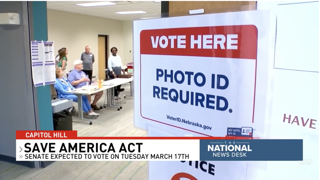
House Republicans have advanced two bills aimed at implementing key voter integrity provisions from the stalled SAVE America Act, seeking to tie requirements for government-issued identification and proof of citizenship to federal funding for states. This legislative maneuver could allow the Senate to consider these measures through the budget reconciliation process, which requires only a simple majority and bypasses the usual 60-vote filibuster threshold.
Explainer Election Integrity in America: Safeguarding Voter Trust and Ballot Security
The core question is whether these election security measures—previously blocked in the Senate—can move forward by linking them to federal grants, a strategy designed to sidestep partisan gridlock.
The SAVE America Act, which passed the House but stalled in the Senate, would require government-issued ID and proof of citizenship to vote in federal elections, restrict mail-in ballots, and include unrelated provisions such as barring men from women’s sports and prohibiting transgender procedures for minors. The new House bills focus on the voter ID and citizenship aspects, offering federal grants to states that comply with these requirements.
Details of the New Bills
House Administration Chairman Bryan Steil, R-Wis., has reintroduced a bill that would require voters to present photo identification in federal elections. Under the proposal, absentee voters would need to attach a copy of their ID to their ballot. The bill also establishes a grant program, administered by the Election Assistance Commission, to reimburse state and tribal governments for providing IDs to eligible voters. For those without ID, the bill allows the casting of provisional ballots, which would be counted once eligibility is confirmed.
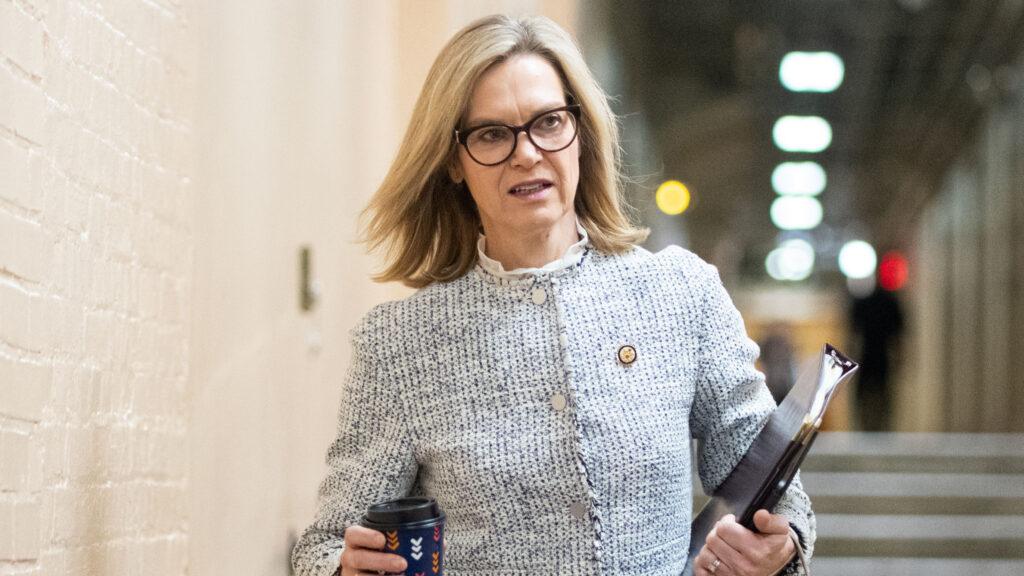
Separately, Reps. Julie Fedorchak, R-N.D., and Laurel Lee, R-Fla., have introduced the SAVE America Through REAL ID Act. This legislation would provide funding to states to implement REAL ID cards, which would indicate citizenship status, and require their use for voting in federal elections. Lee chairs the House Administration Subcommittee on Elections. If enacted, the REAL ID bill would address both proof-of-citizenship and voter ID requirements from the original SAVE America Act, potentially streamlining the process for states and voters alike.
The grant programs outlined in both bills are intended to help states cover the costs of issuing compliant identification, particularly for low-income Americans who may face barriers to obtaining government-issued IDs. The Election Assistance Commission would oversee the distribution of these funds, ensuring that states and tribal governments can implement the new requirements without imposing additional costs on voters.
Support and Rationale
Supporters of the legislation argue that the bills would enhance election integrity while also expanding access to identification. Don Palmer, senior legal fellow at The Heritage Foundation and former chairman of the Election Assistance Commission, said the grants could expand REAL ID infrastructure and improve access to identification for all Americans. Palmer argued that federal support would "improve that infrastructure to provide identity and citizenship confirmation for registration and improve the sharing of citizenship and eligibility data between the driver’s license agencies and state and local election authorities."
House Administration Chairman Bryan Steil emphasized the importance of voter ID as a means to restore public trust in elections. "Americans should be confident their elections are run with integrity—voter ID is a commonsense measure to restore trust in our elections," Steil said.
Fedorchak, a co-sponsor of the REAL ID bill, said the legislation would help low-income Americans obtain compliant identification at no cost, countering claims that voter ID laws suppress participation. She noted that the bill's grant program is specifically designed to ensure that financial barriers do not prevent eligible citizens from voting. Lee added that "strengthening election integrity and expanding voter access aren’t competing goals, they’re the same goal."
A 2005 report by the Carter-Baker Commission, a bipartisan group led by former President Jimmy Carter and former Secretary of State James A. Baker III, recommended using the REAL ID system for national voter ID to prevent fraud. This recommendation has been cited by supporters as evidence of bipartisan backing for voter ID measures. According to polling referenced by the Daily Signal, about 80% of the public supports voter ID requirements.
Criticism and Political Divide
Despite the support from House Republicans and some outside groups, the debate over voter ID and proof-of-citizenship requirements remains sharply divided along party lines. Fedorchak criticized Democrats for "spreading misinformation about REAL ID requirements and claiming voter ID laws prevent participation." She argued the bill addresses these concerns by providing free IDs to low-income Americans, aiming to ensure that no eligible voter is disenfranchised due to lack of identification.
Democratic leaders have historically opposed similar measures, arguing that strict voter ID and proof-of-citizenship requirements could create barriers for eligible voters, particularly minorities, the elderly, and those with limited access to government services. However, the Daily Signal did not report a response from Democratic leaders to the latest proposals.
The broader debate over election security and access continues to be a central issue in American politics. Supporters of the new House bills contend that the measures will strengthen election integrity and public confidence in the voting process. Critics, meanwhile, warn that such requirements could disproportionately impact vulnerable populations and suppress voter turnout.
As the bills move forward in the House, their fate in the Senate remains uncertain. By tying the provisions to federal funding and seeking to use the budget reconciliation process, House Republicans hope to overcome procedural hurdles and advance their election security agenda. The outcome could have significant implications for the administration of federal elections and the ongoing debate over how best to balance security and access at the ballot box.