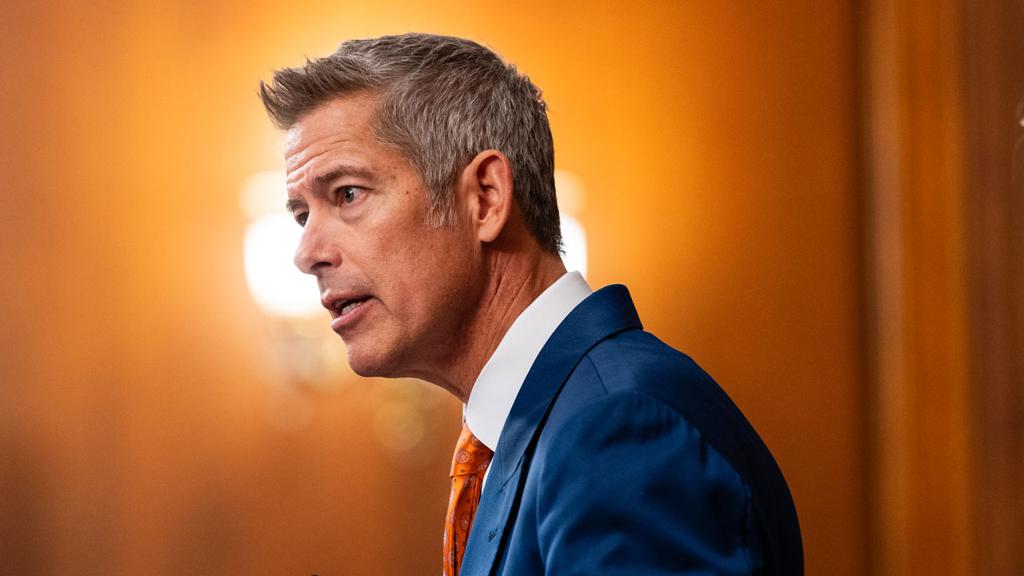
Transportation Secretary Sean Duffy has announced a significant shift in federal infrastructure spending, redirecting $1.73 billion in BUILD grant funding away from projects focused on diversity, equity, and inclusion (DEI) and climate initiatives. Nearly 77% of the funding will now be allocated to traditional transportation priorities such as roads, bridges, and shipping ports, signaling a marked departure from the Biden administration’s approach.
The BUILD grant program, which was previously known as RAISE under President Joe Biden and Secretary Pete Buttigieg, had placed a strong emphasis on funding projects that advanced equity and addressed climate change. According to the Climate Program Portal, the Biden administration invested $562 million in bike and pedestrian projects in a single fiscal year, supporting 41 projects across 27 states. These investments were often publicly linked by Buttigieg to broader goals of advancing equity and combating climate change, including a notable $20 million grant for a separated bike lane in Seattle.
Duffy’s Funding Priorities
Under the new direction, Duffy stated that the $1.73 billion in BUILD grants will be “locked in to fix America’s actual backbone: ROADS, BRIDGES, AND SHIPPING PORTS.” The Department of Transportation’s announcement emphasized that the investments are intended to target critical infrastructure, connecting Americans to jobs and supporting national security.
The specific allocations outlined by the department include $136.8 million for port infrastructure, $169.9 million for transit projects, $11 million for aviation, and $87.7 million for railroads. In total, 127 projects across all 50 states will receive funding under the new guidelines. The department’s website highlighted the administration’s focus on repairing essential infrastructure, stating, “America is fortunate to have a Builder in the White House who knows America is only as great as our infrastructure. That’s why this Department is investing in repairing critical roads and bridges that connect Americans to job opportunities, port infrastructure that bolsters our national security, and aviation and transit projects that move American families. The impact of these dollars will be felt in communities nationwide for years to come.”
Duffy underscored the administration’s priorities in a public statement:
“I just redirected $1.73 billion in USDOT grants away from Biden-era DEI pet projects. Now this funding is officially locked in to fix America’s actual backbone: ROADS, BRIDGES, AND SHIPPING PORTS.”
— Sean Duffy, Transportation Secretary
Criticism and Political Response
The decision to shift funding priorities has drawn criticism from left-leaning media outlets, including MSNBC’s Maddow Blog and The New Republic. These outlets questioned the framing of “DEI bike lanes” and accused Secretary Duffy of politicizing transportation funding. Some commentators have argued that the term “DEI bike lanes” has become a catch-all criticism rather than a specific policy description.
During the Biden administration, Buttigieg had openly connected transportation funding to DEI and climate goals. In 2021, he described a $1 billion RAISE investment as designed to “advance equity, and combat climate change.” In 2023, Buttigieg highlighted $1.5 billion in grants to “address climate change, ensure racial equity, and remove barriers to opportunity.” A New York Post investigation found that the Biden-Buttigieg Department of Transportation spent at least $80 billion on DEI projects.
Public transportation habits also provide context for the debate. A 2025 Statista Consumer Insights poll cited in the source found that 73% of American commuters use their own car to get to work, while only 9% commute by bike. This data suggests that the majority of Americans rely on roads and highways for their daily transportation needs, a point emphasized by supporters of the new funding direction.
Support From Both Parties
Despite the partisan criticism, the BUILD grant awards have received support from some Democrats. Virginia Senators Mark Warner and Tim Kaine, for example, celebrated more than $76 million in BUILD funding for transportation and infrastructure projects in their state. Warner posted on social media that the investment would “expand passenger rail, reduce traffic congestion, and strengthen our infrastructure.”
The shift in grant priorities follows the Trump administration’s 2025 decision to revert the program’s name and mission from RAISE to BUILD, refocusing on traditional infrastructure projects. The Department of Transportation has not responded to criticism from left-leaning media regarding the new funding direction. However, the move has been welcomed by those who argue that federal infrastructure spending should prioritize the nation’s core transportation needs over broader social and environmental goals.
As the debate over federal transportation funding continues, the impact of the redirected $1.73 billion in BUILD grants will be closely watched by policymakers, transportation advocates, and communities across the country. The decision marks a clear policy divide between the current administration’s focus on traditional infrastructure and the previous administration’s emphasis on equity and climate change in transportation policy.