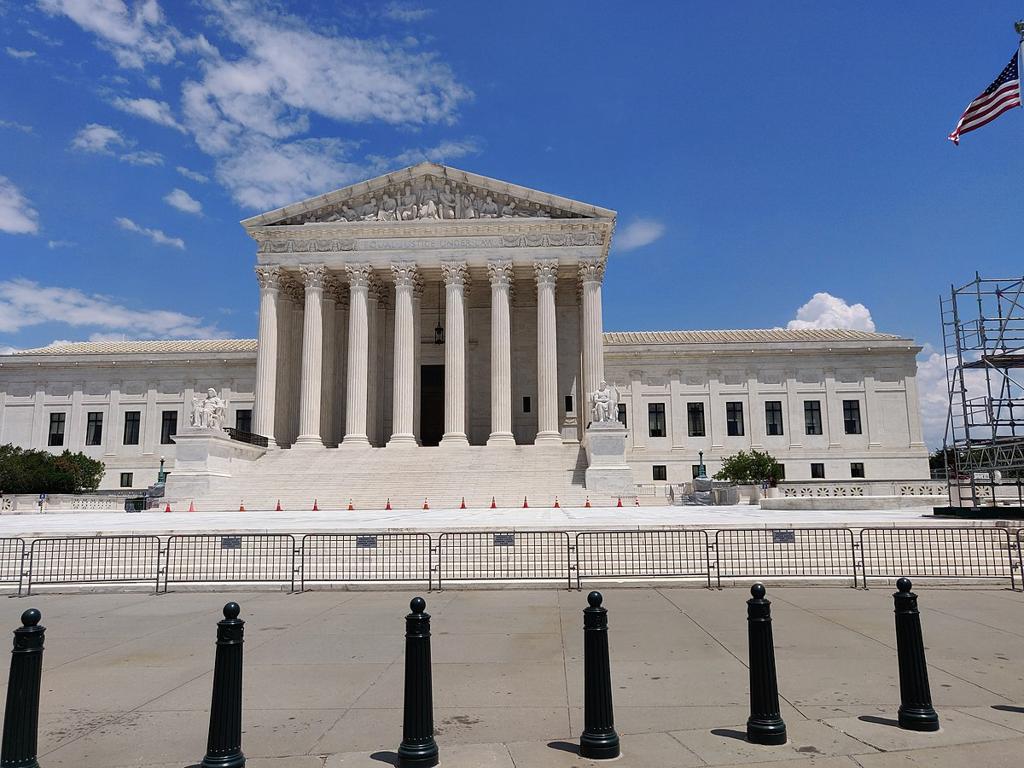
The U.S. Supreme Court issued a temporary stay on a lower court order that sought to block President Trump's plan to cut $4 billion in foreign aid, a decision made in a 6-3 ruling on Friday afternoon.
The ruling comes in response to a preliminary injunction from the U.S. District Court for the District of Columbia, which aimed to prevent the Trump administration from implementing these cuts under the Impoundment Control Act. This law allows the president to withhold funds appropriated by Congress under certain circumstances.
The Trump administration had filed an emergency request with the Supreme Court after the D.C. Court of Appeals denied its application for relief. The high court's decision allows the administration to proceed with its foreign aid cuts while the case is under review.
In its ruling, the Supreme Court stated that the federal government had demonstrated a sufficient basis for its argument that the Impoundment Control Act limits the ability of respondents to challenge the administration's actions. The majority opinion noted that the potential harms to the Executive's conduct of foreign affairs appeared to outweigh the risks faced by the respondents.
“This order should not be read as a final determination on the merits,” (U.S. Supreme Court) the majority wrote. “The relief granted by the Court today reflects our preliminary view, consistent with the standards for interim relief.”
Dissenting Justices Sonia Sotomayor, Elena Kagan, and Ketanji Brown Jackson expressed concerns over the majority's decision. Justice Kagan, writing for the dissent, argued that the majority had overstepped by allowing the cuts to proceed without fully addressing the legal standards for emergency relief.
Kagan stated, “The effect of its ruling is to allow the Executive to cease obligating $4 billion in funds that Congress appropriated for foreign aid, and that will now never reach its intended recipients.” (U.S. Supreme Court) She emphasized that this outcome conflicts with the principle of separation of powers.
The Supreme Court's stay will remain in effect pending the outcome of the government's appeal in the D.C. Circuit and any potential petition for a writ of certiorari. If the administration's petition is denied or if the Court decides to hear the case, the stay will terminate.
This case highlights ongoing tensions between the executive and legislative branches regarding budgetary control and foreign aid. Critics of the cuts argue that withholding funds undermines U.S. commitments abroad, while supporters contend that the administration is exercising its rights under existing law.
As the legal proceedings continue, the implications of this ruling could significantly affect U.S. foreign aid policy and the balance of power between Congress and the presidency.