A new analysis from the Unite America Institute finds that nearly 90% of U.S. House races and about three-quarters of Senate contests in the 2026 midterm elections are uncompetitive, with most winners effectively determined in party primaries rather than in November's general election.
Explainer The Voting Rights Act: Judicial Battles Over Race and Redistricting
The findings highlight growing concerns that most voters have little influence over congressional outcomes, as a small fraction of primary voters now decide the majority of seats. This trend, according to analysts, raises questions about the health of representative democracy and the extent to which general elections provide meaningful choices for the electorate.
The Unite America Institute's review, which draws on the widely followed Cook Political Report's ratings, shows that 383 of 435 House races—about 88%—are considered so safe for one party that the primary winner is virtually assured victory in November. On the Senate side, 26 of 35 races, or 74%, are similarly uncompetitive. The analysis further notes that just 9.4% of eligible voters participated in the dominant party primaries for House races, and 10.2% did so for Senate contests this cycle. This means that, in most cases, a small share of the electorate is effectively deciding who will represent entire districts or states in Congress.
Redistricting and Polarization
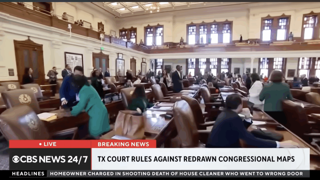
The report attributes much of the lack of competition to recent redistricting efforts and heightened political polarization. After the Supreme Court narrowed its interpretation of the Voting Rights Act to disallow race-based congressional districts, several Southern states—including Alabama, Florida, Louisiana, North Carolina, Ohio, Tennessee, and Texas—redrew their maps in ways that favored Republicans. Missouri also attempted a redraw but faced legal challenges. Only California and Utah changed their maps in ways that benefited Democrats. In Virginia, an attempt to redraw its maps was blocked by the state Supreme Court, leaving the state with six Democratic-leaning and five Republican-leaning districts.
Unite America and other analysts point to these redistricting efforts as a key driver of the current landscape, alongside low primary turnout and a mix of voter satisfaction and apathy. The analysis found that in 150 House races, the nominee for a safe seat ran unopposed in the primary, further limiting voter choice. This lack of competition in both primaries and general elections means that many voters have little or no say in who represents them in Congress.
The combination of redistricting and polarization has led to a situation where most congressional districts are drawn to heavily favor one party, reducing the likelihood of competitive races. As a result, the primary election—often held months before the general election—becomes the decisive contest in most districts. In these cases, the general election is largely a formality, with the outcome all but predetermined.
Few True Toss-Ups Remain
The Cook Political Report currently rates only 21 of 435 House districts as true "toss-ups," with 208 leaning Republican and 206 leaning Democratic. For the Senate, seven of 35 races are considered toss-ups by Cook. Sabato’s Crystal Ball at the University of Virginia Center for Politics offers a similar assessment, identifying 22 House toss-ups and only five competitive Senate contests. The RealClearPolitics polling average lists nine Senate races as competitive but does not provide a current House breakdown.
"In the primaries that effectively determined the outcome, a small share of eligible voters chose the overwhelming majority of seats."
— Unite America Institute analysis
The result, according to Unite America, is that less than 5% of House races are true toss-ups, and a small, unrepresentative group of voters has already decided most of Congress before the general election. This concentration of power in the hands of primary voters, who tend to be more ideologically motivated and less representative of the broader electorate, has significant implications for the direction of national policy and the tone of political debate.
Debate Over Voter Representation
Critics argue that the dominance of safe districts and low-turnout primaries effectively shuts out many voters from meaningful participation in congressional elections. Unite America describes this as a "primary problem," where a sliver of the electorate wields outsized influence over who serves in Congress. The group and other reform advocates warn that this dynamic can lead to more extreme candidates and less incentive for lawmakers to seek bipartisan solutions.
Supporters of the current system, however, note that low competition can also reflect voter satisfaction with incumbents or their party's direction. They argue that if voters were dissatisfied, they would be more likely to turn out in primaries or support challengers. Officials in states that benefited from redistricting have not publicly addressed the criticism raised by the analysis.
The 2026 cycle is now on track to be the least competitive in recent history, with the vast majority of congressional seats already determined months before Election Day. As the general election approaches, the data suggest that only a handful of races will be truly contested, leaving most voters with little opportunity to influence the outcome. The ongoing debate over redistricting, primary reform, and voter engagement is likely to intensify as concerns grow about the implications for American democracy.