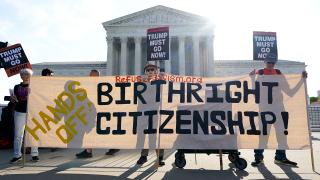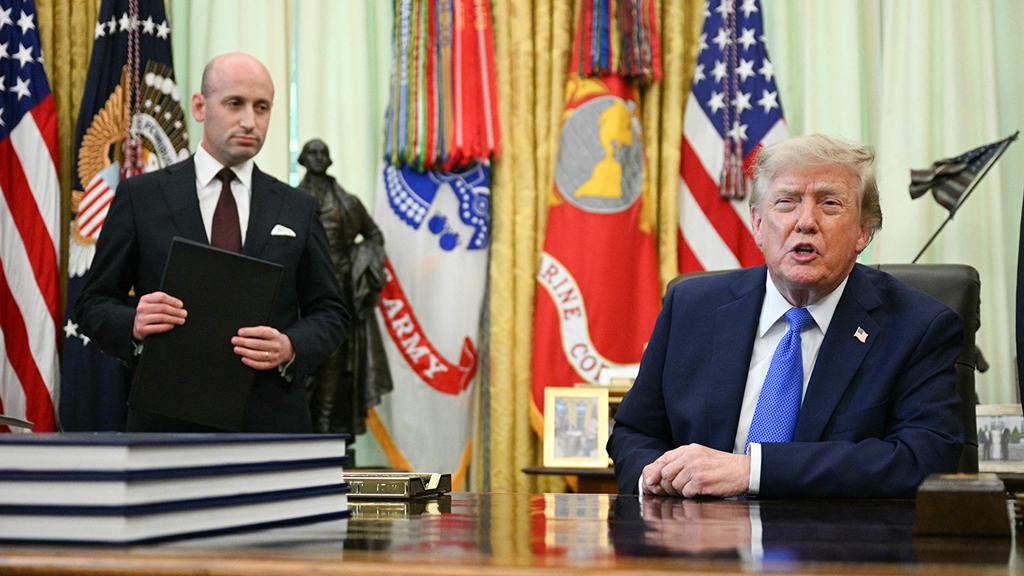
President Donald Trump signed two executive orders on Thursday aimed at restricting birthright citizenship and ending the practice known as birth tourism. The move comes in the wake of a Supreme Court decision that struck down his earlier attempt to limit citizenship rights for children born in the United States to noncitizens.
Explainer Understanding the Supreme Court’s Impact on Law and Liberty
The Supreme Court, in its recent decision in Trump v. Barbara, ruled that the 14th Amendment requires automatic citizenship for all children born on U.S. soil, regardless of their parents' immigration status. The ruling, delivered on June 30 and authored by Chief Justice John Roberts, reaffirmed the longstanding interpretation of the 14th Amendment's citizenship clause. This decision rejected the administration's previous efforts to restrict birthright citizenship by executive order, citing constitutional protections.
The debate over birthright citizenship has intensified in recent years. Critics argue that the policy encourages abuse of the immigration system, while supporters point to constitutional guarantees and the historical application of the 14th Amendment. The Supreme Court's June decision emphasized a broad reading of the citizenship clause, reinforcing the automatic right to citizenship for children born in the United States.
Details of the Executive Orders
Trump's first executive order, signed in the Oval Office, identifies specific categories of children of noncitizens who, according to the White House, are not entitled to birthright citizenship. The administration claims these categories align with historical exceptions recognized by the Supreme Court. However, the recent Trump v. Barbara decision emphasized a broad application of citizenship rights, leaving the legal standing of these exceptions in question.
The second order instructs the secretaries of state and homeland security to halt birth tourism. Birth tourism refers to the practice where foreign nationals travel to the United States to give birth, thereby securing citizenship for their children. The White House cited recent instances involving Chinese nationals hiring surrogates to give birth on U.S. territory as an example of this trend.
"People are building businesses around it, from—wealthy people are building businesses around birthright citizenship. That’s not the way it’s supposed to work. It’s a disgrace," President Trump said during the signing. He added that the orders would target both parents and organizers of birth tourism rings, including through visa denials and law enforcement measures. "We look very heavily at denying visas to people that we have reason to believe are coming here for that purpose. Visas, both for punitive parents, but also for the people organizing these rings. There’s also obviously a law enforcement component," Trump said.
Administration’s Rationale and Enforcement
Deputy chief of staff Stephen Miller described birth tourism as "one of the gravest and most egregious abuses of the American system and it keeps American citizenship sacred." Miller stated that under the new order, "no one in the world is anymore allowed to obtain a visa for this fraudulent purpose."
Trump argued that "hundreds of thousands" of people are exploiting birth tourism, though the administration did not provide specific figures or cite official data in the announcement. The orders direct federal agencies to take "a number of different actions intended to combat those sorts of organized practices," according to Trump. This includes enhanced scrutiny of visa applications and potential law enforcement operations targeting those suspected of facilitating birth tourism.
The administration maintains that these actions are necessary to protect the integrity of American citizenship and to prevent what it describes as exploitation of the system. Officials say that the orders will empower federal agencies to more aggressively investigate and prosecute those involved in organizing or participating in birth tourism schemes. The measures are also intended to send a message to foreign nationals considering travel to the U.S. for the purpose of securing citizenship for their children.
Legal and Political Context
The Supreme Court’s majority opinion in Trump v. Barbara held that the 14th Amendment's citizenship clause requires all children born within the United States to automatically qualify as citizens at birth. The ruling rejected the administration's previous attempt to restrict birthright citizenship by executive order, citing constitutional protections and the historical application of the amendment.
Despite the Supreme Court’s clear ruling, the White House maintains that the new orders are consistent with historical exceptions recognized by the Court. However, the recent decision emphasized a broad reading of the citizenship clause, raising questions about the legal viability of the administration’s latest actions.
The debate over birthright citizenship is likely to continue, with legal challenges expected in response to the new executive orders. Supporters of birthright citizenship have not yet responded to the latest executive actions, but advocacy groups and legal experts are closely monitoring the situation. The orders represent the latest effort by the Trump administration to reshape U.S. immigration policy, even as the Supreme Court has reaffirmed constitutional protections for those born on American soil.
The full text of the Supreme Court's decision in Trump v. Barbara can be found on the Supreme Court's official website.