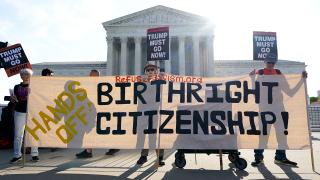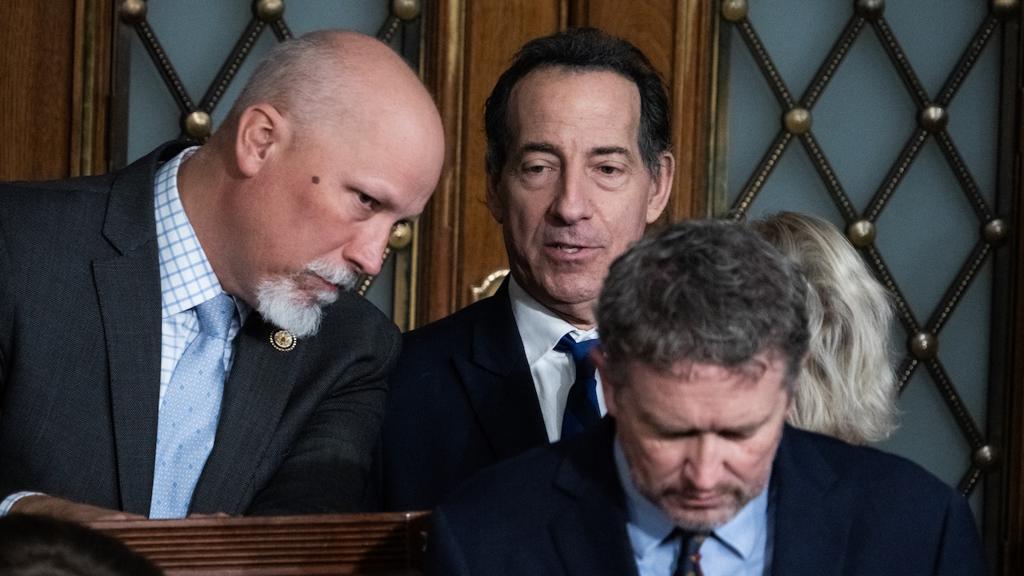
A House Judiciary Subcommittee hearing led by Rep. Chip Roy, R-Texas, on efforts to end the birth tourism industry drew sharp criticism from Democrats on Wednesday, who called the proceedings a "bigoted" attempt to undermine birthright citizenship. The hearing featured testimony from former Deputy Secretary of Homeland Security Ken Cuccinelli, Kansas Attorney General Kris Kobach, and Immigration Accountability Project Policy Director Rosemary Jenks, who argued that birth tourism remains a significant issue that Congress should address.
Explainer Birthright Citizenship Debate: Constitutional Roots and Contemporary Challenges
The session highlighted a deep partisan divide over whether congressional action is needed to address noncitizens traveling to the U.S. to give birth. Democrats dismissed the threat as exaggerated, while Republicans insisted on reforms to close what they see as loopholes in citizenship laws. The debate comes in the wake of the Supreme Court's July decision in Trump v. Barbara, which addressed related questions of citizenship. The hearing is part of a broader Republican push, including the Trump Secure Border Act, to tighten immigration rules and limit perceived abuses of birthright citizenship.
Partisan Dispute Over Birth Tourism
Rep. Mary Gay Scanlon, D-Pa., the subcommittee's ranking member, accused Republicans of using the hearing to attack the Supreme Court's recent ruling. She called the focus on birth tourism a "wasted effort" and argued that it distracts from more pressing legislative priorities. Rep. Jamie Raskin, D-Md., compared the Republican push to historical efforts to strip citizenship, referencing Nazi Germany and the "war on terror" under President Donald Trump. Raskin also criticized House Speaker Mike Johnson, R-La., for not advancing the Trump Secure Border Act, claiming the bill lacked Johnson's support.
Republicans countered that the hearing was not about revisiting the Supreme Court decision but about closing loopholes that allow noncitizens to exploit U.S. citizenship laws. Rep. Tom McClintock, R-Calif., emphasized that the goal was to prevent noncitizens from traveling to the U.S. to give birth, not to question the status of children born to citizens or legal residents. Republicans argued that the current interpretation of the 14th Amendment is being abused by those seeking to secure U.S. citizenship for their children through birth tourism.
Witness Testimony and Policy Proposals
Witnesses at the hearing disputed Democratic claims that birth tourism is not a widespread problem. Rosemary Jenks cited the case at the center of Trump v. Barbara, noting that the woman involved admitted her intent was to secure U.S. citizenship for her child. Jenks argued that this case illustrates the need for congressional action to address the issue. Ken Cuccinelli argued that the constitutional clause on citizenship was originally intended for the offspring of slaves, not people in the country illegally, and suggested Congress consider a constitutional amendment to address the issue.
"This is an effort that only targets people who are fraudulently taking advantage of the United States."
— Ken Cuccinelli, former Deputy Secretary of Homeland Security
Daniel West, Government Relations Director for Heritage Action, described the Trump Secure Border Act as codifying reforms to asylum processing, penalties for visa overstays, and limits on parole authority to prevent abuse by future administrations. West argued that these measures are necessary to prevent future exploitation of the immigration system and to ensure that citizenship is not granted through fraudulent means.
Democratic Objections and Broader Criticism
Democrats on the panel, including Rep. Pramila Jayapal, D-Wash., and Rep. Becca Balint, D-Vt., argued that the hearing was a distraction from more pressing issues such as foreign conflicts and domestic policy needs. Jayapal and Balint both criticized the focus on birth tourism as irrelevant to current public demands for housing and health care, suggesting that Congress should prioritize issues that directly affect Americans' daily lives.
Law professor Jonathan Weinberg, responding to Raskin's questions, warned that restricting birthright citizenship could force Americans to prove their lineage, potentially creating bureaucratic hurdles for citizens. However, witnesses and Republicans maintained that the proposals would only affect noncitizens and would not impact the status of children born to U.S. citizens or legal residents.
House Judiciary Committee Chairman Jim Jordan, R-Ohio, rejected Democratic claims that the hearing was intended to undermine the Supreme Court, accusing Democrats of trying to derail the proceedings. Jordan insisted that the hearing was focused on addressing abuses of the current system and ensuring the integrity of U.S. citizenship laws.
The hearing concluded without a clear resolution, as Democrats and Republicans remained divided on the necessity and scope of potential reforms to birthright citizenship and birth tourism. The partisan split underscored the broader national debate over immigration policy, with both sides vowing to continue pressing their respective positions in future legislative sessions.