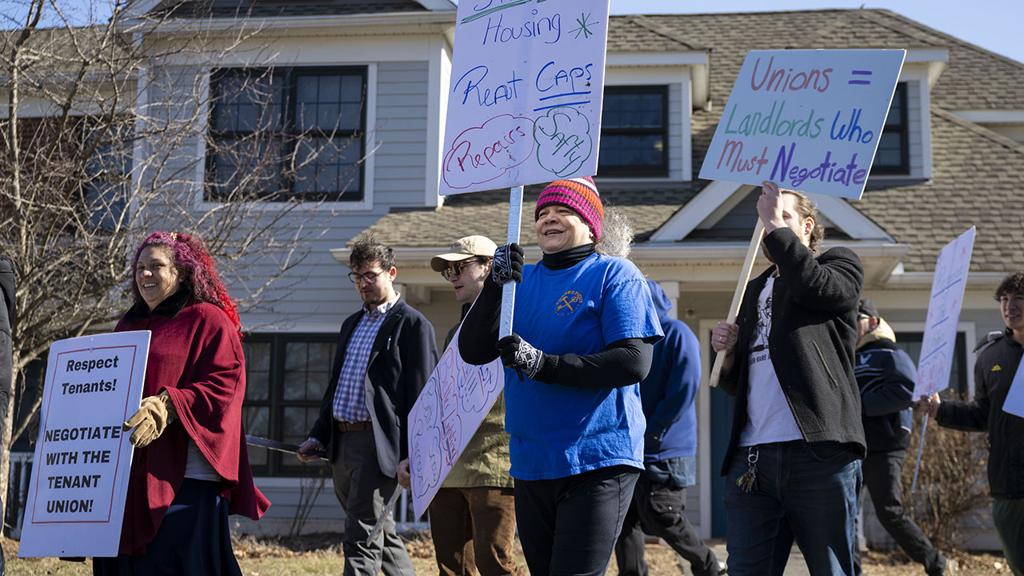
The Democratic Socialists of America (DSA) has initiated a new program aimed at training activists to form what it describes as "militant tenant unions." The goal is to organize renters collectively against landlords and to build mass organizations that advocate for housing justice. This move has ignited debate over whether the DSA is primarily seeking to address the immediate concerns of tenants or to establish a lasting political power base through these unions.
Explainer Minneapolis and Immigration Enforcement: Unpacking Federal Intervention and Local Backlash
The DSA's Housing Justice Commission is currently inviting its members to apply for specialized training as tenant organizers. The stated objective is to move beyond the traditional model of building-level tenant associations and instead foster citywide or even regional tenant unions. The final session of the 2026 Fall Emergency Tenant Organizing Committee, titled "From Organizing Committee to Mass Organization," underscores the group's ambitions for large-scale mobilization and influence in housing policy.
Funding and Political Goals
Significant financial support for tenant union organizing has come from left-leaning foundations. In June, the Robert Wood Johnson Foundation awarded a $3.55 million grant to the National Housing Law Project. The funds are intended to support the Tenant Union Federation, with the grant's stated aim being "building the collective capacity of poor and working-class people to practice noncooperation and civil resistance."
Nicole Huyer, a senior research associate at The Heritage Foundation, has argued that "political influence is the goal" of the DSA's organizing efforts. Huyer warns that socialists "will use these tenant unions to create sustained constituencies for rent regulation, eviction restrictions, right-to-counsel programs, social housing, collective bargaining with landlords, and similar policies."
"We can absolutely empathize with the economic hardship of young Americans and renters who feel priced out, yet the DSA's plan aims to use those real frustrations to make the case for greater government control of housing rather than fixing the policies that restrict housing supply (and put upward pressure on price) in the first place."
— Nicole Huyer, senior research associate, The Heritage Foundation
Huyer also draws a distinction between tenants voluntarily organizing to resolve issues with landlords and what she describes as "an ideological organization using tenants as the basis for a broader political movement." She points out that the DSA's Housing Justice Commission has adopted principles such as "redistribution of land from landowners to the landless," prioritizing tenants over developers and investors, and advocating for "universal access" to housing that is free of segregation by income or race.
Supporters’ and Critics’ Perspectives
Supporters of tenant unions argue that these organizations empower renters by enabling them to negotiate collectively with property owners. Michael Watson, research director at the Capital Research Center, has described tenant organizing as both "housing advocacy and movement-building infrastructure." He draws a comparison between tenant unions and labor unions, calling them "dual-use technology" that can serve both specific negotiation purposes and broader political campaigns.
Watson also notes that while labor unions have a long-established history and recruiting mechanisms, tenant unions do not have the same level of institutional support or tradition. He cautions that politicians interested in strengthening tenant organizations could look to labor union models—such as unionization, collective bargaining, and compulsory dues arrangements—as templates for tenancy policy.
Critics, including Huyer, contend that the DSA's approach risks turning the landlord-tenant relationship into "permanent class warfare." While acknowledging that renters face serious affordability challenges, Huyer argues that DSA-backed policies would not address the underlying issues of housing supply, which many believe are central to the affordability crisis.
Lack of Response from DSA and Allies
Neither the DSA, the Tenant Union Federation, nor the National Housing Law Project responded to requests for comment from the Daily Signal regarding the program or its political goals. This lack of response has left some questions unanswered about the long-term intentions and strategies behind the organizing efforts.
The DSA has also sought to expand its influence by engaging with existing labor union infrastructure, according to the Daily Signal. Observers are closely watching to see whether these organizing efforts will result in new policy initiatives or increased political clout for the DSA and its allied groups. The debate continues over whether the primary outcome will be improved conditions for renters or the creation of a new, organized political constituency.