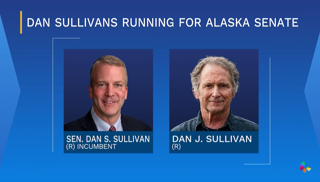
VoteVets, a prominent super PAC aligned with Senate Majority Leader Chuck Schumer, is backing Democratic candidates without military service over Republican Sen. Dan Sullivan, a retired Marine colonel, in Alaska’s closely contested Senate race. The group’s decision to oppose Sullivan, despite his extensive three-decade military career, highlights the partisan stakes in the 2024 election cycle as VoteVets spends significant sums on advertising and events supporting Democrats Mary Peltola in Alaska and Josh Turek in Iowa. Neither Peltola nor Turek has served in the military.
The Alaska Senate race is considered one of the most competitive in the country. Sullivan, who retired as a Marine colonel in 2024 after deployments across the Middle East and Asia, faces a tight reelection fight against Peltola. Recent polling averages show Peltola leading by 1.2 points, though other polls have Sullivan ahead by up to 3 points. The race has drawn national attention, with outside groups like VoteVets investing heavily in the outcome.
VoteVets has launched a series of ad campaigns and hosted events with Peltola, spending over $136,000 on Alaska airwaves, including at least $58,000 on radio ads between Oct. 13 and Nov. 2. Its sister organization, VoteVets Action Fund, has spent more than $200,000 on radio and streaming ads in the state. The group’s efforts are part of a broader strategy to boost Democratic candidates in key battlegrounds, regardless of their military backgrounds.
VoteVets’ Spending and Endorsements
In August, VoteVets announced a $225,000 ad campaign targeting Sullivan for his “support of the war in Iran.” The group also hosted a happy hour event in Anchorage with Peltola, signaling its commitment to her campaign. In Iowa, VoteVets pledged $4.5 million to support Josh Turek, who has served as a state representative since 2023 but has no military background. Turek missed nearly 60% of his state House votes this year, including a vote on veterans home funding, to attend a VoteVets event.
VoteVets describes its mission as electing veterans and national security experts, but its recent endorsements have drawn criticism for prioritizing party alignment over military service. The group has not publicly addressed concerns about overlooking decorated veterans like Sullivan in favor of supporting non-veteran Democrats.
Sullivan’s Record and Campaign
Sen. Dan Sullivan’s military service spans deployments to the Taiwan Strait, South China Sea, Middle East, Horn of Africa, and Central Asia. In 2013, he served on a Joint Task Force in Afghanistan targeting Taliban networks. As a senator, Sullivan has advocated for expanding the Marine Corps presence in Alaska, including a new Arctic training program announced in May. He has made his military background a central theme of his campaign, frequently referencing his service and commitment to Alaska’s armed forces.
"I’m Alaska’s junior U.S. Senator, but with the exception of husband and father, the title ‘Marine’ is my proudest achievement. Always has been. Always will be."
— Dan Sullivan, U.S. Senator
At a recent rally in Fairbanks, Vice President JD Vance highlighted Sullivan’s service, introducing him as “a guy who cares about whether he fights for the men and women of this state. That is Marine Corps veteran, and your great senator, Dan Sullivan.”
Sullivan’s campaign continues to emphasize his legislative work for Alaska’s military community, pointing to his efforts to secure resources and training opportunities for service members stationed in the state.
Criticism and Response
Critics argue that VoteVets is prioritizing party loyalty over its stated mission of supporting veterans and national security experts. By backing non-veteran Democrats like Peltola and Turek while targeting a decorated Marine veteran, the group has drawn scrutiny from both Republican and independent observers. VoteVets has not publicly responded to these criticisms or explained its endorsement criteria in the current cycle.
Neither Peltola nor Turek has responded to requests for comment regarding their support from VoteVets or their positions on veterans’ issues. Meanwhile, Sullivan’s campaign continues to highlight his military credentials and legislative record, seeking to draw a contrast with his opponents.
As the Alaska Senate race enters its final weeks, VoteVets’ spending and endorsements remain a focal point in the debate over the role of military service in American politics. The outcome may influence how advocacy groups approach future endorsements and spending decisions, especially in races featuring candidates with significant military backgrounds.