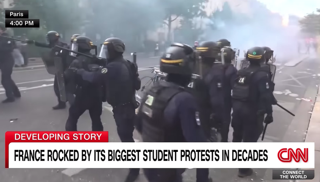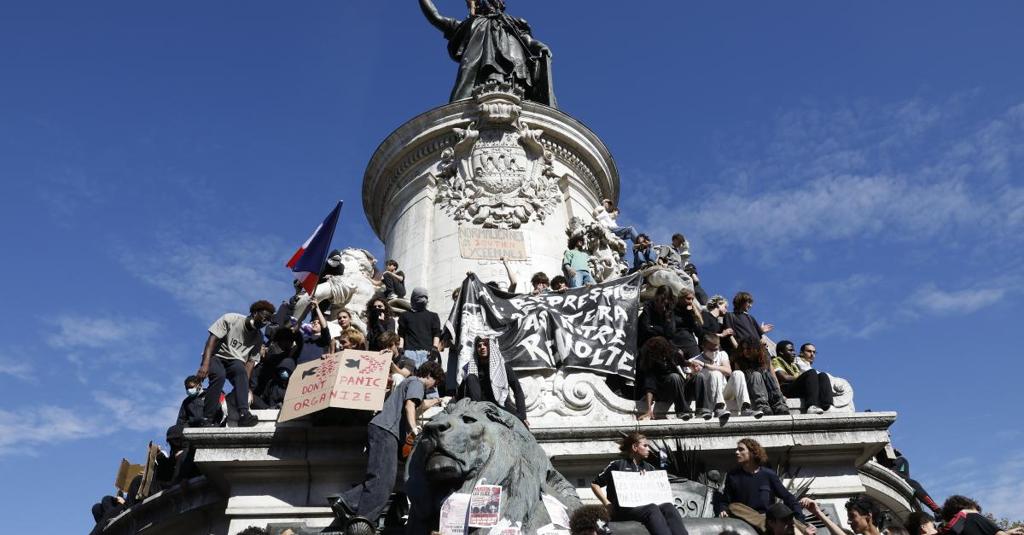
French officials have imposed overnight curfews in several major cities, including Paris, Nice, and Lille, following a weekend of violent riots that resulted in at least 2,400 arrests, according to the Associated Press. The unrest, which initially began as protests over school conditions, quickly escalated into broader demonstrations targeting the government and expressing frustration over rising living costs.
Explainer Inside U.S. Immigration and Customs Enforcement: Law Enforcement, Controversies, and National Security
The government’s response to the violence has come under scrutiny. Interior Minister Laurent Nuñez offered his resignation, acknowledging shortcomings in the police response, but President Emmanuel Macron has not accepted it. The situation is particularly sensitive as France prepares for its next presidential election, with authorities eager to restore order and stability. Meanwhile, opposition figures have accused the government of being unprepared for the scale and intensity of the unrest, further fueling political tensions.
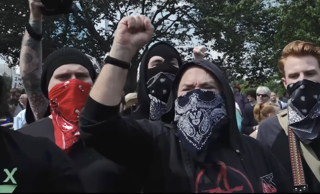
These riots are the latest in a series of large-scale protests that have rocked France in recent years. The country has experienced repeated episodes of social unrest, often triggered by economic grievances and deepening political polarization. Conservative leaders have attributed the recent violence to left-wing activists and have raised concerns about the influence of international donors and far-left groups in stoking the unrest.
Curfew Orders and Police Response
In response to the violence, Paris police ordered a curfew from 11 p.m. Monday to 6 a.m. Tuesday in two districts that were particularly affected by the riots. Additional restrictions on public gatherings were implemented, starting at 8 p.m., in over a dozen areas of the city, including locations near train stations and government buildings. In northern cities such as Lille and Denain, authorities imposed curfews for minors from 8 p.m. to 6 a.m., while in Nice, Mayor Eric Ciotti announced a 9 p.m. curfew for minors.
Prime Minister Sébastien Lecornu, speaking after an emergency cabinet meeting, praised the efforts of local police. He stated that law enforcement had confronted what he described as a “shadowy network” of far-left instigators who were attempting to create “a profound disorder in the country leading up to the presidential election.” Lecornu emphasized that, despite the severity of the violence and significant property damage, there were no fatalities during the weekend’s unrest.
"While we witnessed very difficult scenes involving violence against property, no one was killed, and that is a miracle."
— Sébastien Lecornu, French Prime Minister
Interior Minister Nuñez admitted that police forces were not fully prepared for the scale of the riots, which contributed to his offer of resignation. However, President Macron has not accepted Nuñez’s resignation at this time. The government has not yet provided details about further security measures but has repeatedly called for calm and restraint from all sides.
Groups Behind the Protests
A Fox News investigation identified 54 organizations that were either involved in or promoting the riots. Of these, only 16 were student or youth groups, while the remaining 38 included adult-led communist groups, labor unions, political parties, revolutionary-left organizations, advocacy groups, and international propaganda outlets. Conservative politicians have highlighted funding from left-wing donor Neville Roy Singham, whose groups have previously been linked to anti-Israel demonstrations in the United States.
Despite these claims, French officials have not publicly addressed the allegations regarding outside funding or the specific roles of these organizations in the unrest. Supporters of the protests argue that the demonstrations are a reflection of genuine frustration among the French public over economic and social conditions, rather than the result of external manipulation.
Political Fallout and Next Steps
The French government is under mounting pressure to prevent further violence as the country approaches its next presidential election, scheduled for April 2027. The imposition of curfews and an increased police presence are intended to deter additional unrest and reassure the public. However, opposition figures continue to question the government’s preparedness and the effectiveness of its response to the crisis.
While no fatalities have been reported as a result of the weekend’s violence, property damage and incidents of looting have been widespread across affected cities. Authorities have not yet announced when the curfews will be lifted or whether additional security measures will be introduced in the coming days. The government’s handling of the situation is likely to remain a central issue in the national political debate as France moves closer to the next election cycle.