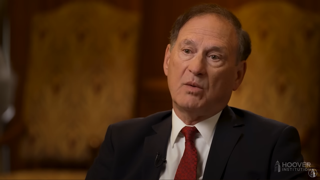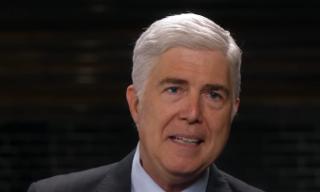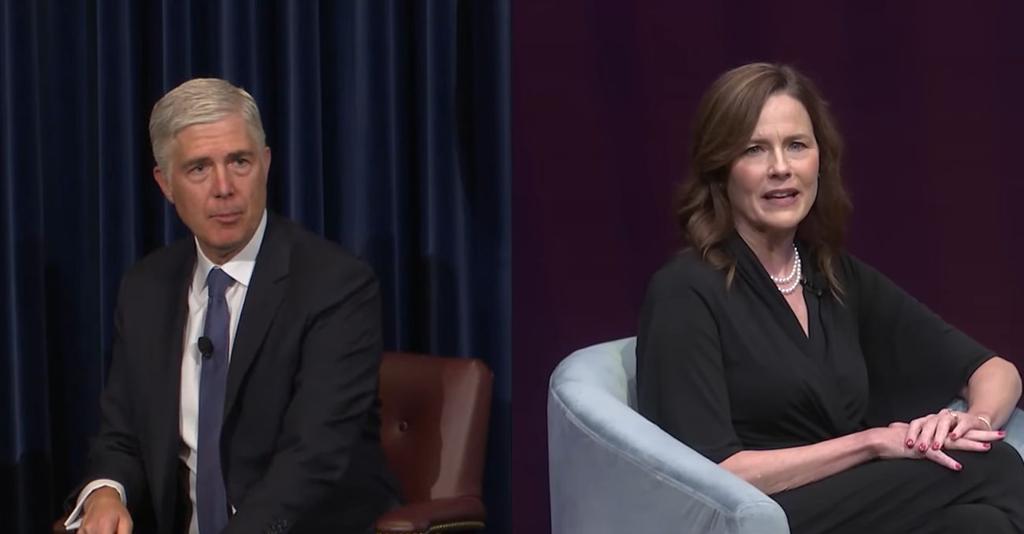
The U.S. Supreme Court heard oral arguments on Tuesday in Chiles v. Salazar, a case challenging Colorado's law that prohibits therapists from providing conversion therapy to minors experiencing gender dysphoria. Associate Justices Neil Gorsuch and Amy Coney Barrett questioned the state's rationale during the proceedings, highlighting potential implications for free speech rights.
Explainer Free Speech Battles: Courts, Censorship, and Cultural Conflicts
Kaley Chiles, a Colorado therapist represented by Alliance Defending Freedom, argues that the law infringes on her First Amendment rights by restricting her ability to engage in talk therapy with her clients. Colorado Solicitor General Shannon Stevenson defended the law, asserting that it only regulates treatments and does not interfere with free speech.
Gorsuch posed a hypothetical scenario suggesting that other states could enact laws that prohibit therapists from affirming minors' sexual orientations. He questioned whether Colorado's argument could allow states to pass similar laws against affirming gender identity changes, which would only require a rational basis review rather than strict scrutiny.
Stevenson initially agreed with Gorsuch's premise but later contended that the presence of words in therapy does not alter the law's applicability. She cited the Supreme Court's recent decision in U.S. v. Skrmetti, which upheld a Tennessee law banning certain transgender procedures for minors, to support her argument that states can regulate even amid medical uncertainty.
Gorsuch pressed Stevenson on the implications of her argument, asking if states could regulate speech related to gender identity changes even when medical consensus is lacking. Stevenson suggested that a narrower ruling would be preferable, but Gorsuch maintained that the logic of her position implied that states could indeed regulate in such circumstances.
Barrett joined the discussion, emphasizing the existence of competing views within the medical community regarding the safety and efficacy of conversion therapy and gender-affirming care. She questioned whether Colorado's position allowed for states to choose sides in this debate, pointing out that different states, like Tennessee and Colorado, adopt contrasting approaches based on their interpretations of medical standards.
Stevenson attempted to clarify that Colorado's law would trigger a rational basis review, while a hypothetical law from Tennessee would be subject to strict scrutiny if it contradicted established standards of care. Barrett challenged this distinction, asking if Colorado's law effectively suppresses certain viewpoints while allowing others.
The exchange underscored the complexities of the legal arguments surrounding free speech and state regulations on therapy practices. The court's decision in this case could have significant implications for how states regulate therapy related to gender identity and sexual orientation.
Shawn Fleetwood is a staff writer for The Federalist and has contributed to various outlets, including RealClearPolitics and Conservative Review. Follow him on Twitter @ShawnFleetwood.