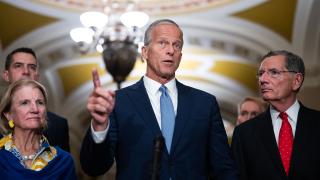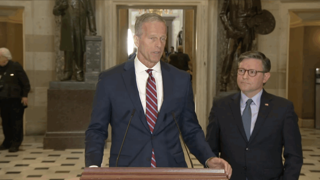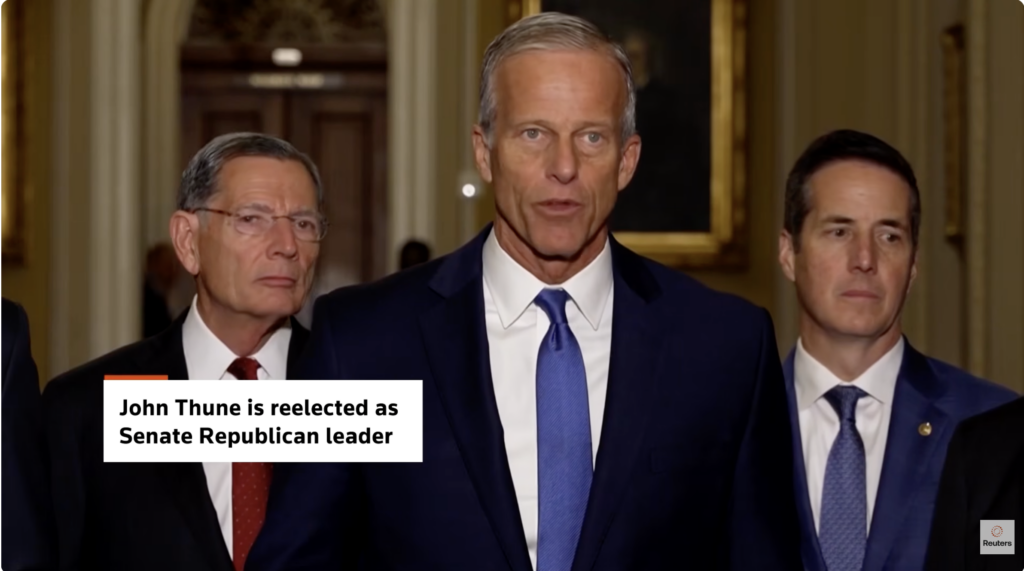
Sen. John Thune, R-S.D., was elected Senate Republican leader on Tuesday, prevailing despite calls from within his party to delay the leadership vote after the GOP suffered significant losses in the recent midterm elections. The party lost at least seven seats and its majority in the chamber, prompting internal debate about the direction and priorities of Senate Republicans.
Explainer The SAVE America Act: Defending Election Integrity with Strong Voter Eligibility Laws
Thune’s re-election as leader came without opposition, but the decision has exposed and deepened divisions among Senate Republicans. Some conservatives argue that the current leadership failed to address voter dissatisfaction and did not deliver on key legislative priorities, fueling frustration within the party’s base.
The leadership vote followed a notable setback for Senate Republicans, who will now serve as the minority in the chamber. Thune will lead a smaller Republican conference, with the rest of the leadership team remaining unchanged. Sen. John Barrasso, R-Wyo., will continue as whip, Sen. Tom Cotton, R-Ark., as conference chairman, Sen. Shelley Moore Capito, R-W.Va., as policy committee chair, and Sen. James Lankford, R-Okla., as conference vice chairman.
Internal GOP Criticism
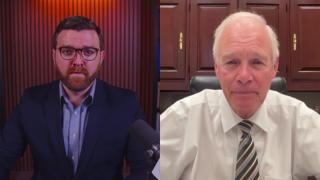
The outcome of the leadership vote did not go unchallenged. Sen. Ron Johnson, R-Wis., led a group of senators who sought to postpone the vote, arguing that the party needed time for “serious reflection and change” in light of the election results. Johnson, who did not participate in the leadership election, stated on X (formerly Twitter) that holding a rushed vote ignored the message sent by voters.
"Holding a rushed election ignores the message our voters sent. We must acknowledge where and why we failed and develop strategies to succeed."
— Sen. Ron Johnson, R-Wis.
Johnson’s concerns were echoed by other conservatives, including Rep. Chip Roy, R-Texas. Roy has been vocal in his criticism of Senate GOP leadership, particularly over what he describes as a lack of action on border security and election integrity. He cited the Senate’s failure to advance legislation such as H.R. 2, a border security bill, and H.R. 9773, which addresses election procedures. Roy told Fox News that the Senate “failed to deliver for the American people” and called for codifying executive orders on border security and immigration law to address ongoing concerns.
Thune’s Defense and Filibuster Debate
In response to criticism, Thune defended the Senate’s procedural rules, emphasizing the importance of the filibuster. Speaking to Fox News’ Bret Baier, Thune noted that the Senate was “designed to make it hard to do things,” and argued that the filibuster protects minority rights in the chamber. “It gives the minority a voice in our government, which now we are going to appreciate because we are going to be that minority,” Thune said.
Some conservatives, including Johnson, have warned that Democrats could move to eliminate the filibuster if they regain full control of the Senate. They argue that such a move could pave the way for significant changes, including Supreme Court expansion and granting statehood to Washington, D.C., and Puerto Rico. Thune, however, has denied claims that he is maneuvering to influence Senate appointments, including the replacement for Tennessee’s outgoing senator, and has insisted that the leadership team is focused on the party’s legislative and oversight responsibilities.
Judicial Nominations and Legislative Priorities
The leadership turmoil comes as Senate Republicans face mounting pressure to address judicial and executive nominations before the end of the legislative session. Thune has said that the conference will extend its calendar, including late nights and weekends, to “finish this legislative session strong” and address “consequential legislation.”
Judicial nominations have become a point of contention within the party. Recently, Arkansas Sens. John Boozman and Tom Cotton reportedly opposed the nomination of Judge Lee Rudofsky to the 8th Circuit Court of Appeals. Their opposition led the president to withdraw Rudofsky’s nomination and instead nominate Cody Hiland for the position. This episode has highlighted ongoing disagreements within the party over judicial appointments and the broader direction of the GOP.
Despite frustration among some Republicans about the party’s recent performance and future direction, Thune has pledged to keep the Senate in session through the lame-duck period to advance the administration’s agenda and confirm pending nominations. Johnson, meanwhile, has emphasized the need for Republicans to “reenergize our supporters who are PO’d at us” and to draw clear distinctions between the GOP and Democrats as the party moves forward.
The coming months will test Thune’s leadership as he navigates a divided conference, ongoing legislative battles, and preparations for the next election cycle. The internal debate over strategy, priorities, and party identity is likely to continue as Senate Republicans adjust to their new minority status and seek to rebuild ahead of future contests.