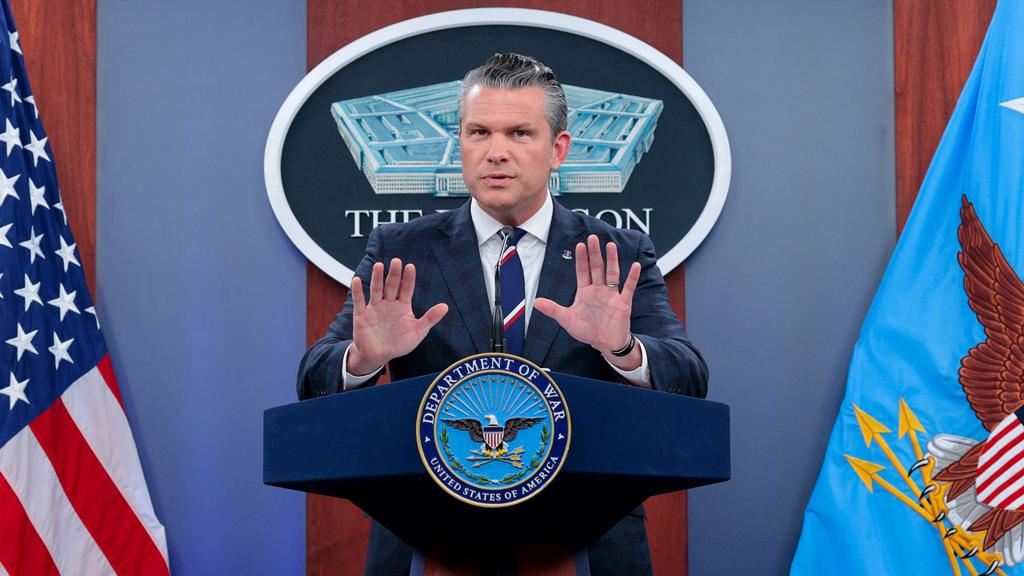
The House of Representatives voted 211-204 on Tuesday night to refer Rep. Thomas Massie’s articles of impeachment against Defense Secretary Pete Hegseth to the Judiciary Committee, effectively halting the impeachment effort for the time being. The decision, which came after a contentious debate, highlights both divisions within the Republican conference and the leadership’s willingness to sideline initiatives that could threaten party unity or distract from legislative priorities as the chamber prepares for a shift in power.
Explainer Modern Military Challenges: Energy Innovation and Middle East Conflicts Explored
The vote largely followed party lines, with only one Republican joining Democrats in opposing the referral. Eleven Democrats and seven Republicans missed the vote. The move to refer the articles to committee is widely seen as a procedural tactic to avoid a direct vote on impeachment, a strategy that has been used in previous Congresses to manage politically sensitive resolutions.
The House Vote and Party Dynamics
Republican leadership worked to ensure the referral passed, seeking to avoid a floor debate on the merits of Massie’s impeachment articles. Only one Republican broke ranks to oppose the referral, underscoring the leadership’s influence and the desire to keep the party unified as it transitions into the minority for the 120th Congress. Massie had anticipated this outcome, stating earlier that leadership might try to "kill" the resolution by referring it to committee rather than allowing a direct vote on the articles themselves.
"If the motion to kill my resolution by referring it to committee fails, and we proceed to the Articles themselves, I’ll request a vote on each of the Articles separately."
— Thomas Massie, Representative
The debate over the referral also revealed underlying tensions within the party. Some Republicans, particularly those not returning to Congress, were more willing to support Massie’s effort or express dissent from leadership. The vote comes at a time when the GOP is grappling with the aftermath of what Massie described as a significant "blue wave" in the recent elections, which will see Republicans entering the minority in the next Congress.
President Donald Trump weighed in on the outcome, celebrating the referral on Truth Social. He wrote, “The Democrats’ attempt to impeach Secretary of War Pete Hegseth has miserably FAILED!” Trump credited Hegseth with "Victories in Venezuela and Iran" and "the Best Recruitment Numbers in the History of the Military," asserting that these achievements led to Hegseth’s "exoneration." He also criticized Democrats for what he characterized as the weaponization and abuse of the impeachment process, although the impeachment effort was initiated by a Republican lawmaker.
Massie’s Position and Next Steps
Rep. Massie, who lost his May primary and will not return to Congress in January, has been outspoken about his motivations for pursuing impeachment. He argued that some Republicans supported his effort either because they were not returning to Congress or wanted to distance themselves from the administration’s record. In comments to the Daily Signal, Massie said the vote was an opportunity for members to show constituents they had "got the message" from the recent elections.
Massie acknowledged that while some colleagues agreed with parts of his impeachment articles, they did not support the entire package. He indicated that if the referral had failed, he would have pushed for separate votes on each article, allowing members to express their positions more precisely. With roughly 20 legislative days left in his term, Massie said his next priority would be advancing his Epstein Files Transparency Act II, which he claims needs only two more signatures to force a vote. The act, according to Massie, is aimed at increasing transparency regarding documents related to the Epstein case.
Broader Context and Reactions
The referral of Massie’s impeachment articles to committee comes as House Republicans face internal disagreements over strategy and messaging, especially in the wake of recent electoral losses. The party is navigating a period of transition, with leadership focused on maintaining discipline and avoiding actions that could further divide the conference or complicate their legislative agenda.
Massie has been critical of the conference’s legislative output, suggesting that his impeachment effort and the passage of a continuing resolution were among the few substantive actions taken in recent months. He has argued that the party needs to do more to address the concerns of its base and respond to the outcome of the elections. Republican leaders, however, have not publicly addressed Massie’s criticisms or the specifics of his impeachment push, instead opting to manage the issue through procedural means.
The Judiciary Committee is not expected to take up Massie’s articles of impeachment before the end of the current Congress, effectively ending the effort unless reintroduced in the future. As Republicans prepare to enter the minority, the episode serves as a reminder of the challenges facing party unity and the complexities of managing internal dissent during periods of political transition.