President Trump has withdrawn the nomination of District Judge Lee Rudofsky to the 8th Circuit Court of Appeals after Arkansas Republican Senators John Boozman and Tom Cotton withheld their support, according to an official White House announcement and multiple media reports. The decision highlights ongoing divisions within the Republican Party over judicial appointments, particularly as the administration seeks to fill federal court vacancies before Democrats assume control of Congress in January.
The White House confirmed Rudofsky’s withdrawal in an official release and simultaneously announced Arkansas Supreme Court Justice James Hiland as the new nominee for the appellate seat. Rudofsky, who previously served as Arkansas’ solicitor general and is currently a district judge, acknowledged in a public statement that without the endorsement of his home-state senators, his confirmation was not a realistic prospect.
"But under our Constitution — which I believe is the most ingenious document in the history of the world — the President’s nomination must be confirmed by the Senate. And the reality is that, without the support of my home-state Senators, confirmation is simply not a practical possibility in today’s Senate,"
— Lee Rudofsky, District Judge
Arkansas Senators Decline Support
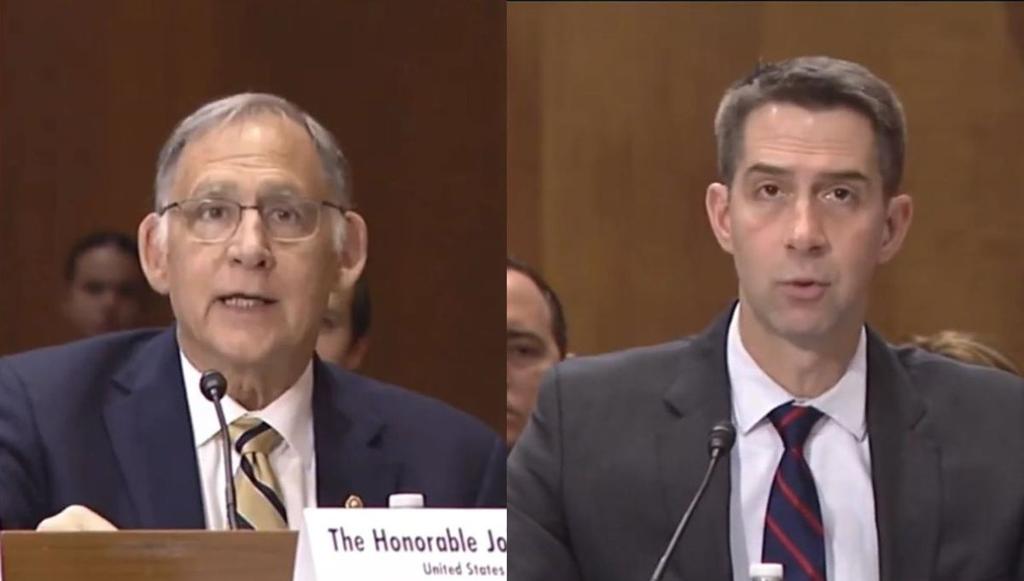
Reports from The Federalist and the Washington Examiner indicate that Senators Boozman and Cotton worked behind the scenes to block Rudofsky’s nomination, instead favoring Justice Hiland for the appellate position. In a notable break from Senate tradition, neither senator introduced Rudofsky at his September Senate Judiciary Committee hearing, a customary gesture of support for nominees from their own state. When asked by the Washington Examiner about his involvement in the process, Boozman did not deny playing a role, responding, “Would that be wrong?” and declined to elaborate on private conversations with other senators.
The senators’ decision not to back Rudofsky effectively ended his prospects for confirmation. In the current Senate, the support of home-state senators is often considered essential for a judicial nominee to advance, particularly when the Senate is closely divided and party unity is critical.
New Nominee Faces Scrutiny
Justice James Hiland, the new nominee for the 8th Circuit seat, has also faced scrutiny. Hiland has been criticized for publicly discussing private communications with the White House Counsel’s office and for expressing frustration at being initially passed over for the appellate seat. Law professor Josh Blackman has cited Hiland’s remarks to students about rejecting a district court judgeship and his willingness to challenge the administration’s decisions as points of concern regarding his conduct.
Despite these criticisms, the White House has moved forward with Hiland’s nomination. The administration’s decision to replace Rudofsky with Hiland appears to reflect the preferences of the Arkansas senators, whose support is seen as crucial for any nominee’s success.
Broader Setbacks for Judicial Nominations
Rudofsky’s withdrawal is not an isolated incident. In another recent setback for the Trump administration’s judicial picks, outgoing Oklahoma Senator Alan Armstrong reversed his support for Zachary West’s district court nomination. Senator Thom Tillis commented on the situation, telling Bloomberg Law, “They just need to sort it out or get somebody else.” Armstrong is scheduled to be replaced by Representative Kevin Hern at the end of the month, adding further uncertainty to the fate of pending nominations.
The push to confirm remaining judicial nominees comes as Democrats have pledged to block further appointments after taking control of Congress in January. According to Ballotpedia, more than two dozen Article III federal judicial vacancies remain, underscoring the urgency for the administration and Senate Republicans to act before the new Congress is seated.
Ongoing Uncertainty and Criticism
The intervention by Arkansas’s senators and the controversy surrounding Hiland’s conduct have drawn criticism from some observers. However, neither Boozman nor Cotton has publicly addressed the concerns in detail. The White House, for its part, has not commented beyond its official withdrawal notice for Rudofsky and the announcement of Hiland’s nomination.
The Senate is expected to continue considering President Trump’s judicial nominations through the end of the year. The outcome of several key appointments remains uncertain, as the administration and Senate Republicans navigate internal divisions and the looming shift in congressional control.
For now, the withdrawal of Rudofsky’s nomination serves as a reminder of the complex dynamics at play in the judicial confirmation process, where the support of home-state senators and party unity can prove decisive.