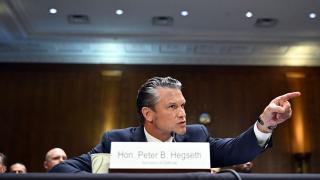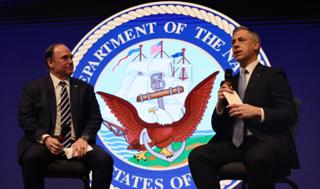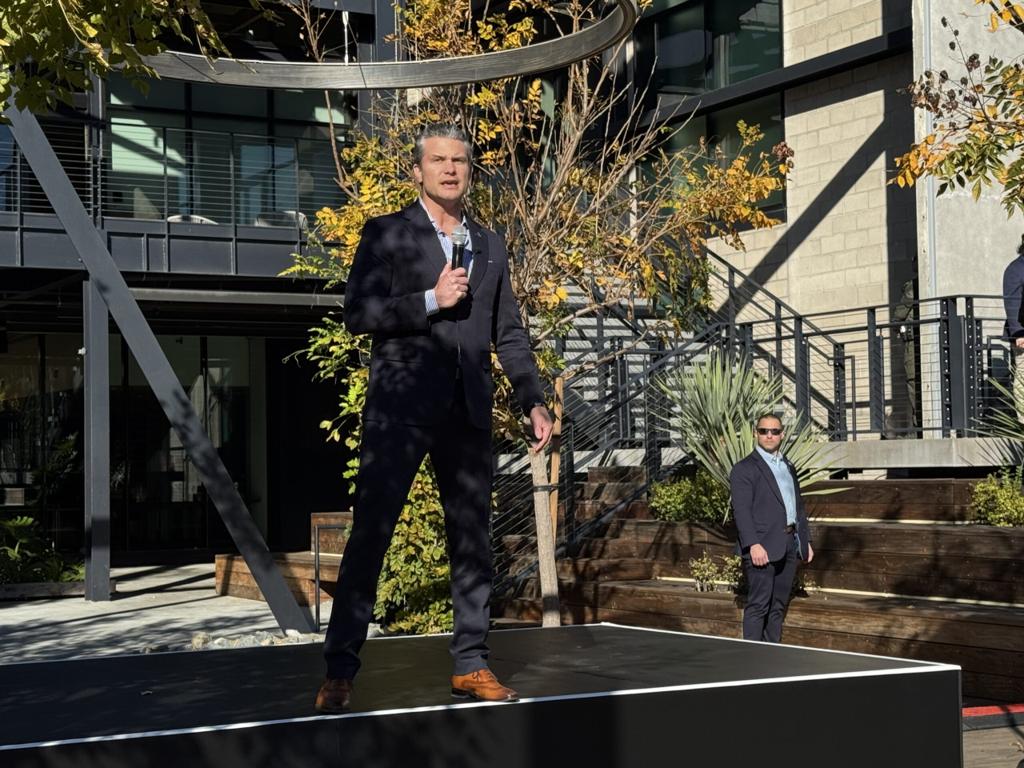
SIMI VALLEY, CALIF. — War Secretary Pete Hegseth announced a significant shift in U.S. military strategy during his keynote address at the Reagan National Defense Forum on Saturday, emphasizing a focus on deterrence and domestic production over foreign intervention. Hegseth stated, "The War Department will not be distracted by democracy building, interventionism, undefined wars, regime change, climate change, woke moralizing, and feckless nation-building."
This announcement comes amid growing concerns about the effectiveness and costs associated with the current military-industrial complex, which Hegseth criticized for prioritizing profit over national security. He argued that the U.S. must restore its military strength while ensuring that allies contribute more to their own defense.
Hegseth's remarks reflect a broader critique of past foreign policy approaches that he claims have weakened America's military and economic standing. He accused a generation of policymakers of abandoning the principles of former President Ronald Reagan in favor of what he termed "unchecked neo-conservatism and economic globalism."
Focus on Deterrence and Domestic Production
The War Secretary outlined a vision for a military strategy that prioritizes deterrence and aims to build an "American-made arsenal of freedom." He noted that current national defense spending, approximately 3 percent of GDP, could rise to 5 percent, or around $1.8 trillion, to support this initiative. Hegseth emphasized the need for American taxpayers to trust the military with their resources, stating, "We will honor their trust and their sacrifice."
Hegseth's speech also highlighted the need for a more competitive defense contracting environment, suggesting that major defense contractors would no longer have guaranteed access to military contracts. He stated, "The bottom line is a historic, generational, and transformational change that we will implement... to a future powered by dynamic vendor space."
Critique of the Military-Industrial Complex
The War Secretary's comments included pointed criticism of the military-industrial complex, which he accused of fostering a culture of dependency among U.S. allies while profiting from prolonged conflicts. He referenced the previous administration's ties to defense contractors, noting that former Defense Secretary Lloyd Austin had connections to Raytheon, a major defense contractor. Hegseth remarked, "This generation of self-proclaimed neo-Reaganites abandoned Reagan’s actual wise policies."
While Hegseth's remarks were met with a mixed response from the audience, some attendees expressed skepticism about the potential for meaningful change in defense contracting practices. Critics of the military-industrial complex argue that the system is entrenched and resistant to reform.
Balancing Perspectives
Rep. John McGuire, R-Va., defended the defense industry, stating, "They’re a business. We’re a capitalist society. It’s okay to make your case, but the best ideas should win." He emphasized the importance of a strong military as a deterrent against conflict, arguing that a weak military invites aggression.
Hegseth's address also included a call for increased burden-sharing among U.S. allies, urging them to take greater responsibility for their own defense. He stated, "We will no longer tolerate freeriding," indicating a shift towards a more assertive U.S. foreign policy.
The National Defense Strategy, which Hegseth previewed, is expected to outline these priorities in detail and may include provisions aimed at enhancing the defense capabilities of U.S. allies. Hegseth concluded by asserting that the new strategy would ensure that the U.S. remains strong without being unnecessarily confrontational.
As the Trump administration prepares to implement these changes, the implications for U.S. military engagement and defense spending remain to be seen. The upcoming National Defense Authorization Act (NDAA) is expected to include measures that align with Hegseth's vision for a reformed defense strategy.