The U.S. Navy has reduced its reinstatement time for service members separated for declining a Covid-19 vaccine from six months to two, Secretary John Phelan announced at a public event on Wednesday. Phelan stated, "I think we are pretty far ahead of most of the other services" in fulfilling the Trump administration's promise to reinstate service members with back pay and erase career penalties for conscientious refusals to accept Covid-19 shots. A War Department official confirmed that the Navy is ahead of other military branches in this regard.
The Federalist is seeking more details about the military branches' compliance with President Trump's executive order from ten months ago, which promised reinstatement with full back pay and benefits. Phelan mentioned that he has tasked his assistant secretary of manpower and reserve affairs, C. Scott Duncan, with the reintegration of service members who were punished under the Biden administration for their conscientious objections to the vaccine.
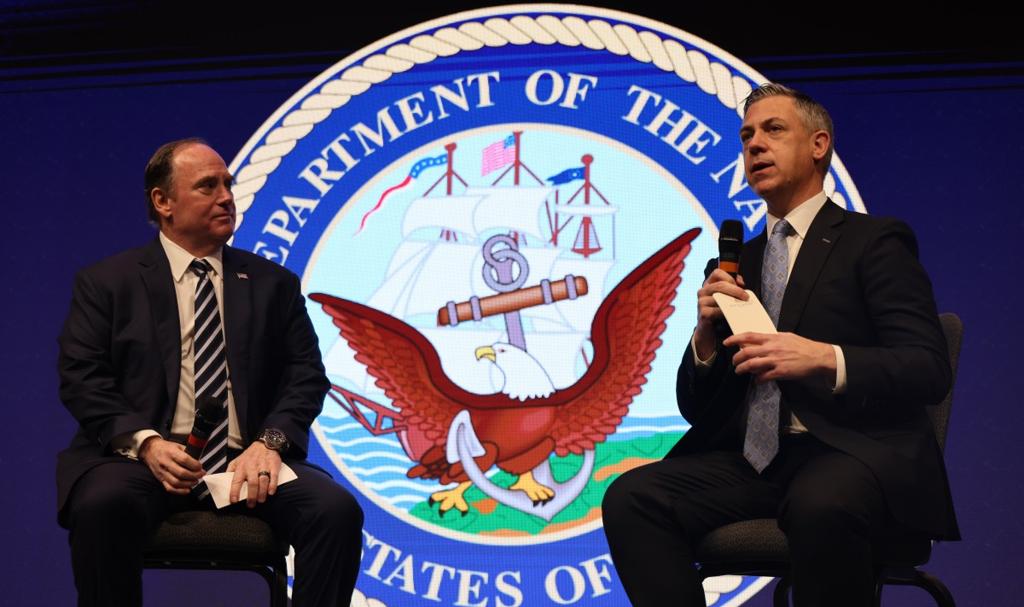
During the Northeast Indiana Defense Summit on November 12, Phelan emphasized the urgent need to revive U.S. manufacturing capabilities, citing a dangerous strategic environment. He highlighted advancements in AI, drone, and autonomous warfare as critical factors necessitating improvements in military technology and strategy. "Our status as the world’s dominant sea power is increasingly being contested, and it is no longer guaranteed," he warned.
Phelan pointed out that the U.S. Navy is lagging behind China in both ship quality and quantity, despite spending significantly more than budgeted. He noted that China controls over half of the world's shipbuilding market, putting the U.S. at a disadvantage. He stated, "We are stuck in 1980s manufacturing in our shipyards and even missile development," which could project weakness to foreign adversaries and increase the likelihood of conflict.
The secretary also addressed the decline in American manufacturing jobs, which he attributed to offshoring. He noted that during the Cold War, about one-third of Americans worked in manufacturing, while today that number is approximately 12 percent. With 70 percent of those workers nearing retirement, he stressed the need for a skilled workforce to support national security.
Phelan called for a cultural shift to recognize the importance of skilled trades, stating, "For the next decade, I believe teaching people how to use their hands will be the most relevant skill needed in the workplace." He estimated that replacing the skilled workers necessary for ship repair and construction would require training a quarter of a million new American workers.
To attract more skilled labor, Phelan suggested that wages may need to be adjusted to compete with other industries. He remarked, "When you have workers who make the same money at Buc-ees or at Amazon versus being in a welding outfit all day in very tight corners, it’s hard to get that person to want to do that job." He also criticized union contracts that limit workers' tasks, leading to inefficiencies in shipyards.
In addition to workforce issues, Phelan emphasized the need for shipbuilding companies to invest their own capital in infrastructure improvements. He recounted a conversation with a shipyard CEO who complained about outdated facilities, questioning why the government should bear the burden of upgrading them. Phelan stated, "We need to get competition also into the arena," to improve the shipbuilding industry.
Both Phelan and Indiana U.S. Senator Jim Banks highlighted recent legislative efforts, including President Trump’s Big, Beautiful Bill and the National Defense Authorization Act, which allocate substantial funding for military equipment manufacturing in the United States, particularly in the Midwest.
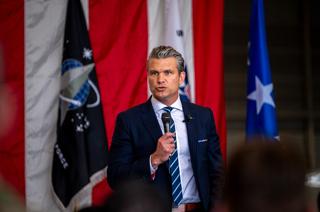
Secretary of War Pete Hegseth, who spoke earlier at the summit, emphasized the importance of military readiness, stating, "Those who long for peace must prepare for war." He argued that a capable military is essential for deterrence and maintaining peace, asserting that adversaries must believe in the U.S. military's willingness and capability to win any conflict. Hegseth's remarks underscored the interconnectedness of national security and economic stability, echoing Phelan's call for a revitalized manufacturing sector to support military needs.