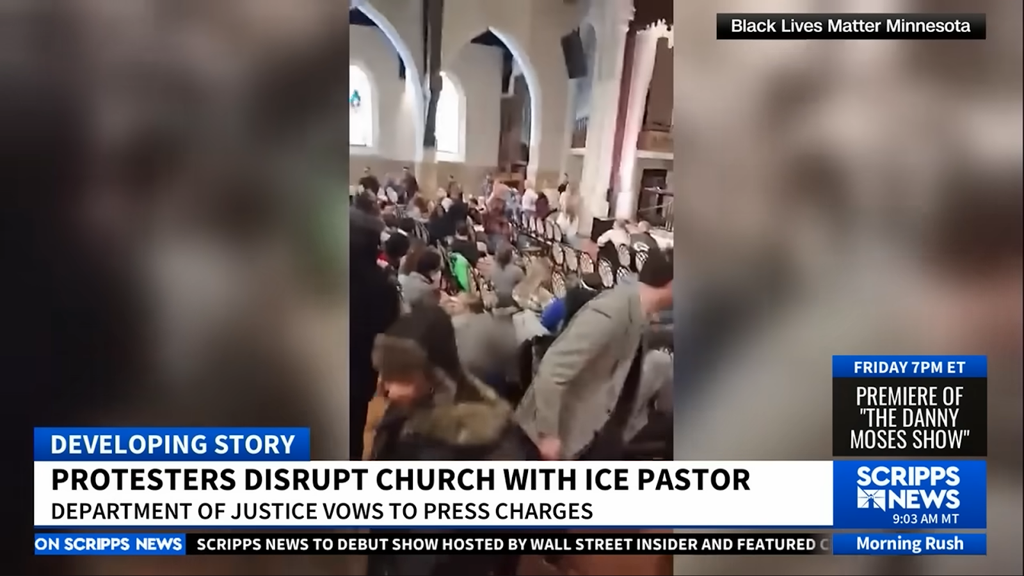
Two anti-ICE activists were arrested Thursday for their alleged involvement in a disruption at Cities Church in St. Paul, Minnesota, during a recent protest against immigration enforcement. Attorney General Pam Bondi announced the arrests of Nekima Levy Armstrong and Chauntyll Louisa Allen, stating that Armstrong played a key role in organizing the incident that occurred over the weekend. This event has drawn significant attention due to its implications for the ongoing tensions between federal immigration enforcement efforts and local opposition, particularly in states like Minnesota, where some leaders have openly criticized federal agents. Bondi emphasized the seriousness of the situation, stating, "Listen loud and clear: WE DO NOT TOLERATE ATTACKS ON PLACES OF WORSHIP," and hinted that more arrests could follow as investigations continue.
Explainer Understanding Immigration Enforcement: Policies and Controversies
Background on the Incident
Armstrong and Allen are accused of violating the Freedom of Access to Clinic Entrances (FACE) Act, which is designed to protect access to places of worship and reproductive health clinics. FBI Director Kash Patel confirmed the charges against the activists, noting that the incident reflects broader challenges faced by federal agents in conducting immigration operations amid local hostility. The disruption at Cities Church was part of a series of anti-ICE demonstrations across Minnesota, where state leaders, including Governor Tim Walz and Minneapolis Mayor Jacob Frey, have criticized federal immigration policies. Critics argue that such rhetoric can incite violence against immigration officials, although local leaders have not publicly responded to these specific allegations regarding the potential for violence.
Activist Background
Nekima Levy Armstrong has a history of activism, previously leading a Minneapolis-based nonprofit focused on poverty issues. Reports indicate that she earned over $1 million during her tenure as executive director of the Wayfinder Foundation, which received funding from organizations like the Black Lives Matter Global Network Foundation. Critics have pointed to her past statements, including praise for a convicted cop killer, as evidence of her controversial views and radical stance on law enforcement issues. Armstrong's recent activities have drawn attention, particularly her involvement in the church incident. She is currently the founder and CEO of a cannabis company called Dope Roots. The financial details of her nonprofit leadership have raised questions about the allocation of funds, as the organization reportedly disbursed approximately $700,052 in grants during her tenure, leading to scrutiny over how effectively those funds were utilized.
Broader Implications
The incident at Cities Church has sparked discussions about the intersection of immigration enforcement and religious freedom. Bondi's comments reflect a commitment to protecting places of worship from disruptions, while also addressing the challenges faced by federal agents in enforcing immigration laws. In a related development, former CNN host Don Lemon was reportedly present during the church disruption and confronted the pastor about the protest. As of now, Lemon has not been arrested or charged, and a magistrate judge declined to approve a complaint for his arrest, a decision that has drawn criticism from Bondi. However, sources indicate that the Justice Department may explore other avenues to address Lemon's conduct, which has raised questions about accountability in such protests.
The situation in Minnesota underscores the ongoing national debate over immigration policy and the role of local versus federal authorities. While some local leaders advocate for more lenient immigration practices, federal officials maintain that enforcement is necessary to uphold the law. As the arrests of Armstrong and Allen unfold, the broader implications for immigration enforcement and community relations remain to be seen, with both sides of the debate continuing to voice their perspectives. The incident not only highlights the tensions surrounding immigration enforcement but also raises critical questions about the rights of individuals to protest and the responsibilities of law enforcement to protect public spaces, including places of worship.