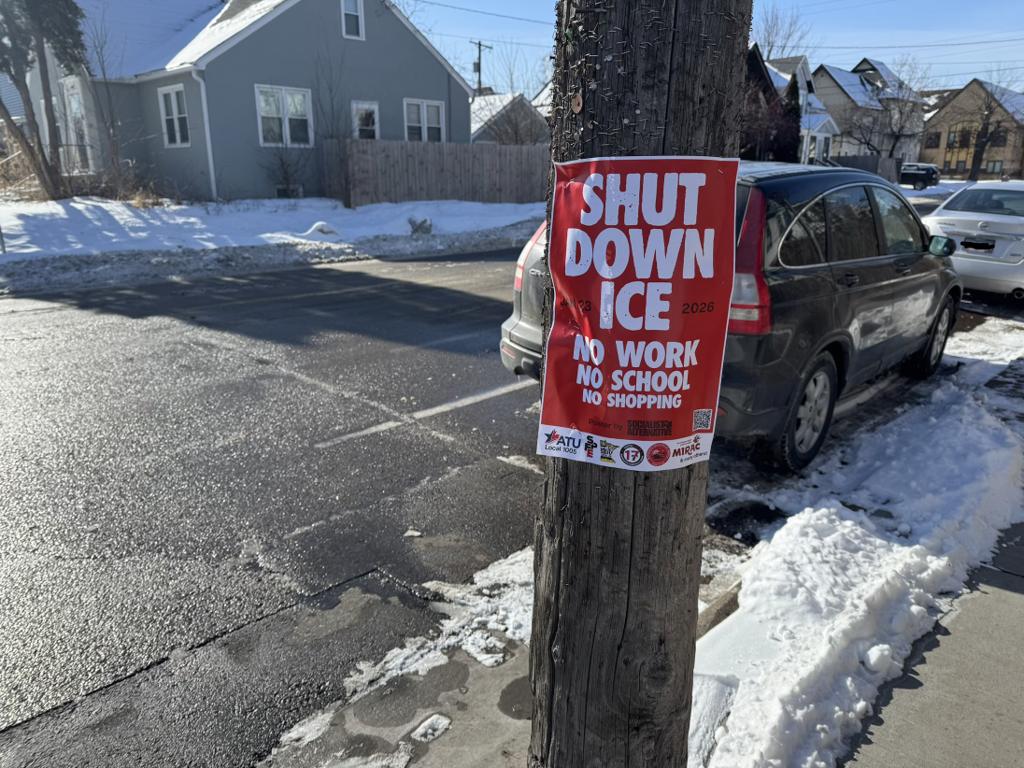
A Minnesota teachers union is reportedly funding a group that actively opposes Immigration and Customs Enforcement (ICE), raising significant questions about the union's focus on educational priorities. Documents obtained by Defending Education suggest that Minneapolis Families for Public Schools (MFPS) operates as a "front group" for TakeAction Minnesota (TAM), which is involved in organizing anti-ICE activities within local neighborhoods and schools. This situation highlights a growing tension between educational advocacy and political activism, as critics argue that teachers' unions should prioritize improving student outcomes rather than engaging in political campaigns. Rhyen Staley, research director at Defending Education, criticized the unions, stating, "The teachers unions continue to prove they are rotten apples that only care about far-left street activism, to the detriment of educating children."
Explainer Understanding Immigration Enforcement: Policies and Controversies
Documents indicate that MFPS is linked to TAM, which has collaborated with various leftist organizations to promote initiatives against ICE. These initiatives include organizing events such as "Rapid Response Networks & ICE Watch," aimed at mobilizing community members to respond to ICE activities. The coalition's website outlines goals such as abolishing ICE and closing detention camps, reflecting a broader agenda that extends beyond educational concerns.
Financial Ties to Activism
Education Minnesota, the state teachers union, has provided financial support to TAM, contributing a total of $132,500 since 2015. A significant portion of this funding, $50,000, was allocated in August 2025. Critics argue that this financial backing enables TAM to pursue its activist agenda, which some view as a distraction from the union's primary mission of supporting educators and students. Staley described TAM as "basically a front group that can get away with doing some things the unions can’t." He emphasized that the focus should be on improving learning outcomes rather than engaging in political strategies. However, supporters of the union's actions argue that addressing social justice issues is also part of their educational mission, though no officials from Education Minnesota responded to requests for comment regarding these claims.
Activism in Schools
The documents reveal that MFPS has been involved in organizing events that encourage student walk-outs and other forms of protest against ICE. For instance, a recent training event hosted by TAM aimed to instruct participants on how to influence local political meetings to support candidates aligned with their views. The training emphasized the importance of electing politicians who would advocate for policies such as universal health care and the abolition of ICE. The coalition behind these efforts, known as "Melt the ICE," includes various groups that have organized public protests and community actions against ICE. Their website states, "We hope to force an end to ICE’s unprecedented siege of Minnesota — and further the movement to abolish ICE altogether while we do it."
Community Response and Concerns
Critics of these initiatives express concern that such activism could undermine the educational environment in schools. They argue that the focus on political activism detracts from the core mission of education. The documents suggest that MFPS has even created a form for reporting ICE activities at schools, which some view as an attempt to mobilize students and parents against law enforcement. While some community members support the anti-ICE movement, others worry about the implications of involving schools in such politically charged activities. The tactics employed by MFPS, including the establishment of local text alert groups for rapid response, have drawn scrutiny for potentially fostering a divisive atmosphere in educational settings.
In summary, the financial and organizational ties between Education Minnesota and anti-ICE activism raise important questions about the role of teachers' unions in political advocacy. As the debate continues, the balance between educational priorities and social justice activism remains a contentious issue in Minnesota and beyond. The ongoing discussions surrounding this topic reflect broader societal debates about the intersection of education, politics, and community engagement, emphasizing the need for clarity in the mission of educational institutions.