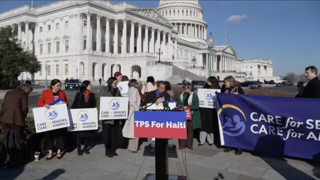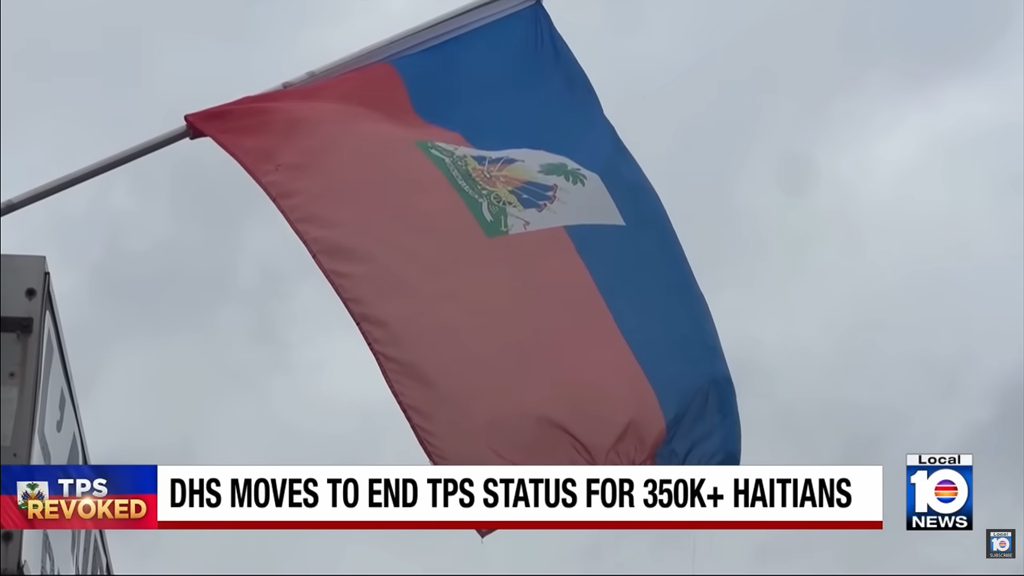
The U.S. Supreme Court is deliberating on whether the Temporary Protected Status (TPS) for hundreds of thousands of foreign nationals can be revoked, a decision that could affect the residency of approximately 356,000 individuals from Syria and Haiti. The court heard oral arguments on Wednesday in two consolidated cases, Mullin v. Doe and Trump v. Miot, which challenge the Trump administration's decision to terminate TPS for these groups.
The core issue revolves around the interpretation of the Immigration and Nationality Act, which governs TPS and whether it allows for judicial review of the Department of Homeland Security's (DHS) decisions regarding the designation or termination of TPS. Critics argue that the administration's actions were politically motivated and did not follow proper procedures, while supporters contend that the law grants the executive branch broad discretion in such matters.
TPS is designed to provide temporary residency to individuals from countries experiencing extraordinary conditions, such as natural disasters or armed conflict. The Trump administration's attempts to end TPS for Syrian and Haitian nationals were blocked by lower courts, which cited concerns over the legality of the administration's actions. This follows a previous Supreme Court decision that paused similar injunctions in a case involving Venezuelan nationals.
Arguments from the Administration
U.S. Solicitor General John Sauer, representing the Trump administration, argued that the statute explicitly prohibits judicial review of the DHS secretary's decisions regarding TPS. "That provision means what it says ... and bars judicial review of both the secretary’s ultimate decision whether to designate, extend, or terminate," Sauer stated. He maintained that even if the challengers' claims were not barred, they are meritless.
However, the court's more liberal justices challenged Sauer's assertions. Justice Ketanji Brown Jackson questioned the extent to which executive actions on TPS could be reviewed by federal courts. Justice Sonia Sotomayor echoed this sentiment, suggesting that the administration's decision may have been influenced by discriminatory motives, referencing past comments made by Trump about certain countries.
Opposition Perspectives
Attorneys representing the Syrian and Haitian nationals argued that the legal framework governing TPS does not prevent courts from reviewing the administration's actions. Ahilan Arulanantham, representing the Syrian case, contended that the government failed to adhere to required procedures, such as consulting relevant officials about conditions in the countries in question. Geoffrey Pipoly, representing the Haitian case, claimed that the decision to end TPS was racially motivated.
Justice Clarence Thomas probed the challengers on their interpretation of the statute's provisions, while Chief Justice John Roberts questioned whether the administration's arguments represented a significant expansion of previous court holdings. Justice Amy Coney Barrett raised concerns about the practical implications of allowing judicial review, asking if a mere procedural check would suffice when substantive conditions remain dire.
Judicial Review and Its Implications
The justices expressed varying degrees of skepticism regarding the arguments presented by both sides. Justice Samuel Alito challenged the notion of racial motivation behind the TPS terminations, questioning the categorization of affected groups. Meanwhile, Justice Neil Gorsuch also appeared doubtful of the challengers' claims regarding judicial review.
A decision in Mullin v. Doe and Trump v. Miot is expected later in the Supreme Court's 2025-2026 term, which concludes in late June or early July. The outcome will have significant implications for the future of TPS and the legal authority of the executive branch in immigration matters.
Supporters of the Trump administration's stance argue that the executive branch must retain the ability to make swift decisions in response to changing conditions in foreign countries. Critics, however, maintain that such discretion should be balanced with accountability and adherence to legal processes.