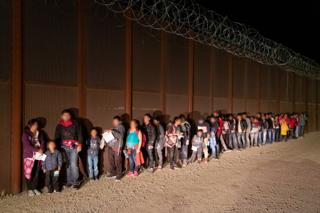
Nearly 60,000 migrants, mostly from Morocco, entered the Spanish enclave of Ceuta within about 24 hours this week, overwhelming local authorities and prompting Spain to deploy its military to restore order, according to reporting from The Federalist and PBS NewsHour.
The rapid influx has reignited debate over how quickly a country's border security can be compromised, and how slowly it can be restored, as Spain faces legal and logistical hurdles to deporting those who arrived by sea. The incident comes as both Spain and the United States grapple with the challenges of mass migration, border enforcement, and political divisions over how to respond.
Ceuta Border Overrun
Spanish officials said that tens of thousands of migrants crossed into Ceuta, a Spanish territory on the northern coast of Africa, in a single day. Videos from the scene showed large groups, primarily young men but also families, arriving by boat and on foot, breaking through barriers and overwhelming local resources. The territory's population is about 85,000, making the scale of the crossing unprecedented.
Ceuta, one of two Spanish enclaves bordering Morocco, has long been a focal point for migrants seeking entry into Europe. The sudden arrival of so many people in such a short period placed immense strain on the enclave’s infrastructure, including shelters, medical facilities, and law enforcement. Local officials described the situation as a humanitarian emergency, with many migrants lacking food, water, and shelter upon arrival.
Spain responded by deploying its Armed Forces to support the Civil Guard in Ceuta. Spanish Prime Minister Pedro Sánchez was expected to visit the enclave following the incident, according to PBS NewsHour. The deployment of military personnel underscored the seriousness of the crisis and the government’s concern about maintaining order and security in the territory.
At least 18 people died during the attempt to reach Ceuta, highlighting the dangers of the journey. The deaths occurred as migrants attempted to cross the border by sea or scale fences separating Ceuta from Morocco. While tens of thousands reportedly left voluntarily after the initial crossing, many remain, and Spain faces significant challenges in processing or removing them. The authorities have struggled to identify and register new arrivals, further complicating efforts to manage the situation.
Legal and Political Barriers to Deportation
A recent court ruling in Spain prohibits the immediate deportation of migrants who arrive by sea, complicating efforts to quickly return those who entered Ceuta. Migrants who claim asylum must go through formal procedures, and minors receive additional protections under Spanish law. This legal framework means that even as Spain seeks to restore order, it must adhere to international and domestic obligations regarding the treatment of migrants and asylum seekers.
The situation has drawn comparisons to U.S. border policy debates. Critics argue that left-leaning governments in both Spain and the U.S. have made enforcement more difficult, while supporters of more open policies say humanitarian obligations must be respected. Spanish officials have not publicly addressed the criticism of their response to the Ceuta crossing, but the legal and logistical challenges remain significant.
Spanish law requires that unaccompanied minors be placed in protective custody, and the sudden influx has overwhelmed the capacity of child shelters in Ceuta. Processing asylum claims can take months or even years, leaving many migrants in legal limbo. The government faces pressure from both domestic and international groups to ensure that the rights of migrants are protected, even as it seeks to manage the security and logistical challenges posed by the mass crossing.
U.S. Border Policy and Political Debate
In the U.S., the Trump administration has emphasized strict border enforcement, with U.S. Customs and Border Protection reporting 13 consecutive months of zero releases at the border. Since Trump took office, nearly 600,000 people in the country illegally have been deported, and net migration reportedly fell below zero in 2025, according to a Brookings Institute analysis cited by The Federalist.
Despite these figures, an April Pew Research poll found that 28 percent of Republicans and Republican-leaning independents felt the Trump administration was doing "too little" to deport unauthorized immigrants. Some allies have expressed frustration that enforcement has focused on violent criminals rather than all people in the country illegally.
"We’re not saying open the borders tomorrow... open borders is part of a longer-term international plan."
— Megan Romer, DSA National Co-Chair
Progressive groups such as the Democratic Socialists of America (DSA) have called for abolishing ICE and ending deportations, with DSA National Co-Chair Megan Romer stating in a Fox News interview that "open borders is part of a longer-term international plan."
The debate in the U.S. mirrors the situation in Spain, with political divisions over how to balance enforcement with humanitarian obligations. Both countries face pressure from advocacy groups, opposition parties, and international organizations as they attempt to manage complex migration flows.
Broader Implications and What to Watch
The events in Ceuta have been cited by some U.S. commentators as a warning of how quickly border security can be lost if enforcement is relaxed. The debate continues over how to balance humanitarian concerns, legal obligations, and national sovereignty. Spanish authorities have not indicated how or when they plan to resolve the status of those who remain in Ceuta following the mass crossing.
The situation remains fluid, with ongoing efforts to provide humanitarian assistance and restore order in Ceuta. The crisis has underscored the challenges faced by countries on the front lines of migration, as well as the broader political and legal debates over border security and the rights of migrants. As Spain works to address the immediate needs of those who have arrived, the long-term questions of integration, deportation, and border management remain unresolved.