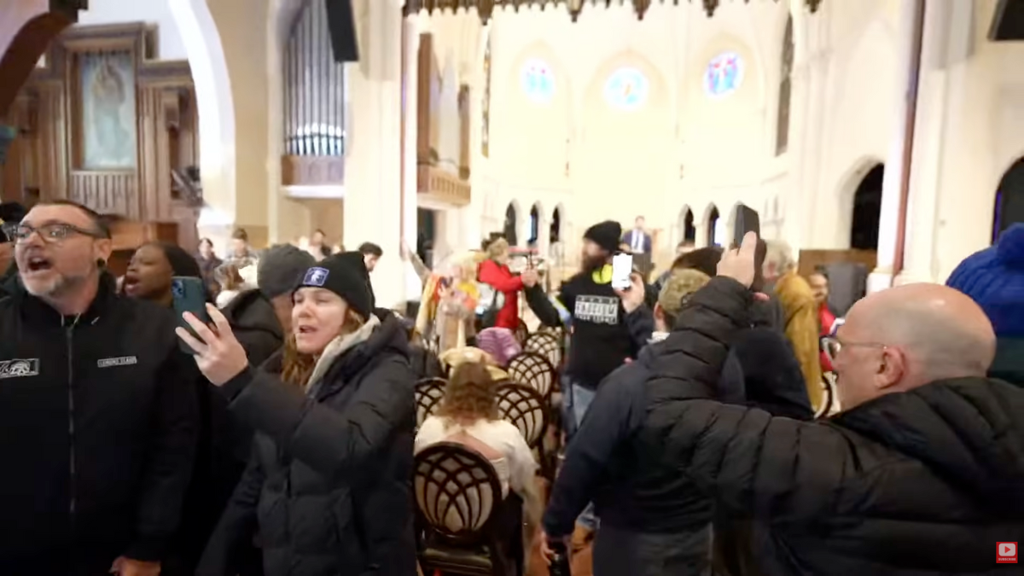
A recent disruption at Cities Church in St. Paul, Minnesota, during a Sunday service has sparked a debate among Christian leaders about the role of immigration advocacy in relation to the freedom to worship. Critics argue that some pastors prioritize support for unauthorized immigrants over the rights of their congregants to practice their faith without interference.
Explainer Christianity and Sports: Navigating Faith in Public Life
The incident highlights a growing tension between religious freedom and immigration policy, as many church leaders are seen as increasingly sympathetic to pro-immigration stances. This has led to concerns that the enforcement of immigration laws is being undermined in favor of compassion for those in the country illegally.
Prominent Christian leaders have often advocated for both legal and unauthorized immigrants, framing them as victims in need of support. However, critics contend that this perspective can overshadow the importance of upholding the law. They argue that some church leaders present unauthorized immigrants as law-abiding individuals while neglecting the complexities and challenges posed by illegal immigration.
Key Details
Kevin Ezell, president of the North American Mission Board, expressed his discontent over the disruption at Cities Church, stating, "For protestors to disrupt a Sunday morning worship service this way is absurd. If elected officials won't contain lawlessness, @NAMB_SBC will provide security." This statement underscores the frustration among some church leaders regarding the lack of accountability from local authorities.
Background and Reactions
The disruption at Cities Church is seen by some as part of a broader trend where places of worship are targeted by those advocating for pro-immigration policies. Critics argue that this undermines the sanctity of religious gatherings and poses a threat to the freedom of worship. They call for church leaders to advocate for their congregants' rights to worship freely and to support the enforcement of immigration laws.
Supporters of immigration advocacy within the church argue that compassion should guide the response to those seeking refuge or a better life. They contend that the moral obligation to help those in need should not be overshadowed by legal concerns. However, this perspective is met with skepticism by those who believe that unchecked immigration can lead to societal disruptions, including increased crime and strain on community resources.
The ongoing debate has led to a divide among church leaders, with some advocating for a more balanced approach that recognizes the importance of both compassion and law enforcement. Critics argue that many pastors are either unaware or willfully ignorant of the potential consequences of unfettered immigration on their communities. They assert that this lack of awareness can lead to a failure to protect the rights of congregants.
The Biden administration's approach to immigration enforcement has also come under scrutiny, with critics claiming that it has contributed to a perception that immigration laws are not being taken seriously. This has led to calls for a more robust response from federal officials to protect the First Amendment rights of worshippers.
As the debate continues, many church leaders are being urged to reconsider their positions on immigration and to prioritize the rights of their congregants. The disruption at Cities Church serves as a reminder of the challenges faced by religious communities in navigating the complexities of immigration policy and advocacy.
In light of these tensions, some church leaders are calling for a reevaluation of how immigration issues are addressed within their congregations. They emphasize the need for a thoughtful and informed approach that balances compassion with the rule of law. However, responses from those in favor of pro-immigration advocacy have been limited, leaving some critics feeling that their concerns are not being adequately addressed.
The incident at Cities Church is likely to resonate beyond Minnesota, as similar tensions are felt in religious communities across the country. As church leaders grapple with these issues, the question remains: how can they effectively advocate for both their congregants' rights and the needs of those seeking a better life?