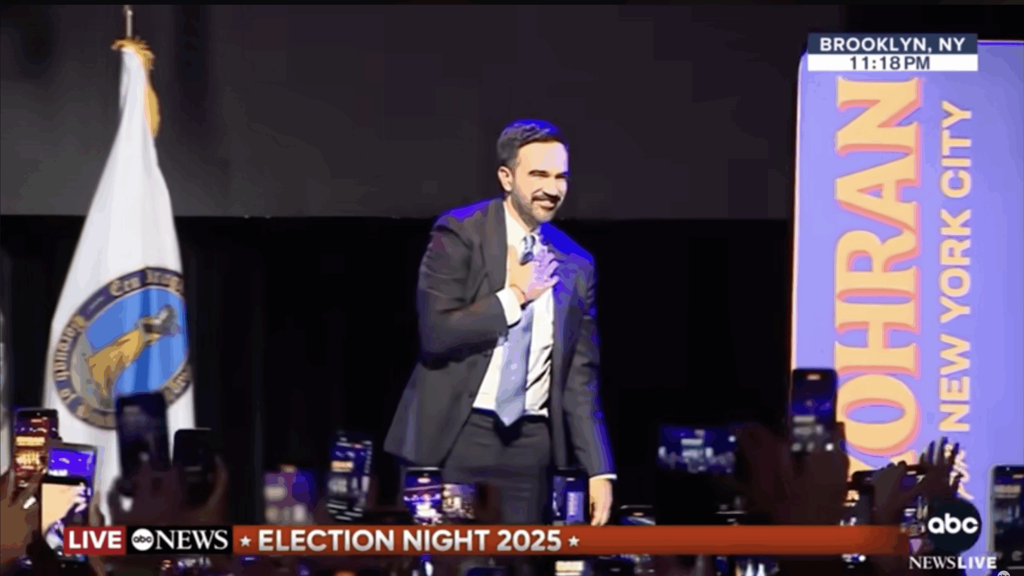
New York City has elected a communist mayor, with Uganda-born Zohran Mamdani projected to secure over 50 percent of the vote. This election outcome has prompted discussions among Republicans about the implications of mass immigration on the political landscape. Some analysts argue that Mamdani's victory is a direct consequence of uncontrolled immigration, both legal and illegal, which they claim undermines the traditional electorate.
A recent survey from Patriot Polling indicated that Mamdani garnered 62 percent support from foreign-born voters, compared to just 31 percent among American-born citizens. This stark contrast highlights the shifting demographics in the city. Former Governor Andrew Cuomo and Republican candidate Curtis Sliwa received 40 percent and 25 percent support, respectively, from native-born Americans.
Mamdani himself acknowledged the role of foreign-born voters in his victory speech, stating, "We will fight for you, because we are you." He emphasized the contributions of various immigrant communities in New York City, asserting that the city remains a place built and powered by immigrants.
Critics of Mamdani's election argue that his background reflects a broader issue of importing a new ruling class that may not align with American values. They contend that his Ugandan heritage and socialist policies are indicative of a shift away from the principles of self-governance and republicanism that have historically defined the United States.
The debate surrounding Mamdani's election raises questions about the long-term implications of mass migration on American society. Some commentators reference historical warnings, such as those from Alexander Hamilton, who cautioned that immigrants may bring with them political opinions that do not align with the values of the nation they enter.
Supporters of Mamdani argue that his election is a testament to the evolving nature of New York City as a melting pot of cultures and ideas. They believe that diverse perspectives can enrich the political discourse and lead to more representative governance.
As the political landscape continues to shift, the implications of Mamdani's election may resonate beyond New York City, prompting a reevaluation of immigration policies and their impact on American democracy. The outcome serves as a reminder of the complexities surrounding immigration and its influence on local and national politics.