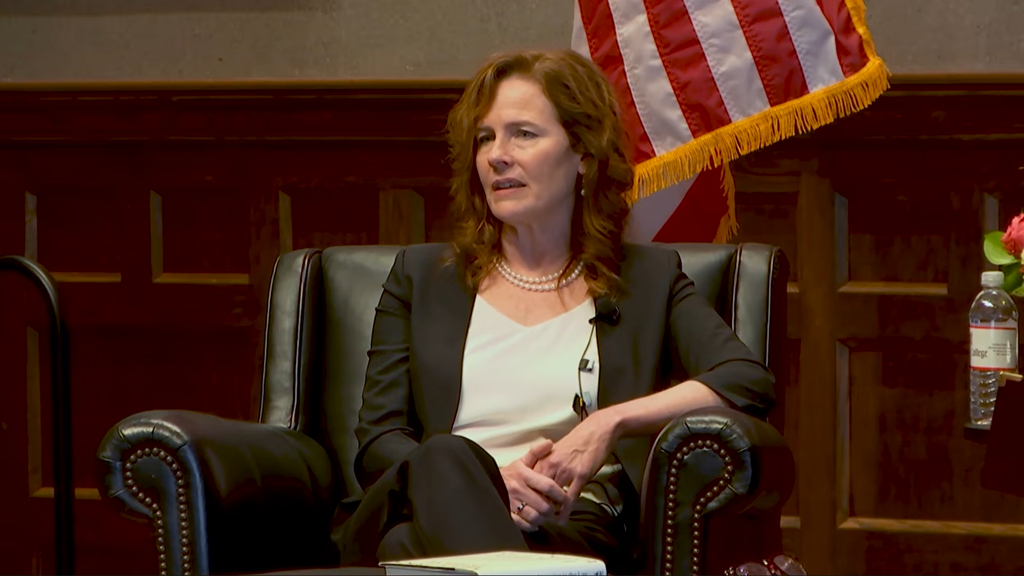
A recent article by Washington Post reporter Julian Mark has drawn criticism for its implications regarding Supreme Court Justice Amy Coney Barrett's family background in relation to an upcoming immigration case. The piece, titled "A Supreme Court justice’s personal ties to Haiti highlight stakes in asylum case," discusses the court's impending oral arguments in Trump v. Miot and Noem v. Doe, which address President Trump's decision to revoke Temporary Protected Status (TPS) for Haitian and Syrian migrants.
The core tension arises from the suggestion that Barrett's personal experiences as an adoptive mother of two Haitian children may influence her judicial decisions on the TPS issue. Critics argue that this framing undermines the integrity of the judicial process by implying that personal background could sway a justice's impartiality.
The Supreme Court is set to hear arguments concerning the status of approximately 353,000 Haitian migrants who were granted TPS following the 2010 earthquake and subsequent crises in Haiti. The Trump administration's actions to revoke this status have faced legal challenges, with lower courts previously blocking the administration's efforts. The justices' decision could have significant implications for those affected by the TPS program.
Criticism of Media Tactics
Critics of Mark's article assert that it employs a tactic often seen in media coverage, where personal attacks are used to influence public perception of political figures. The article's mention of Barrett's adopted children has been characterized as an attempt to pressure her into ruling against the Trump administration by leveraging her family background.
Mark's article states, "Now Barrett will join her fellow justices in deciding whether the Trump administration can remove temporary immigration protections for 353,000 Haitian migrants." He further notes that while it is risky to predict a justice’s views based on their life experiences, some legal scholars argue that such experiences are often undervalued in judicial assessments.
However, Barrett has publicly emphasized the importance of judicial impartiality. In her book, "Listening to the Law," she wrote, "My office doesn’t entitle me to align the legal system with my moral or policy views. Swearing to apply the law faithfully means deciding each case based on my best judgment about what the law is."
Defense of Judicial Independence
Supporters of Barrett argue that the media's focus on her family background detracts from the substantive legal issues at stake in the TPS cases. They contend that Barrett has consistently demonstrated a commitment to separating her personal beliefs from her judicial responsibilities.
The Washington Post article acknowledges that Barrett's children are U.S. citizens and that the circumstances of their adoption differ significantly from the TPS issue. Mark himself notes, "There are major differences in how Barrett’s children and the Haitian migrants covered by TPS entered the United States, and the laws governing international adoptions and TPS do not intersect."
Despite the criticisms, the article has not prompted a response from the Washington Post regarding the framing of Barrett's family in the context of the immigration case. Legal experts remain divided on the implications of personal experiences in judicial decision-making, with some asserting that such factors can play a role in a judge's perspective, while others maintain that impartiality must prevail.
Broader Implications for Media and Judiciary
The controversy surrounding Mark's article highlights ongoing tensions between media narratives and judicial independence. Critics argue that the media's portrayal of justices, particularly those with conservative leanings, often seeks to undermine their credibility and influence public opinion.
As the Supreme Court prepares to hear the TPS cases, the focus on Barrett's family background raises questions about the ethics of media coverage and its potential impact on judicial proceedings. The outcome of the cases could set a significant precedent for immigration policy and the rights of migrants in the United States.
In conclusion, the intersection of personal narratives and judicial responsibilities continues to provoke debate, with implications that extend beyond the immediate legal issues at hand. The discourse surrounding Justice Barrett's family and the TPS cases serves as a reminder of the complexities involved in balancing personal experiences with the demands of impartial justice.