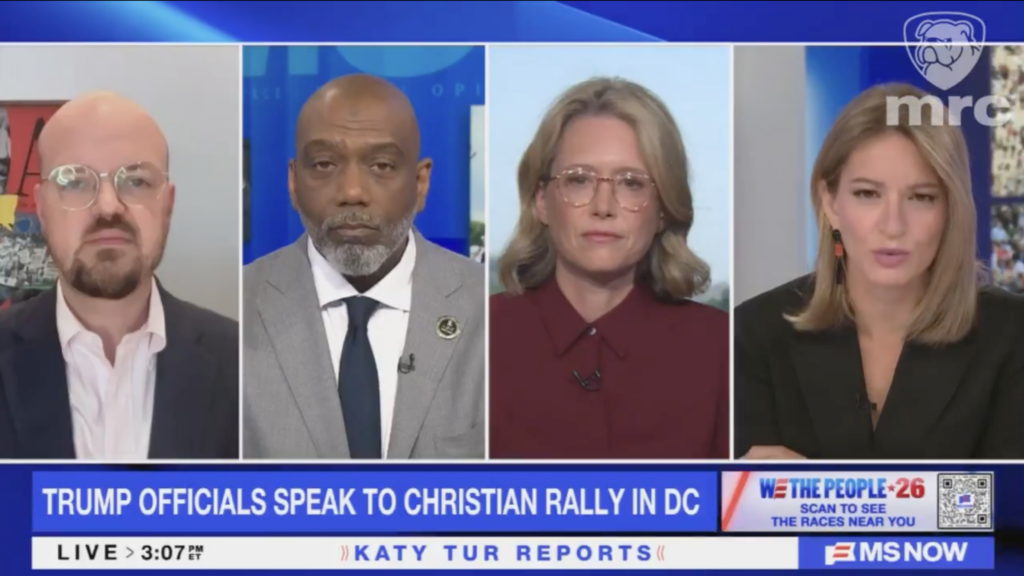
Katy Tur, a host on MSNBC, sparked controversy during a recent panel discussion by questioning House Speaker Mike Johnson's interpretation of rights as outlined in the Declaration of Independence. Tur asked whether Johnson was prioritizing God over the foundational document when he stated, "Our rights do not derive from government. They come from you, our Creator and heavenly Father."
The exchange highlights a broader debate over the source of rights in American governance, with critics arguing that a misunderstanding of the Declaration's principles could undermine the foundational beliefs of the nation. Supporters of Johnson's view assert that rights are inherent and not granted by the government, a perspective rooted in the philosophy of the Founding Fathers.
During the segment, Tur expressed incredulity at Johnson's statement, suggesting it implied a conflict between divine authority and the Declaration. She remarked, "Is this him putting God over the Declaration of Independence?" However, observers noted that Johnson's remarks were a loose paraphrase of a key passage from the Declaration, which asserts that individuals are endowed with certain unalienable rights.
Historical Context
The Declaration of Independence, adopted in 1776, articulates the belief that all men are created equal and possess rights that are not granted by government but are inherent. This principle is central to the American ethos and has been referenced by various political figures throughout history. Critics of Tur's comments, including some conservative commentators, argue that her interpretation reflects a misunderstanding of the document's intent and significance.
In response to Tur's remarks, McKay Coppins, a contributor to MSNBC, stated that he believed the idea that rights come from a higher power is "not wholly uncommon" but did not directly address the historical context of Johnson's statement. This lack of clarity in the discussion has led to further debate about the role of religion in American political discourse.
Diverging Views on Rights
The contention over the source of rights has been a longstanding issue in American politics. Proponents of the view that rights are God-given argue that this perspective is essential for protecting individual freedoms from government overreach. They contend that if rights are derived from government, then they can be redefined or revoked at will, undermining the very foundation of liberty.
Conversely, some critics, including Senator Tim Kaine, D-Va., have expressed concern over the implications of asserting that rights come from a divine source. Kaine previously stated, "The notion that rights don’t come from laws and don’t come from the government, but come from the Creator — that’s what the Iranian government believes." This comparison has drawn criticism from those who argue that it misrepresents the American understanding of rights.
Implications for Political Discourse
The debate surrounding Tur's comments and Johnson's interpretation of rights underscores a deeper divide in American political discourse. Supporters of the view that rights are inherent argue that a failure to recognize this principle can lead to a government that oversteps its bounds and infringes on individual liberties. Critics, however, contend that emphasizing divine authority in political discussions can alienate those who advocate for a secular approach to governance.
As the conversation continues, it remains to be seen how these differing interpretations will shape future discussions about the role of religion and the government in defining rights. While Tur's comments have drawn significant attention, responses from supporters of her view have been limited, suggesting a potential gap in the dialogue surrounding these critical issues.