A series of closely contested House races in states including New York, Pennsylvania, and Virginia will decide whether Republicans maintain their 220-215 majority or Democrats gain the three seats needed to take control, as both parties brace for a high-stakes Election Day.
Explainer Health Care Realities: Cost, Ethics, and Reform Challenges in America
The outcome will determine not only legislative priorities but also the scope of congressional investigations and oversight of the Trump administration, with subpoena power at stake. The balance of power in the House will shape the direction of federal policy, the ability to advance or block legislation, and the oversight of executive branch actions for the next two years.
Both parties are targeting districts that have become increasingly competitive, with Democrats needing to defend vulnerable seats while flipping a small number of Republican-held districts. The Cook Political Report identifies 18 toss-up races, 14 of which are currently held by Republicans and four by Democrats. These battlegrounds are spread across several states, reflecting shifting political dynamics and demographic changes in suburban and swing areas.
Toss-Up Districts in Focus
Pennsylvania's 1st and 10th districts are among the most closely watched. In the 1st district, a New York Times/Siena poll conducted October 16-22 shows Democrat Bob Harvie narrowly leading Republican incumbent Brian Fitzpatrick, 48% to 46%. In the 10th district, Republican Scott Perry and Democrat Janelle Stelson are tied at 48% each, according to the same poll. Both districts have a history of close contests and are considered bellwethers for the national mood.
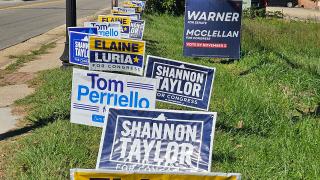
Virginia's 1st district is also highly competitive, with a Public Policy Polling survey from October 21-22 showing Democrat Shannon Taylor and Republican incumbent Rob Wittman essentially tied at 47% to 46%. The district, which includes parts of the northern Virginia suburbs and rural areas, has seen increased turnout and campaign spending from both parties.
Other toss-ups include Iowa's 1st and 3rd districts, where Republican incumbents Mariannette Miller-Meeks and Zach Nunn are defending their seats. Both districts have flipped between parties in recent cycles, underscoring their volatility. In New York's 17th district, Republican Mike Lawler faces Democrat Mondaire Jones in a race drawing national attention and significant outside spending.
Shifting Polls and Party Strategies
Democrats have gained ground in several Republican-held districts, with the Cook Political Report now rating 13 GOP seats as leaning Democratic. Among them is Virginia's 2nd district, where a Christopher Newport University poll from October 1-10 shows Democrat Elaine Luria leading Republican incumbent Jen Kiggans, 46% to 43%. Luria, a former Navy officer, has focused her campaign on national security and abortion rights, while Kiggans has emphasized economic issues and border security.
California's open seat, previously held by Republican Darrell Issa, is another target for Democrats. In that race, Democrat Marni von Wilpert is running against Republican Jim Desmond. The district, which covers parts of San Diego County, has trended more Democratic in recent years due to changing demographics and increased turnout among younger voters.
National polling gives Democrats an edge heading into Election Day. A YouGov survey from October 23-26 puts Democrats at 50% and Republicans at 41%. An Ipsos poll from October 22-26 shows Democrats at 53% and Republicans at 44%, while an NPR/PBS poll from October 22-25 has Democrats at 52% and Republicans at 44%. These numbers suggest a favorable environment for Democrats, but the outcome in individual districts may hinge on local issues and turnout.
Both parties have adjusted their strategies in response to shifting polls. Republicans are focusing on economic concerns, inflation, and crime, while Democrats are emphasizing abortion rights, health care, and threats to democracy. Outside groups are pouring millions of dollars into advertising and get-out-the-vote efforts in the most competitive districts.
Investigations and Impeachment Talk
If Democrats secure a majority, House Democratic Leader Hakeem Jeffries has said the party would immediately investigate corruption allegations against Trump administration officials. Jeffries has not ruled out impeachment, stating only that removing a president would require a two-thirds Senate majority. The potential for new investigations has become a central issue in the campaign, with Democrats promising increased oversight and Republicans warning of partisan gridlock.
"What we’ve seen from the Trump cartel is that they’re more focused on enriching themselves, their family members, their friends and their donors than they are with making life more affordable for the American people."
— Hakeem Jeffries, House Democratic Leader
Former President Trump has warned that a Democratic majority could lead to efforts to remove him from office and target his defense secretary, Pete Hegseth, particularly over the Iran war. "I think it's terrible. All they do is they talk about impeaching everybody," Trump said, according to the Washington Examiner. The prospect of impeachment and investigations has energized both party bases and increased the stakes of the election.
Delayed Results Possible
With several races expected to be decided by narrow margins, final control of the House may not be clear on election night, especially in states with lengthy ballot-counting procedures. Both parties are preparing for the possibility of days of uncertainty as close contests are resolved. States like Pennsylvania and California, which allow mail-in ballots to be counted after Election Day, could delay the final tally.
A narrow majority for either party would leave little room for defections, complicating leadership decisions and major legislative negotiations. The stakes remain high as the final votes are cast and counted. The outcome will determine not only which party sets the House agenda, but also the future of key policy debates and the balance of power in Washington.