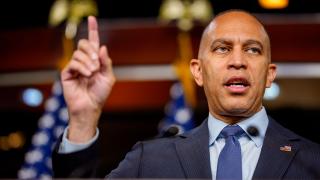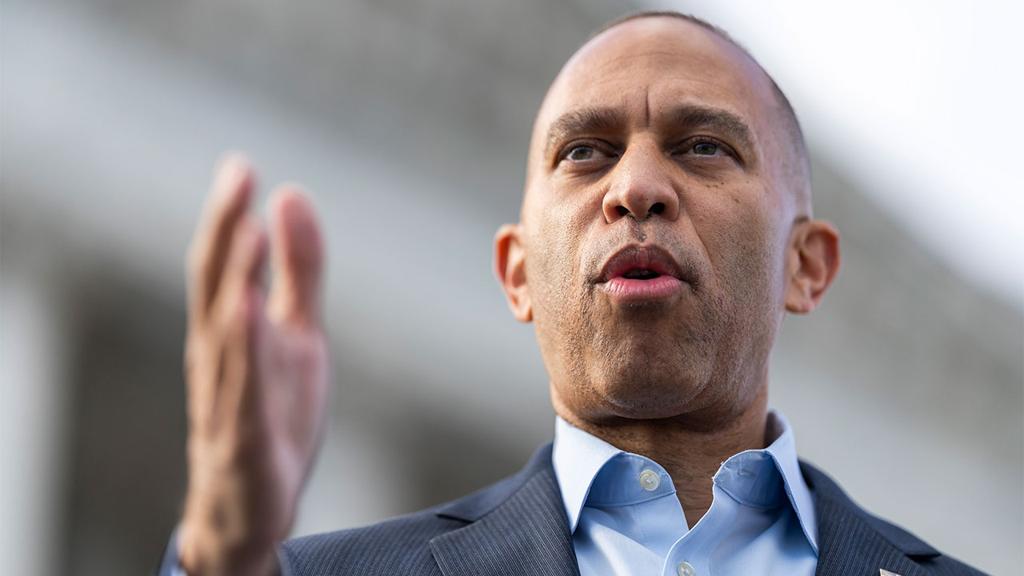
House Democratic leader Hakeem Jeffries and other party leaders have continued to support legislation expanding transgender rights and abortion access, while challenging Republican-backed tax policies and border enforcement approaches.
Explainer Health Care Realities: Cost, Ethics, and Reform Challenges in America
The ongoing debate in Congress centers on Democratic efforts to broaden legal protections for transgender individuals and expand abortion access. These efforts have drawn criticism from Republicans, who argue that such measures represent government overreach on social and fiscal issues. Democrats, meanwhile, frame their initiatives as necessary steps to ensure equality and protect individual rights.
In recent years, Jeffries co-sponsored the "Equality Act," a significant piece of legislation aimed at strengthening protections for LGBTQ+ Americans. The bill would have barred restrictions on access to restrooms and locker rooms based on biological sex, instead allowing individuals to use facilities that correspond with their gender identity. The legislation defined gender identity as "the gender-related identity, appearance, mannerisms, or other gender-related characteristics of an individual, regardless of the individual's designated sex at birth." The measure passed the House in 2019, receiving support from 236 Democrats. However, it did not advance in the Republican-controlled Senate, leaving the issue unresolved at the federal level.
Transgender Rights Initiatives
Beyond legislative proposals, Democratic leaders have advocated for practical changes within government institutions. Jeffries and Rep. Katherine Clark, D-Mass., for example, urged House Administration Committee Chair Zoe Lofgren, D-Calif., to support the installation of more transgender-friendly restroom facilities in the Capitol. In a letter, they emphasized the importance of access to safe and comfortable restrooms for all employees, interns, and visitors, including those from the transgender, gender nonconforming, and disability communities. They specifically requested further examination of the issue and the facilitation of additional single-stall or single-occupancy restrooms to better accommodate those who work or seek to work in the House of Representatives.
The 2024 Democratic Party Platform reinforced the party's support for transgender rights. It highlighted actions taken by former President Joe Biden, such as reversing a ban on transgender servicemembers, and outlined efforts to protect access to gender-affirming health care. These policy positions reflect a broader Democratic commitment to advancing the rights of transgender individuals at both the legislative and administrative levels.
Abortion Policy and the Hyde Amendment
On abortion policy, Democrats have consistently called for repealing the Hyde Amendment, a provision that has prohibited federal funding of abortions since 1976. The Democratic platform states, "Democrats are fighting back to restore reproductive freedom for every woman in every state. We will repeal the Hyde Amendment." This position marks a clear contrast with Republican lawmakers, who generally support maintaining the amendment.
Jeffries joined 208 House Democrats in co-sponsoring the "Women's Health Protection Act," which would prohibit government restrictions on abortion services. The Democratic platform describes these legislative efforts as part of a broader commitment to reproductive rights and health care access. Republican critics argue that repealing the Hyde Amendment would force taxpayers to fund abortions, a claim that Democrats have not directly addressed in the cited materials. The debate over the Hyde Amendment remains a central point of contention in the broader national conversation about abortion policy.
Tax Cuts and Federal Spending
Tax policy is another area of sharp disagreement between the parties. The Democratic platform criticizes the 2017 Trump tax cuts, describing them as "reckless" and asserting that they primarily benefited the wealthy while increasing the federal deficit. According to the platform, "The law had no impact on the average American's income—only boosting wages for those in the top 10 percent," and the tax cuts "exploded the federal deficit by $2 trillion."
However, analysis from the Heritage Foundation, as cited in the source, offers a different perspective. The analysis notes that the tax cuts lowered rates for people earning as little as $9,526 per year and nearly doubled the standard deduction, which simplified tax filing for most Americans. The Heritage Foundation also points to increased federal tax revenues, rising from approximately $3.314 trillion in fiscal year 2017 to a projected $5.403 trillion in fiscal year 2026. The analysis attributes the rise in deficits not to the tax cuts themselves but to higher federal spending, which grew from $3.980 trillion to $7.395 trillion over the same period. This ongoing debate reflects broader disagreements over fiscal responsibility and the role of government in economic policy.
Border Enforcement Trends
Border security and immigration enforcement have also been prominent issues in recent congressional debates. According to Department of Homeland Security figures cited in the source, the number of people encountered at the southwest border rose sharply during the Biden administration. Encounters increased from 458,080 in fiscal 2020 to 2,475,669 in fiscal 2023. The numbers then dropped to 443,671 in fiscal 2025 and 128,009 in the first ten months of fiscal 2026.
Republican critics argue that Democratic control would not improve border security, pointing to the surge in border encounters during the early years of the Biden administration. However, Democratic leaders have not directly responded to this criticism in the cited materials. The issue remains a point of contention, with both parties offering differing solutions and assessments of the effectiveness of current policies.