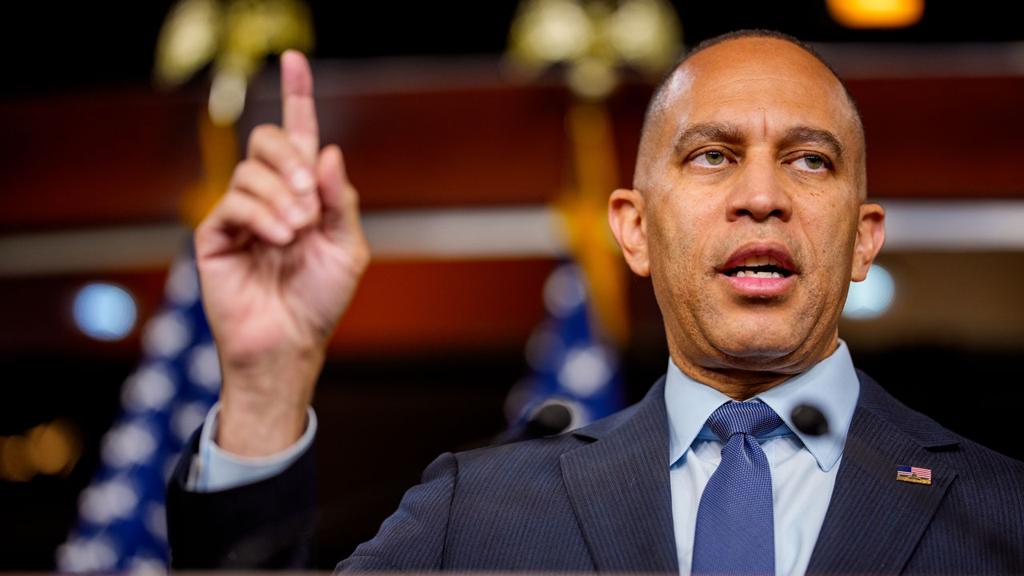
House Minority Leader Hakeem Jeffries has withdrawn his support for Medicare for All, a notable shift from his previous position backing single-payer health care legislation. Jeffries, who has represented New York in Congress since 2013, had consistently cosponsored Medicare for All bills in every session, including the 2019 and 2021 versions. During his 2022 reelection campaign, he emphasized his support, stating, “I have cosponsored the Medicare for All Act every Congress that I’ve been a Representative.”
Explainer Health Care Realities: Cost, Ethics, and Reform Challenges in America
His recent comments, however, reflect a change in stance. Asked on NBC’s “Meet the Press” whether he supports Medicare for All, Jeffries said it is “not legislation that I am currently co-sponsoring or that I support.” This marks a clear departure from his earlier record and comes as the Democratic Party continues to debate the financial and practical challenges of expanding government-run health care.
Jeffries’ Position Change
Jeffries’ decision not to support or co-sponsor Medicare for All highlights the growing internal debate among Democrats regarding the feasibility and affordability of a single-payer system. While progressive members of the party continue to push for universal coverage, others have raised concerns about the potential costs and the impact on the federal budget. Jeffries’ shift aligns him more closely with those in the party who are cautious about the financial implications of such sweeping health care reform.
The move also reflects broader concerns about the sustainability of Medicare for All. The Committee for a Responsible Federal Budget has estimated that implementing a single-payer system could require between $25 trillion and $35 trillion in federal funding over a decade. Similarly, the Congressional Budget Office projected that single-payer plans could increase federal health care subsidies by $1.5 trillion to $3 trillion in a single year, depending on the specific design of the program.
Cost and Feasibility Debates
Analyses of Medicare for All proposals suggest that financing a $30 trillion plan would require significant new revenue sources. Options could include a 32% payroll tax, a 25% income surtax, or more than doubling the national debt. Even if all individual and corporate income-tax collections were doubled, it would not fully cover the highest cost estimates for a comprehensive single-payer system.
Supporters of Medicare for All argue that families would benefit from the elimination of premiums and out-of-pocket expenses, shifting the financial burden from individuals to the federal government. However, critics counter that moving costs to the IRS does not make health care free, and that the overall expense would still be borne by taxpayers. The Congressional Budget Office has also warned that increased demand for health care under a single-payer system could outpace the available supply of medical professionals and facilities, potentially leading to longer wait times for care.
“Promising unlimited care does not create unlimited doctors, nurses, hospital beds or operating rooms.”
— Committee for a Responsible Federal Budget analysis
International Comparisons and Public Opinion
International examples are frequently cited in the debate over single-payer health care. Britain’s National Health Service (NHS) and Canada’s provincial health care systems are often referenced as models, but recent surveys reveal mixed levels of satisfaction among their populations. In Britain, a British Social Attitudes survey found that only 26% of respondents were satisfied with the NHS, while 51% expressed dissatisfaction. In Canada, an Ipsos poll reported 56% satisfaction with provincial health care, but a more recent Nanos survey indicated that 70% of Canadians were dissatisfied with the system overall, with nine in ten respondents calling for major changes.
Waiting lists for treatment are a persistent concern in both countries. In England, more than 7 million cases were on the elective-treatment waiting list, with approximately 2.5 million people waiting longer than 18 weeks and over 100,000 waiting more than a year for care. The Canadian Medical Association has acknowledged that about 20% of Canadians awaiting elective surgery experience waits of more than a year.
Political and Public Reactions
The debate over Medicare for All continues to generate strong reactions among both policymakers and the public. A 2025 survey found that 80% of Americans not yet enrolled in Medicare worry the program will not be available when they become eligible. Critics of Medicare for All question whether Americans would be willing to accept the higher taxes and potential service delays that have been observed in other countries with single-payer systems.
Supporters of single-payer health care maintain that eliminating premiums and out-of-pocket costs would provide significant relief to families and improve access to care. However, they have not directly addressed the recent shift in Jeffries’ position or the concerns about cost and feasibility that have become central to the debate.
Jeffries’ withdrawal of support for Medicare for All underscores the ongoing challenges facing efforts to enact sweeping health care reform in the United States. As the discussion continues, lawmakers and the public alike will weigh the potential benefits of universal coverage against the significant financial and logistical hurdles such a system would entail.