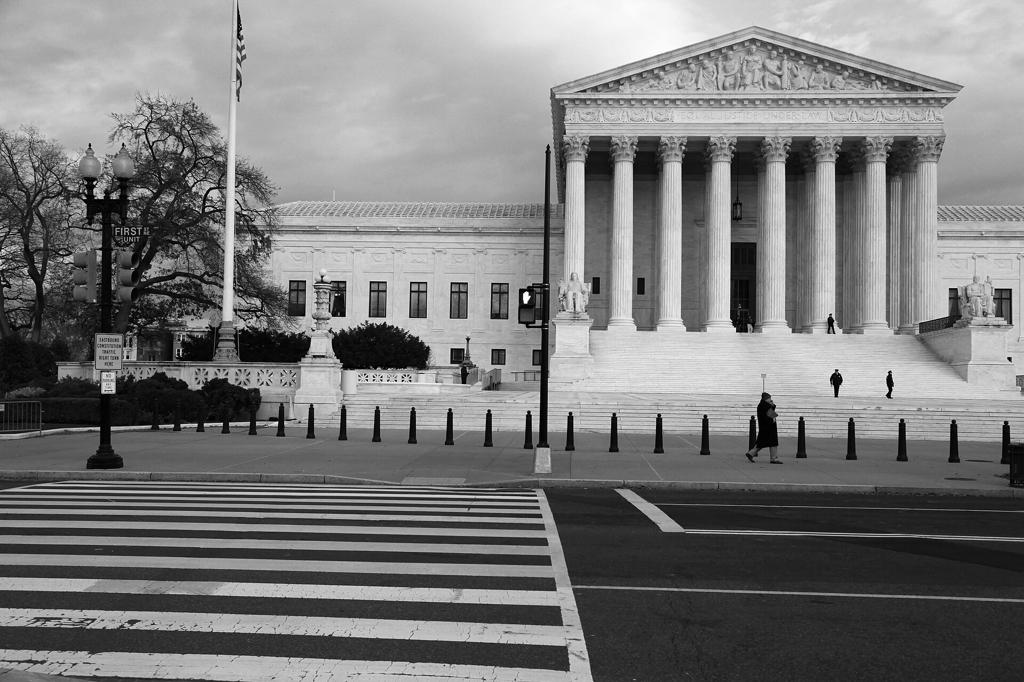
A proposed constitutional amendment to permanently set the number of Supreme Court justices at nine failed to clear the U.S. House of Representatives on Wednesday, falling short of the two-thirds majority required for passage. The vote, which came after weeks of debate and partisan tension, highlights the deep divisions in Congress over the future of the nation’s highest court and the possibility of expanding its bench.
Explainer Understanding the Supreme Court’s Impact on Law and Liberty
The "Keep Nine Amendment," introduced by Rep. Andy Biggs, R-Ariz., was defeated in a 212-206 vote, with 15 members not voting, according to the official House roll call. The measure needed a two-thirds majority—at least 290 votes—to advance, but was opposed by 205 Democrats and Rep. Kevin Kiley, I-Calif., who caucuses with Republicans. All 211 Republicans present, along with Rep. Don Davis, D-N.C., voted in favor of the amendment. The outcome leaves the current size of the Supreme Court unchanged, but the debate over its future is expected to continue as both parties signal differing visions for the judiciary.
Vote Breakdown and Party Positions
The House Judiciary Committee had previously advanced the amendment in June on a party-line vote, setting the stage for a contentious floor debate. On the House floor, the vote largely followed party lines. Only one Democrat, Rep. Don Davis of North Carolina, broke ranks to support the amendment, joining all present Republicans. Conversely, Rep. Kevin Kiley, an independent from California who generally caucuses with Republicans, voted against the measure, siding with the Democratic majority.
Rep. Henry Cuellar, D-Texas, who had previously voiced opposition to the idea of expanding the Supreme Court, ultimately voted against the amendment. According to reporting by The Federalist, Cuellar was the only one among 16 vulnerable House Democrats to respond to inquiries about his position on the measure, but his vote did not align with his earlier public statements. The vote tally reflected the broader partisan divide, with most Democrats opposing the amendment and nearly all Republicans supporting it.
The defeat of the amendment comes amid ongoing debate within the Democratic Party over whether to pursue changes to the Supreme Court’s structure. While some Democrats have expressed interest in expanding the number of justices, others have cautioned against such a move, warning it could further politicize the judiciary.
Arguments Over Court Expansion
Supporters of the Keep Nine Amendment, including the Keep Nine Coalition—a group of grassroots organizations and former bipartisan officials—argued that enshrining the current number of justices in the Constitution is necessary to protect the Supreme Court’s independence from shifting political majorities. Roman Buhler, director of the coalition, told The Federalist in June that even a small group of Democrats opposing court expansion could influence party leaders to reconsider such efforts. "Even a handful of Democrats that are willing to stand up now and say, 'Let’s not do this,' could have a big impact because it could change the strategic calculation for all Democrats," Buhler said.
Rep. Andy Biggs, the amendment’s sponsor, warned that allowing a majority in Congress to alter the Court’s size in response to unfavorable rulings could set a dangerous precedent. "If a sitting majority can change the size of the Supreme Court the moment it dislikes its rulings, what happens the next time the other side is in power?" Biggs said on social media. Supporters of the amendment argue that a fixed number of justices helps maintain the Court’s legitimacy and prevents it from becoming a political tool.
Opponents of the amendment, primarily Democrats, have not issued a formal response to its defeat. However, House Minority Leader Hakeem Jeffries has previously indicated that his party may pursue "dramatic reform" of the Supreme Court if given the opportunity. Rep. James Clyburn, D-S.C., recently told NBC News he supports adding four justices to the bench, and several potential Democratic presidential contenders have expressed openness to expanding the Court. Proponents of court expansion argue that the current composition of the Supreme Court does not reflect the nation’s diversity or the will of the electorate, and that increasing the number of justices could help restore balance.
The debate over the size of the Supreme Court has intensified in recent years, particularly following a series of high-profile rulings and the confirmation of several justices under Republican presidents. While the number of justices has remained at nine since 1869, the Constitution does not specify a fixed number, leaving the issue to Congress. Efforts to change the Court’s size have surfaced periodically throughout American history, but none have succeeded since the 19th century.
Next Steps in the House
With the defeat of the Keep Nine Amendment, the immediate prospect of a constitutional cap on the Supreme Court’s size appears unlikely. The House is scheduled to adjourn for a week-long recess after wrapping up business on Thursday, according to the 2026 House legislative calendar. Lawmakers are expected to return on September 14. The failure of HJR 1 leaves the door open for continued debate over the size and structure of the Supreme Court as party leaders weigh their next moves.
As Congress prepares to reconvene later in the year, the issue of Supreme Court reform is expected to remain a point of contention. Both parties are likely to continue using the debate to rally their respective bases ahead of the next election cycle. For now, the size of the Supreme Court remains at nine justices, but the partisan divide over its future ensures that the conversation is far from over.