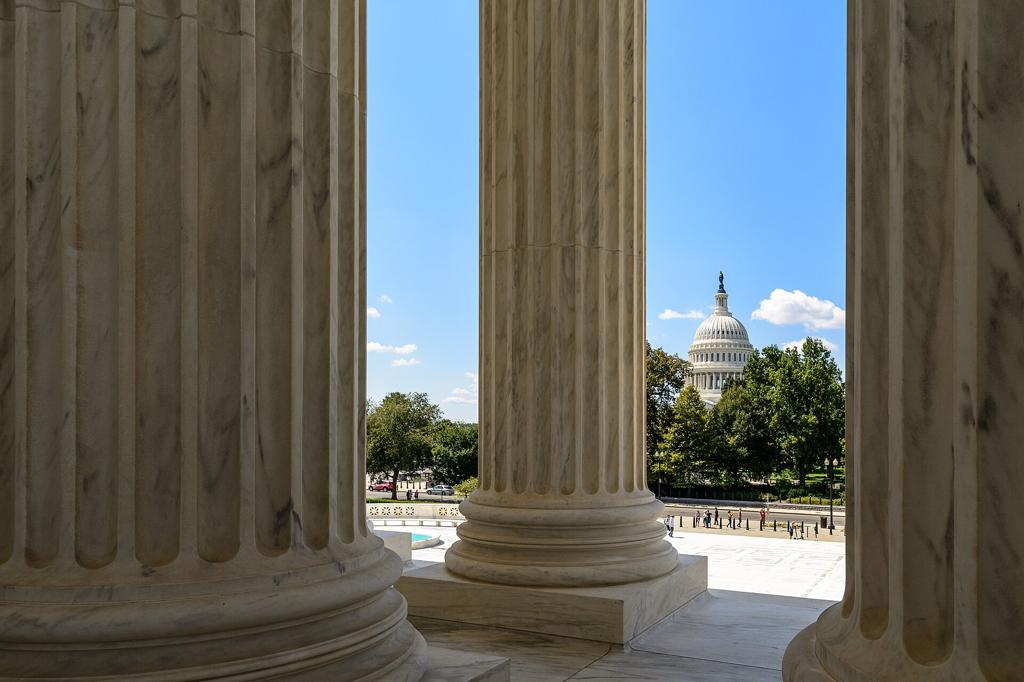
The U.S. Supreme Court has announced it will hear two high-profile cases during its current term, each with the potential to significantly influence national legal standards. One case challenges a Maryland school district’s admissions policy over alleged racial discrimination, while the other contests a longstanding federal prohibition on home alcohol distilling. The outcomes could reshape how race is considered in public education and clarify the extent of federal regulatory power over personal activities in the home.
Explainer Understanding the Supreme Court’s Impact on Law and Liberty
School Admissions and Alleged Racial Discrimination
The first case, Association for Education Fairness (AEF) v. Montgomery County Board of Education, centers on admissions policies for magnet programs in Montgomery County, Maryland. The controversy began after the district adopted new admissions standards, following recommendations from a consulting firm. These changes were intended to address what the district described as a racial imbalance in its competitive middle school programs.
Plaintiffs, represented by the Pacific Legal Foundation, argue that the revised admissions rules have disproportionately excluded high-scoring Asian American students. They claim the policy was designed to achieve a preferred racial balance, unfairly targeting one group in the process. The Pacific Legal Foundation stated, "[The school district] cannot unfairly target one racial group to achieve their preferred racial balance."
The Supreme Court has asked the parties to address a key legal question: whether plaintiffs must show that a targeted racial group suffered an aggregate disparate impact relative to its share of the applicant pool. This issue is particularly significant in light of the Court’s recent decision in Students for Fair Admissions v. Harvard, which found that affirmative action in higher education violated the Equal Protection Clause. In that ruling, Chief Justice John Roberts wrote that such policies "unavoidably employ race in a negative manner, involve racial stereotyping, [and] lack meaningful end points."
The Montgomery County Public Schools have not yet issued a public response to the Supreme Court’s decision to review the case. However, the case has attracted attention from a range of advocacy groups. Several amicus briefs have been filed, including submissions from the Buckeye Institute, the American Civil Rights Project, Students for Fair Admissions, and the Asian American Coalition for Education. These filings are noted in the Supreme Court docket.
Federal Ban on Home Distilling
The second case, Department of Justice v. McNutt, challenges a federal law dating back to the Reconstruction era that prohibits Americans from distilling alcohol at home. The plaintiffs in this case include individuals and a pro-distilling organization. Many of them have experience with lawful alcohol production for fuel or other beverages, and now seek the right to distill spirits for personal use at their residences.
The Supreme Court will consider whether the federal ban is "necessary and proper" for carrying out Congress’s constitutional power to tax. This question arises from the Fifth Circuit’s decision earlier this year, which upheld the ban. The Department of Justice and the Alcohol and Tobacco Tax and Trade Bureau are named as petitioners, while Scott McNutt and others are respondents, as listed in the official docket.
Attorneys for both sides have already submitted briefs to the Court. The government is represented by Solicitor General D. John Sauer, while the respondents are represented by Andrew Michael Grossman of Baker Hostetler LLP. The Supreme Court granted certiorari on October 19, 2026, agreeing to hear arguments on the constitutional limits of federal regulatory authority over personal conduct in the home.
Broader Legal and Policy Context
Both cases arrive at a time when the Supreme Court is actively addressing the boundaries of federal power and the role of race in public institutions. The admissions case follows the Court’s recent move to restrict affirmative action in higher education, signaling a potential shift in how race can be considered in public school admissions. The distilling case, meanwhile, could have implications for individual rights and the scope of federal regulation over private activities.
Legal experts note that the Court’s decisions in these cases could have wide-reaching effects. In the education context, a ruling against the Montgomery County Board of Education could prompt school districts nationwide to reevaluate admissions policies that consider race as a factor. In the context of home distilling, a decision limiting federal authority could open the door for changes to other regulations affecting personal conduct in the home.
As of this publication, neither AEF v. Montgomery County Board of Education nor Department of Justice v. McNutt has been scheduled for oral argument. The Supreme Court’s eventual rulings are expected to set important precedents for school admissions policies and the federal government’s ability to regulate private behavior.