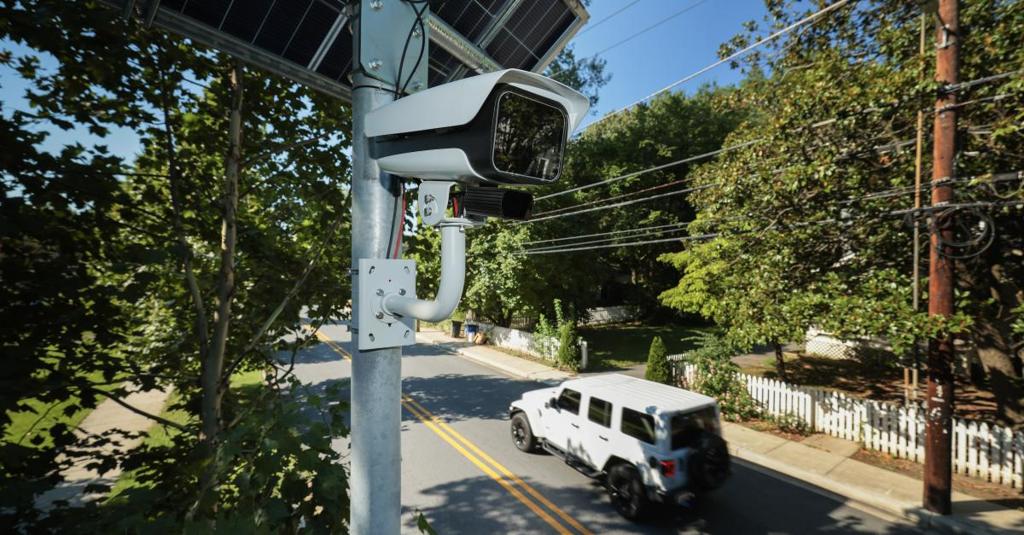
West Virginia lawmakers have ordered Flock Safety executives to appear before the House Committee on Government Organization on Nov. 9, intensifying scrutiny over the company’s handling of license plate reader camera data and employee access. The committee, chaired by Delegate Chris Phillips, issued the summons after Flock repeatedly declined to provide written answers on whether its employees had improperly accessed customer data, the identity of its foreign data analysis vendor, and the rate of false positive matches prior to July 2026.
Explainer Understanding Public Safety Trends: Crime Declines and Rising Challenges for Law Enforcement
The inquiry highlights growing bipartisan concerns about the privacy and reliability of automated license plate readers, as lawmakers seek transparency on potential misuse and data security.
The West Virginia House of Delegates’ investigation comes amid a national debate over the balance between public safety tools and individual privacy. Flock’s technology, once widely embraced by law enforcement, is now facing pushback from legislators, judges, and privacy advocates questioning its oversight and the risks of centralized surveillance.
Lawmakers’ Demands for Answers
Correspondence reviewed by Just the News and available through the House Committee on Government Organization shows lawmakers frustrated by Flock’s lack of transparency. Delegate Tristan Leavitt, one of four signatories to the latest letter, said Flock has not disclosed whether it disciplined employees for improper data access or named its non-U.S. contractor. Leavitt stated the Nov. 9 hearing aims to secure “concrete answers to our specific questions.”
"Americans are concerned about this much data being centralized in one place. Those concerns aren’t resolved by Flock’s contradictory answers about who can access their data and why, what precisely is done with that data, and what breaches have occurred."
— Tristan Leavitt, West Virginia Delegate
The committee’s letter cited recent media and activist reports about possible vulnerabilities and breaches, pressing Flock to clarify incidents where unauthorized users accessed live or archived camera streams. Lawmakers said Flock’s prior statements that it had “never been hacked” were contradicted by later admissions of a vendor configuration error that temporarily exposed some video streams to the public internet.
National Pushback and Legal Challenges
Flock’s license plate readers, once popular with police departments for automating traffic enforcement, have come under increased scrutiny. Earlier this month, a federal judge in Oklahoma ruled that a law enforcement officer violated a woman’s Fourth Amendment rights by searching her vehicle’s history through Flock’s network without a warrant, in the case of United States v. Kyle (docket). The New Civil Liberties Alliance described it as the first federal court decision finding warrantless ALPR tracking unconstitutional. The case remains open for appeal.
Concerns about the technology’s reach have led some municipalities and states to consider scaling back or ending Flock camera use. Rep. Marlin Stutzman, R-Ind., told Just the News he plans to introduce federal legislation to limit the spread of such cameras, calling them “invasive” and a step toward “too big government.” Stutzman acknowledged law enforcement’s argument that the cameras are useful tools but said, “There has to be boundaries. There have to be controls in place.”
Flock’s Privacy Updates and Ongoing Incidents
In August, Flock announced updates intended to strengthen privacy protections, including reducing default data retention from 30 days to one week and allowing local police departments to limit data sharing with other agencies. Departments can adjust these settings as needed. The company said these changes would help prevent misuse and give communities more control.
Despite these measures, new incidents have raised further questions. Last month, an Indiana sheriff’s deputy was accused of using Flock data to stalk his girlfriend over a year, prompting an arrest warrant. In a recent letter to West Virginia lawmakers, Flock stated there has been only one instance of improper external access to its central cloud database, which it said has never been breached by unauthorized parties. The company described the vendor configuration error as affecting only a small number of live public camera streams, not ALPR data, and said access required specific IP knowledge.
Flock has not addressed whether any of its own employees have improperly accessed customer footage, a key issue for West Virginia legislators. The committee has indicated it will continue pressing for answers on employee conduct and the identity of the foreign vendor involved in data analysis.