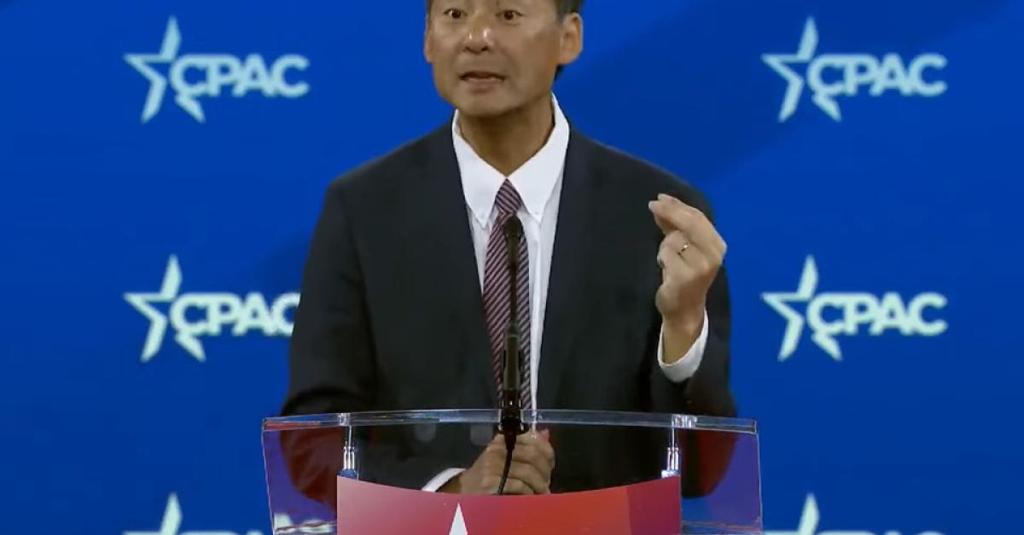
Former U.S. Ambassador-at-Large for Global Criminal Justice Morse Tan went on trial in South Korea on Friday, facing criminal defamation charges for comments he made about South Korean President Lee Jae Myung while in the United States 16 months ago.
Explainer Free Speech Battles: Navigating Rights and Censorship in Modern Society
The case has sparked diplomatic tensions, with U.S. lawmakers and advocacy groups warning that South Korea's prosecution of an American citizen for speech made on U.S. soil threatens free expression and could strain bilateral relations.
Tan, who served during President Trump's first term and is a former Liberty University law school dean, was barred from leaving South Korea after arriving as an election monitor this spring. South Korean courts cited him as a flight risk, causing him to miss his grandmother's funeral, according to reporting by Just the News and a congressional letter from Rep. Young Kim and other House Republicans.
Charges and Legal Arguments
Tan is accused of defaming President Lee by repeating contested allegations of criminal behavior as a youth during a Washington, D.C. press conference and at a public event in South Korea. Prosecutors allege Tan's statements were false, citing a review of Lee's juvenile detention records, which are not publicly disclosed except for judicial or investigative purposes, according to Korea JoongAng Daily as cited by Just the News.
Tan pleaded not guilty, telling the court he believed his statements about President Lee were true and introducing himself as a social activist, according to SBS News. His lawyer argued for dismissal, contending that South Korean courts lack jurisdiction over a U.S. citizen for remarks made in America and that there was no intent to defame or awareness of falsehood.
"Whatever one's opinion of Tan's statements, the treatment of an American citizen over speech made in America deserves national scrutiny."
— Bob Ballinger, chief legal officer, National Association of Christian Lawmakers
If convicted, Tan faces up to seven years in prison. He described the proceeding as a "show trial" and called his prosecution "a punch in Trump's face" in comments to the Daily Caller.
U.S. Lawmakers and Diplomatic Response
The case has drawn repeated interventions from U.S. lawmakers. In an August 13 letter to South Korean Ambassador Kang Kyung-wha, Rep. Young Kim, chair of the House Foreign Affairs East Asian and Pacific Affairs Subcommittee, called the exit ban and prosecution "remarkably unfair treatment" and warned that South Korea's actions "could affect perceptions" of its commitment to "freedom of expression and the rule of law." The letter was also signed by Reps. Brian Mast, Chris Smith, and Michael Cloud, all Republicans and members of House foreign affairs or oversight committees.
The State Department told the Daily Caller it "stands ready to raise our concerns directly with foreign governments when they use criminal defamation or similar laws to punish U.S. citizens for political speech," but declined to comment on Tan's case specifically.
South Korean Foreign Minister Cho Hyun told the National Assembly’s Foreign Affairs Committee that the U.S. had requested a "smooth resolution" to the case, but maintained that the government had explained its legal enforcement process. Cho characterized a recent House Foreign Affairs Committee letter as an effort to address disagreements in the relationship, not a formal protest.
Broader Free Speech Concerns
Tan's prosecution comes amid heightened scrutiny of South Korea's approach to speech and defamation laws. House Judiciary Committee Chair Jim Jordan wrote to Korea's Media and Communications Commission in August, expressing concern that recent amendments to the Information and Communications Network Act grant courts "unprecedented power to punish news outlets and social media users for spreading 'false or manipulated information'" and allow fines of up to $656,000, according to Jordan's letter.
Advocacy groups such as the National Association of Christian Lawmakers have mobilized to draw attention to Tan's case, citing a lack of coverage by major U.S. news outlets. Former U.S. Ambassador for International Religious Freedom Sam Brownback criticized South Korea's actions as "shocking," warning of a "horrible trend line for that democracy" regarding arrests and prosecutions of religious leaders.
Tan's case has also been compared to recent high-profile prosecutions in the U.K. involving speech-related offenses, raising broader questions about the extraterritorial reach of foreign defamation laws and their impact on Americans traveling abroad.
South Korea’s Position and Next Steps
South Korean authorities maintain that their legal process is being properly followed. The indictment states that prosecutors checked President Lee's juvenile records and found Tan's claims to be false. Foreign Minister Cho Hyun has indicated that the government is working to address U.S. concerns through dialogue rather than confrontation.
Tan remains in South Korea under an exit ban as his trial proceeds. Congressional Republicans have requested ongoing briefings and have warned that the outcome could influence perceptions of South Korea's democratic values.