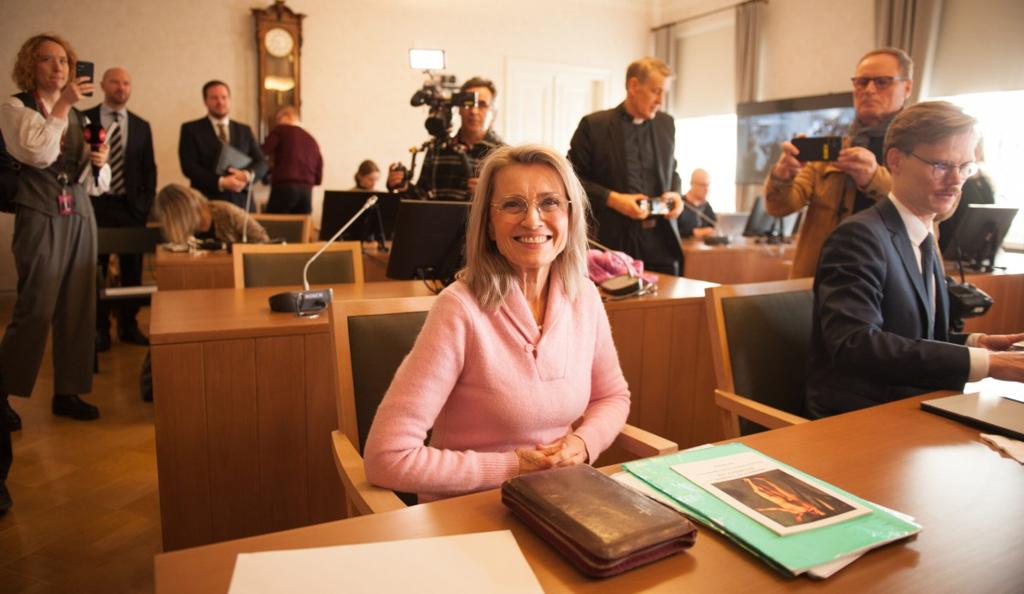
Finland's Supreme Court is deliberating whether quoting the Bible constitutes illegal "hate speech" under the country's war crimes laws, a case that could have significant implications for free speech and religious expression in Europe. The lawsuit, initiated by Helsinki's top prosecutor, targets Lutheran Bishop Juhana Pohjola and Member of Parliament Paivi Rasanen for their statements regarding gender differences as outlined in the Bible.
Rasanen, who has faced legal scrutiny since 2019 for tweeting a Bible verse criticizing the state church's sponsorship of a queer pride event, maintains her innocence. "I have not insulted anyone, I have not spread hate," Rasanen stated during a virtual press conference. "I have simply spoken what I believe to be true, out of love and conviction."
"I have not insulted anyone, I have not spread hate. I have simply spoken what I believe to be true, out of love and conviction."
— Paivi Rasanen, Member of Parliament
The case, often referred to as "the Bible trial," has already seen two lower courts clear Rasanen and Pohjola of all charges. However, the prosecutor has appealed to the Supreme Court, which could set a precedent for how religious speech is treated across Europe. If the court rules against the defendants, it may effectively criminalize expressions of Christian beliefs, raising concerns about the future of free speech in Finland and beyond.
Pohjola expressed concern that a conviction would send a troubling message to Christians and could undermine the rule of law. "Any conviction would … send a dangerous message to all Christians and Christian denominations and would not build a genuinely free society proud of its rule of law," he said.
The prosecutor's case hinges on the argument that even if Christian speech does not cause demonstrable harm, it should still be classified as hate speech. Rasanen's lawyer, Matti Sankamo, argued that accepting this view would criminalize harmless speech, violating the European Convention on Human Rights.
The potential penalties for violating Finland's hate speech laws could include up to two years in prison, alongside fines for Rasanen and Pohjola. The prosecutor has sought to remove Rasanen's media appearances and writings from the internet, a move that has raised alarms about censorship and the suppression of religious expression.
This case comes amid a broader trend in Europe, where several countries have seen increased legal actions against individuals for their speech, particularly regarding LGBTQ+ issues. In the United Kingdom, for example, an estimated 30 people are arrested daily for alleged speech crimes, often related to social media posts. The Finnish case has drawn international attention, with U.S. lawmakers expressing concern over the implications for religious liberty and free speech.
Rasanen has noted that her prosecution could inspire similar actions against Christians in other jurisdictions. "LGBT advocates are following this case, and [if the charges prevail] it could be they would raise similar kinds of criminal complaints against very classical Christian teachings in other places," she said.
As the Supreme Court prepares to issue its ruling, the outcome could have far-reaching consequences for the balance between free speech and hate speech laws in Europe, particularly regarding religious expression. The case underscores the ongoing tensions between evolving societal norms and traditional religious beliefs, raising questions about the future of free speech in a rapidly changing cultural landscape.