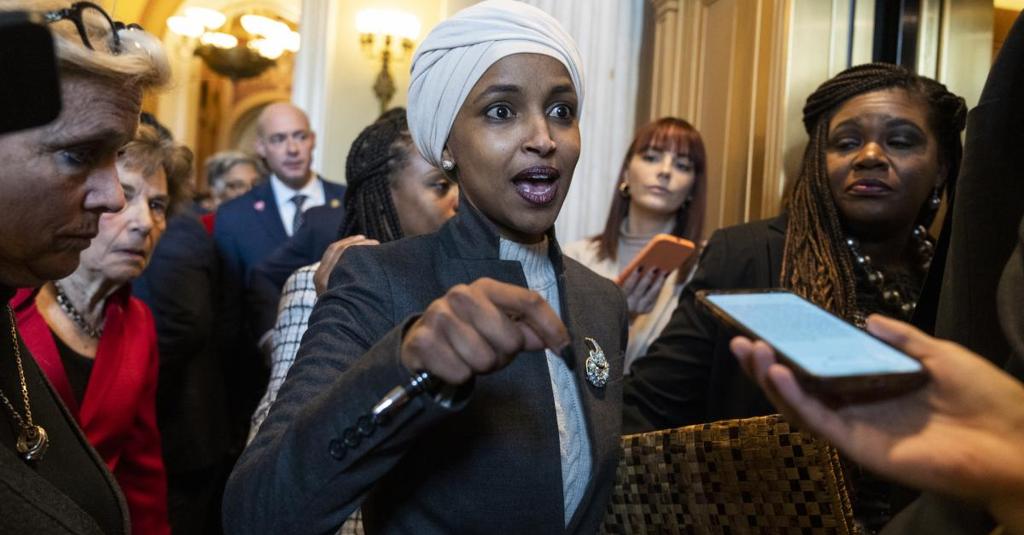
Minnesota Democratic Rep. Ilhan Omar’s attorneys have formally requested that the Justice Department immediately return property seized from her home during a search conducted by Homeland Security Investigations agents earlier this week. The request was made in a letter sent Friday, in which Omar’s legal team argued that the search was “neither justified nor lawful.” The attorneys characterized the raid as politically motivated, asserting that it targeted Omar, a longtime critic of Republican President Donald Trump, just weeks before the midterm elections.
The dispute centers on whether federal agents had proper legal grounds for the search. Omar’s lawyers allege that the action was an abuse of power and an attempt to intimidate a political adversary. The Justice Department has not yet issued a public response to these allegations or to the demand for the return of the seized property. The specific items taken from Omar’s home have not been disclosed in the available reporting.
Omar has frequently been the subject of criticism from Republican leaders and has faced scrutiny for her political positions. Her legal team contends that the timing of the search, so close to the midterm elections, raises concerns about the potential for political motivations behind federal law enforcement actions. The Justice Department’s next steps in response to the letter remain unclear, and no federal officials have commented on the legal basis for the search or addressed the allegations of political targeting.
Lawyers’ Arguments and Claims
In their letter, Omar’s attorneys stated that the search was conducted without proper justification and was “neither justified nor lawful.” They further alleged that the raid was politically motivated, describing it as an effort to go after a “longtime political target” of President Trump. The legal team called for the immediate return of all property taken from Omar’s home. While the letter did not specify the items seized, the attorneys emphasized that the timing of the raid—occurring just weeks before the midterm elections—suggested a political motive behind the federal action.
"The search was neither justified nor lawful."
— Omar’s legal team
Omar’s lawyers also argued that the search represented an abuse of federal law enforcement powers, raising concerns about the precedent it could set for future actions involving elected officials. They maintained that the lack of transparency regarding the justification for the search further undermined confidence in the process.
Federal Response and Political Context
As of Friday, the Justice Department had not issued a public response to the claims or to the demand for the return of Omar’s property. No federal officials have addressed the allegations of political motivation or commented on the legal basis for the search. The silence from federal authorities has left questions about the rationale for the search and the status of the seized property unresolved.
The case has drawn attention to the broader issue of how federal law enforcement agencies handle investigations involving high-profile political figures. Omar’s legal team’s letter highlighted concerns about the use of federal law enforcement powers in politically sensitive cases, particularly when actions occur close to major elections. The lack of public explanation from the Justice Department has contributed to ongoing debate about the intersection of law enforcement and politics.
Broader Political Backdrop
The search of Omar’s home and the subsequent legal dispute come amid heightened scrutiny of federal law enforcement actions involving prominent political figures. Omar has been a vocal critic of Republican leadership and has frequently been at the center of partisan debates. The situation underscores ongoing tensions over the intersection of law enforcement and politics, especially in the lead-up to major elections.
In recent years, actions by federal agencies involving elected officials have generated significant public and political attention, with concerns raised on both sides of the political spectrum about the potential for investigations to be influenced by partisan considerations. The case involving Omar adds to this broader context, highlighting the challenges faced by law enforcement agencies in maintaining public trust while carrying out their duties in politically charged environments.
As the Justice Department considers its response to Omar’s legal team, the outcome of this dispute may have implications for how similar cases are handled in the future. The situation remains fluid, with further developments possible as more information becomes available or as federal authorities choose to address the allegations publicly.