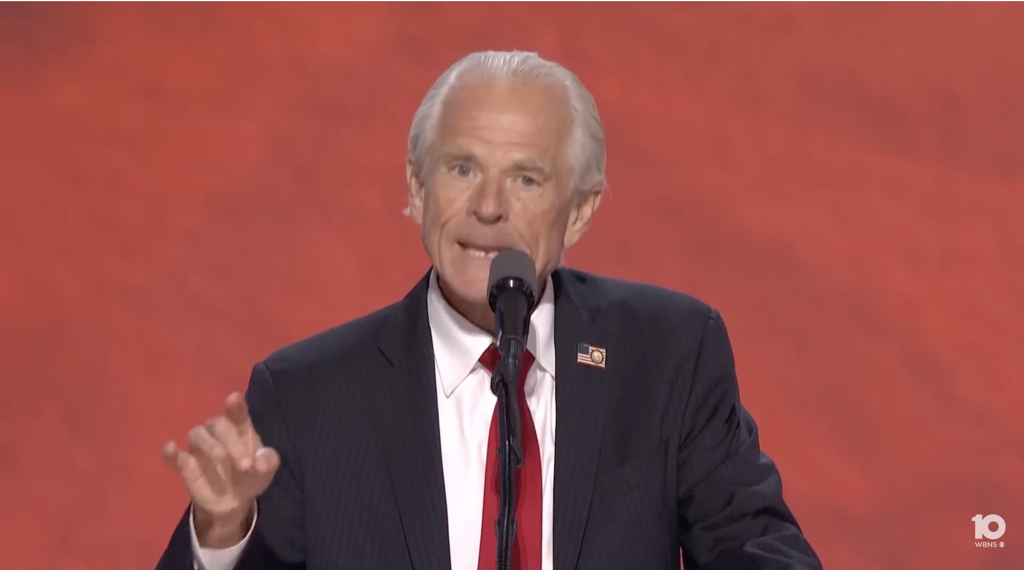
Peter Navarro, a former senior adviser to President Donald Trump, has emerged as a vocal critic of what he describes as the weaponization of justice by the Biden administration. In a recent interview, Navarro recounted his experiences as the first senior White House official charged with contempt of Congress, a situation he claims reflects a broader trend of political persecution.
Navarro was sentenced to four months in prison for refusing to comply with a subpoena from the January 6 Committee, which he characterized as a politically motivated inquiry. He argued that his refusal was based on a principle of executive privilege, a stance that many former advisers have taken in similar situations.
"Either I obeyed my oath of office, respected and honored executive privilege and refused the subpoena and risked prison, or I went and bent the knee to that committee and dishonored the privilege and my oath of office," (U.S. DOJ) Navarro stated during an interview with The Federalist Radio Hour.
His memoir, titled "I Went To Prison So You Won’t Have To: A Love and Lawfare Story in Trump Land," (U.S. DOJ) details his arrest and subsequent incarceration. Navarro described the circumstances of his arrest in June 2022 as humiliating, claiming he was handcuffed at an airport and treated like a criminal.
Navarro's narrative highlights what he sees as a pattern of Democrats using legal mechanisms to target political opponents. He noted that every individual involved in his prosecution was affiliated with the Democratic Party, from the House members who voted to hold him in contempt to the prosecutors and the judge overseeing his case.
In his view, the actions taken against him and others in the Trump administration represent a form of "lawfare," (U.S. DOJ) which he defines as the use of legal systems and institutions to achieve political ends. Navarro emphasized that the consequences of such actions extend beyond individual cases, warning that they threaten the integrity of the political system.
"What it’s about is lawfare; it’s politics by other means, to paraphrase Clausewitz," (U.S. DOJ) Navarro remarked, suggesting that the current political climate could lead to further abuses of power if left unchecked.
As the Trump administration's Justice Department seeks to hold accountable those who engaged in what Navarro describes as weaponized justice, he believes it is crucial for Americans to recognize the potential for similar tactics to be used in the future. He called his memoir a "wake-up call" (U.S. DOJ) for the public, urging vigilance against the misuse of governmental authority.
Navarro's experiences resonate with other former Trump officials who have faced legal challenges. He pointed to figures like Steve Bannon, who also served time for contempt of Congress, as part of a broader narrative of political retribution.
In conclusion, Navarro's story serves as both a personal account of his legal battles and a cautionary tale about the implications of political lawfare in the United States. He argues that without accountability for those who misuse the justice system, the cycle of retaliation and persecution may continue, potentially undermining democratic principles.
Matt Kittle, a senior elections correspondent for The Federalist, contributed to this report.