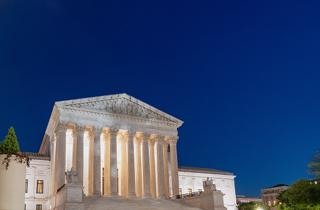
The Supreme Court will hear oral arguments in the case of Wassily v. Blanche on Monday, a dispute that could have significant implications for noncitizens whose asylum status has been revoked following criminal convictions. The central question before the justices is whether individuals who were once granted asylum, but later lost that status due to criminal activity, remain eligible to adjust their immigration status to lawful permanent residency—commonly known as obtaining a green card—in order to avoid deportation.
Explainer Understanding the Supreme Court’s Impact on Law and Liberty
Background of the Case
The case involves Tamer Wassily and Byron Velasquez Arreaga, both of whom were granted asylum in the United States after fleeing persecution in their home countries during the 1990s. After living in the U.S. for several years, both men were convicted of crimes, including third-degree stalking, child endangerment, and drunk driving. As a result of these convictions, the federal government revoked their asylum status and initiated deportation proceedings against them.
In response, Wassily and Velasquez Arreaga petitioned to adjust their status to lawful permanent residents. Their argument hinges on the interpretation of the Immigration and Nationality Act (INA). They contend that the law does not require an applicant to currently hold asylum status in order to be eligible for adjustment; rather, it is sufficient that the individual was previously granted asylum. This distinction is at the heart of the legal debate.
Arguments Before the Court
In their petition to the Supreme Court, the petitioners argue that the text, context, and legislative history of the INA support their eligibility for adjustment of status. They further assert that if any ambiguity exists in the statute, it should be resolved in their favor under the rule of lenity—a principle typically applied to resolve ambiguities in criminal law. Their brief states, "Text, context, structure, history, and purpose provide a clear answer: any noncitizen previously granted asylum is eligible to adjust to LPR status if the conditions in paragraphs (1)-(5) are satisfied. And if ambiguity remains, the rule of lenity resolves it in petitioners’ favor."
The federal government, represented by Solicitor General John Sauer, has taken the opposite position. In the government's brief, Sauer argues that Congress intended the benefits of adjustment to lawful permanent resident status to apply only to those who currently hold asylum status. He maintains that individuals whose asylum was revoked—whether for fraud, mistake, or criminal conduct—should not be eligible for further immigration benefits. "When Congress bestows a benefit on an ‘alien granted asylum,’ the common-sense understanding is that the benefit inures to an alien with asylum status, not to any alien who once had that status but was later deprived of it," Sauer wrote.
Zack Smith, a Senior Legal Fellow at the Heritage Foundation, has also weighed in, criticizing the petitioners' reliance on the rule of lenity. Smith notes that this rule is generally reserved for criminal cases, not civil immigration matters. "That’s not the case here. This is a civil immigration matter," Smith said. He further argued that accepting the petitioners' interpretation would require the Court to assume Congress intended eligibility for adjustment to hinge solely on whether an individual had ever been granted asylum, regardless of subsequent revocation for reasons such as fraud or criminal activity. "That premise is unfounded," Sauer added in the government's brief.
Broader Context and Support
The case has attracted attention from several advocacy organizations. The National Immigrant Justice Center and the American Immigration Lawyers Association have filed amicus briefs in support of Wassily and Velasquez Arreaga, arguing that a restrictive interpretation of the law would unfairly penalize individuals who have already been recognized as refugees.
Smith described the case as part of a broader trend of legal challenges to federal immigration law, often supported by advocacy groups and, in some instances, aided by lower court rulings. He noted that while lower courts ruled against the petitioners in this case, "what we’ve seen in too many of these cases … [is] you have lower federal court judges who are willing to go along with some of those dubious interpretations."
Recent Supreme Court Immigration Rulings
The Supreme Court has addressed several related immigration issues in recent terms. In Mullin v. Al Otro Lado, the justices ruled that asylum seekers do not "arrive" in the United States while still in Mexico. In another case, Mullin v. Doe, the Court affirmed that Temporary Protected Status is, as the name suggests, temporary and does not automatically lead to permanent residency.
These decisions underscore the Court’s ongoing role in interpreting the complex landscape of U.S. immigration law, particularly as it relates to the rights and status of noncitizens facing removal from the country.
Next Steps
Oral arguments in Wassily v. Blanche are scheduled for Monday, Nov. 30, according to the Supreme Court docket. The outcome of the case could clarify whether former asylees who have lost their status due to criminal convictions have any remaining pathway to lawful permanent residency, or whether revocation of asylum status is a permanent bar to further immigration benefits.
A decision is expected by the end of the Court’s term next year.