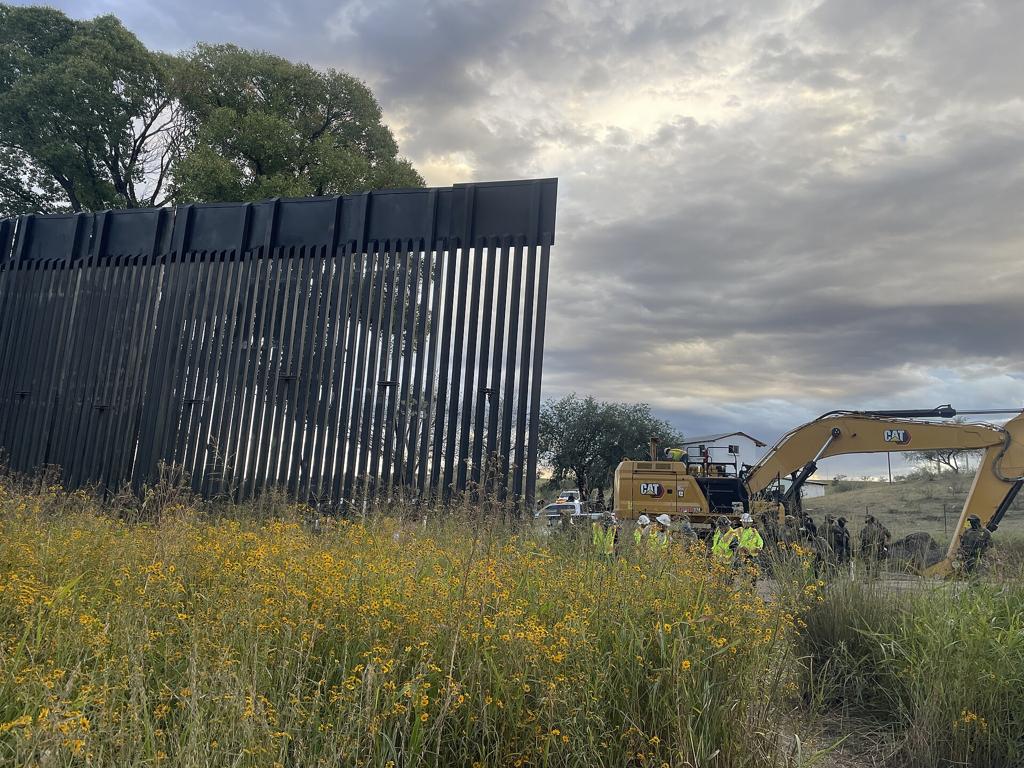
The U.S. Supreme Court on Monday lifted a lower court injunction that had halted the Trump administration’s construction of border wall segments in the Big Bend region of Southwest Texas, allowing work to proceed while legal challenges continue. The order, issued without a full written opinion, represents a significant victory for the administration’s border security agenda. Justice Ketanji Brown Jackson dissented but did not provide a written explanation for her position.
Explainer Understanding the Supreme Court’s Impact on Law and Liberty
The Supreme Court’s decision means that construction of the wall can resume in the disputed area, at least temporarily, as litigation over the legality of the project continues in the lower courts. The ruling comes amid ongoing national debate over the scope of executive authority in matters of border enforcement and the balance between security and environmental protection.
The dispute centers on whether Department of Homeland Security Secretaries Kristi Noem and Markwayne Mullin had the legal authority to waive environmental and conservation laws in order to expedite wall construction in the Big Bend area, which includes land near a national park. The waivers were issued under the authority of the Illegal Immigration Reform and Immigrant Responsibility Act (IIRIRA), a statute that allows the DHS secretary to bypass certain laws to facilitate border infrastructure projects.
District Judge Kathleen Cardone, who issued the original injunction on October 2, found that the challengers were likely to succeed on their claims that the secretaries exceeded their legal authority. Judge Cardone relied on the major questions doctrine, a legal principle that limits agency action on issues of broad significance unless Congress has clearly authorized such action. She concluded that the waivers went beyond what Congress had intended and that the executive branch could not act without explicit legislative approval in matters of such importance.
Supreme Court’s Reasoning
In its unsigned per curiam order, the Supreme Court found that the government is “exceedingly likely to prevail” on its argument that Judge Cardone lacked jurisdiction to consider the challengers’ major-questions-doctrine claim. The Court explained that the relevant statute only allows district courts to hear claims alleging constitutional violations, not claims that the executive branch exceeded its statutory authority. The majority wrote, “That conclusion does not change where, as here, a plaintiff invokes the major-questions doctrine.”
The Court also determined that other factors weighed in favor of the government, including the risk of irreparable harm if construction was delayed and the balance of equities tipping toward federal interests. The ruling cited Congress’s enactment of the IIRIRA as evidence of legislative intent to prioritize border security over the harms alleged by challengers. The Court stated that the government’s interest in border security outweighs the aesthetic, recreational, and environmental harm alleged by the plaintiffs.
“The Government’s interest therefore outweighs any aesthetic, recreational, and environmental harm alleged by respondents.”
— Supreme Court per curiam decision
The stay issued by the Supreme Court will remain in effect while the government prepares and files a petition for a writ of certiorari, and until the Court decides whether to hear the case on the merits. If the Court ultimately denies the petition or rules on the merits, the stay will end accordingly. Justice Jackson’s dissent was noted in the order, but she did not provide a written explanation for her disagreement with the majority.
Arguments and Legal Context
Solicitor General John Sauer, representing the administration, argued in Supreme Court filings that Congress “denied district courts jurisdiction to entertain” the type of claims brought in this case. Sauer described the challengers’ major-questions claim as “border[ing] on frivolous” and criticized Judge Cardone for what he characterized as an improper rewriting of the law to limit the secretary’s waiver authority.
Judge Cardone, a Bush appointee, had previously explained that the plaintiffs were likely to prevail because the DHS secretaries lacked clear legal authority for the waivers, invoking the major questions doctrine. Her ruling reflected concerns that the executive branch was acting beyond the scope of its statutory authority and that such significant policy decisions should be made by Congress, not by administrative agencies.
The Supreme Court’s order does not resolve the underlying legal questions about the scope of executive authority or the validity of the waivers. Instead, it allows construction to proceed while the litigation continues. The case will likely return to the lower courts for further proceedings, and the legal battle over the border wall is expected to continue for months, if not longer.
Broader Border Security Debate
The case highlights the ongoing legal and political battles over border enforcement and the limits of executive power. The Trump administration has made rapid border wall construction a central part of its immigration and security policy, frequently relying on statutory waivers to bypass environmental regulations and other legal requirements. Supporters of the administration’s approach argue that Congress has granted the executive branch broad authority to act in the interest of national security, particularly along the southern border.
Opponents, including environmental groups and local landowners, contend that the use of waivers exceeds executive power and threatens protected lands, wildlife habitats, and the recreational value of areas like Big Bend. They argue that the administration’s actions undermine important environmental protections and set a dangerous precedent for future executive overreach.
The Supreme Court’s order does not address these substantive concerns, leaving the challengers’ arguments about environmental and recreational impacts unresolved for now. The administration’s critics have not yet responded in detail to the Court’s latest action, and the broader debate over border security and executive authority is likely to continue as the case proceeds through the courts.
The outcome of this litigation could have significant implications for the future of border enforcement policy and the ability of federal agencies to bypass statutory requirements in the name of national security. For now, the Supreme Court’s decision ensures that construction of the border wall in the Big Bend region will move forward, even as the legal fight continues.