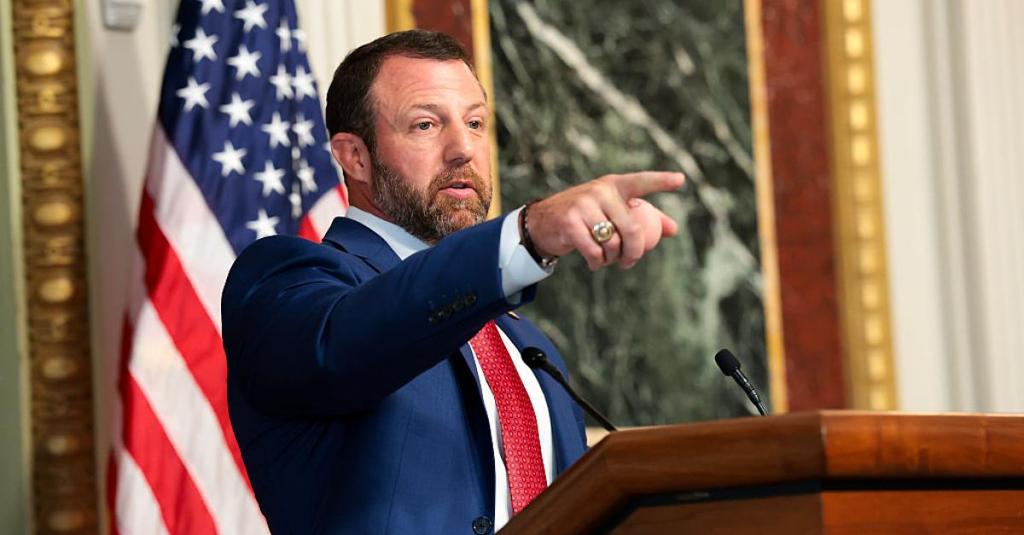
Department of Homeland Security Secretary Markwayne Mullin has issued strong criticism of U.S. District Judge Jinsook Ohta, who was appointed by President Joe Biden, following her decision to order the release of David Antonio Aviles Perez. Perez, a 35-year-old member of the MS-13 gang, was previously convicted of aggravated murder in El Salvador.
Explainer Inside U.S. Immigration and Customs Enforcement: Law Enforcement, Controversies, and National Security
The case has attracted national attention and sparked debate over the intersection of judicial decisions, immigration enforcement, and public safety. It has become a focal point in ongoing discussions about how the U.S. justice system handles individuals with violent criminal backgrounds who are also in the country illegally.
Perez was convicted in El Salvador in December 2025 and sentenced to 20 years in prison for aggravated murder, according to the Department of Homeland Security (DHS). Prior to his conviction abroad, Perez was arrested by police in Monterey, California, in 2023. Authorities allege that he swung a machete at a homeless man in Laguna Grande Park, an incident that contributed to concerns about his potential danger to the community.
Judge Ohta’s Decision
Judge Ohta ordered Perez's release after determining that he had been held for five months without a bond hearing. According to reports, U.S. immigration officials had not formally assessed whether Perez posed a flight risk or a danger to the community before his release was ordered. This procedural issue was central to Judge Ohta’s decision.
DHS has noted that this is the second time Perez has been released in California. The agency emphasized that Perez is wanted for murder in El Salvador and described him as a “dangerous illegal” who poses a significant threat to public safety. The repeated release of Perez has heightened concerns among law enforcement officials and has fueled criticism from federal authorities.
DHS Response and Public Safety Concerns
In a statement released Saturday, Secretary Mullin condemned Judge Ohta’s ruling. He stated, “This radical activist judge has put American lives at risk by releasing a wanted murderer.” Mullin further argued that, “Because sanctuary politicians want to play politics from the bench, innocent Americans are in danger.”
DHS reiterated its position in a press release, warning that the release of Perez undermines ongoing efforts to keep violent offenders off U.S. streets. The agency expressed frustration that judicial decisions could override law enforcement efforts to detain individuals with serious criminal records, particularly those wanted for violent crimes abroad.
The department’s statement also highlighted the challenges faced by federal authorities in balancing due process rights with public safety concerns. The lack of a formal determination regarding Perez’s risk to the community was cited as a key procedural gap that contributed to his release.
Broader Context and Reactions
The release of Perez comes at a time of heightened debate over the role of federal judges in immigration cases, as well as the impact of sanctuary policies on public safety. Critics of sanctuary policies argue that such measures can hinder cooperation between local law enforcement and federal immigration authorities, potentially allowing individuals with violent criminal backgrounds to remain in the country.
Supporters of judicial independence and due process, however, contend that individuals held in detention are entitled to timely bond hearings and that procedural safeguards are essential to upholding constitutional rights. Judge Ohta’s decision to release Perez was based on the finding that he had been detained for five months without a bond hearing, raising questions about the balance between individual rights and community safety.
The case has underscored ongoing tensions between federal law enforcement agencies and the judiciary over how best to handle individuals in the country illegally who have been convicted of violent crimes abroad. It has also reignited debate over the responsibilities of judges, the discretion of law enforcement, and the effectiveness of current immigration enforcement policies.
As of Saturday, Judge Ohta and representatives for the court had not publicly responded to Secretary Mullin’s criticism or addressed the statements issued by DHS. The lack of response has left questions about the judicial rationale and the broader implications of the decision unanswered.
The situation remains under close scrutiny by both federal officials and the public, as policymakers and law enforcement agencies continue to grapple with the complex issues at the intersection of immigration, criminal justice, and public safety.