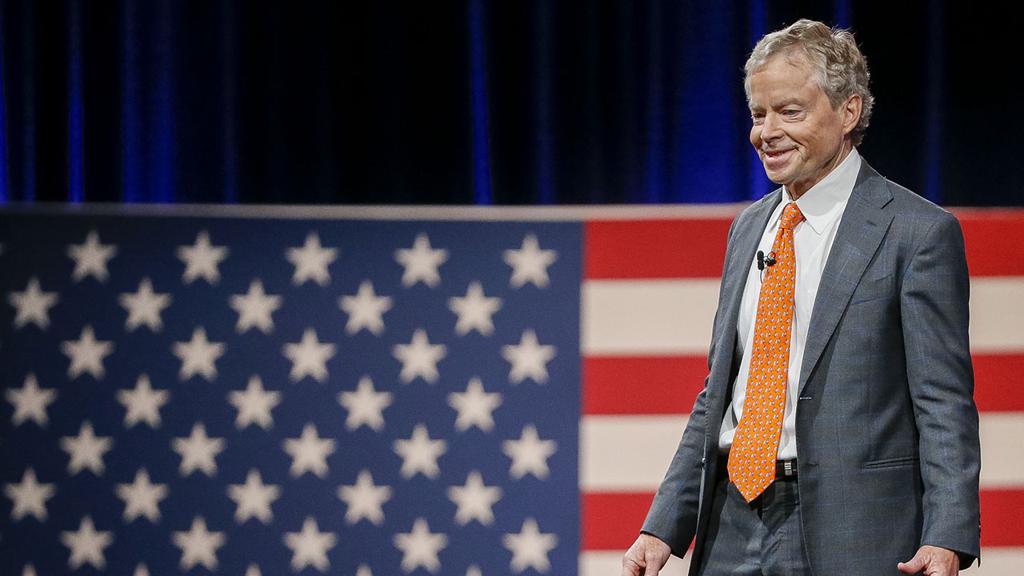
Texas Comptroller Don Huffines has called on President Donald Trump, the Department of Homeland Security, and U.S. Immigration and Customs Enforcement (ICE) to audit every state and local government agency in Texas. Huffines says this action is necessary due to what he describes as decades of failures in verifying employment eligibility across state agencies, a problem that could have significant financial and legal consequences for Texas taxpayers.
Explainer Redistricting Battles: How Maps Shape American Political Power
The request comes after Huffines' office reported discovering widespread noncompliance with federal Form I-9 requirements. The Form I-9, mandated under the Immigration Reform and Control Act of 1986, requires all U.S. employers to verify the legal work status of their employees. According to Huffines, problems with compliance in Texas state agencies may stretch back as far as 20 years. This could potentially expose the state to at least $5 million in federal civil penalties, with the possibility of even higher costs if further violations are uncovered.
Findings and Federal Request
Huffines said the Texas Comptroller's office began consulting independent legal counsel after identifying what he called systemic failures in its own hiring practices. According to Huffines, these failures were not isolated incidents but part of a broader pattern that may have been known to some within government. He alleges that "people inside government" were aware of these issues but concealed them from the public, allowing the problems to persist for years.
"If 90 days of auditing found this in one agency, Texans should ask what is sitting in all the others. We are the outsiders who found it, and sunlight is the best disinfectant."
— Don Huffines, Texas Comptroller
Huffines is now urging federal authorities to review the employment eligibility of every government employee in Texas. He argues that the state of Texas should be held to the same standards as private businesses when it comes to compliance with federal I-9 requirements. "The state of Texas needs to pay its fines for violating federal I-9 requirements, just like every business has to. And every government entity out of compliance should be audited and pay up too," Huffines said.
The call for federal audits comes after Huffines' office conducted a 90-day review of its own hiring practices, which he says revealed significant gaps in employment verification. Huffines has not specified the exact number of employees affected or whether any unauthorized workers were identified, but he maintains that the findings are serious enough to warrant a statewide review.
Political Transition and Broader Context
Huffines took office as comptroller on August 1, 2026, after being appointed by Governor Greg Abbott. He replaced acting Comptroller Kelly Hancock, who resigned earlier that year. Huffines, a Republican, campaigned on a platform of government accountability and transparency. He has characterized the employment verification failures as evidence of "decades of neglect and weak leadership" within Texas state government.
Huffines' tenure as comptroller is set to be brief. He lost his bid for a full term to Democrat Sarah Eckhardt, who won 51.3% of the vote to Huffines' 46.2%. Eckhardt's victory marks the first time in decades that a Democrat will oversee Texas' revenue forecasts, tax collections, and government purchases. Huffines is scheduled to leave office in January 2027.
The timing of Huffines' announcement comes during a period of political transition for the state. As he prepares to leave office, Huffines has made clear that he wants to address what he sees as longstanding problems before his successor takes over. He has framed the employment verification issue as a matter of public trust and fiscal responsibility, emphasizing the potential costs to taxpayers if the state is found to be in violation of federal law.
Reactions and Next Steps
Huffines' call for sweeping audits has drawn attention from both supporters and critics, though public responses from other officials and advocacy groups have so far been limited. Supporters of Huffines' efforts argue that stronger oversight is needed to ensure compliance with federal law and to protect taxpayer dollars. They say that the discovery of potential violations in one agency raises questions about practices across the entire state government.
Critics, however, have not yet responded publicly to Huffines' claims or his proposals for federal audits. It remains to be seen how incoming Comptroller Sarah Eckhardt and other state leaders will address the issue once she takes office. The agency has not released detailed information on how many employees may have been affected by the compliance failures or whether any unauthorized workers were identified during the initial review.
As Huffines' office continues to investigate the scope of the hiring failures, the outcome of his request for federal audits could have significant implications for state and local government agencies across Texas. The situation highlights ongoing debates over immigration enforcement, government accountability, and the responsibilities of public agencies to follow federal employment laws. For now, Huffines maintains that transparency and accountability are essential, and he is urging federal authorities to take a closer look at employment practices throughout Texas government.