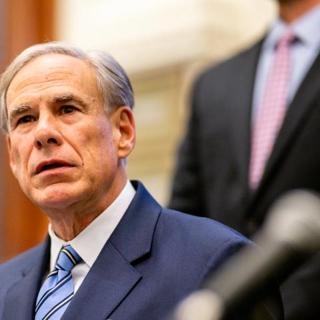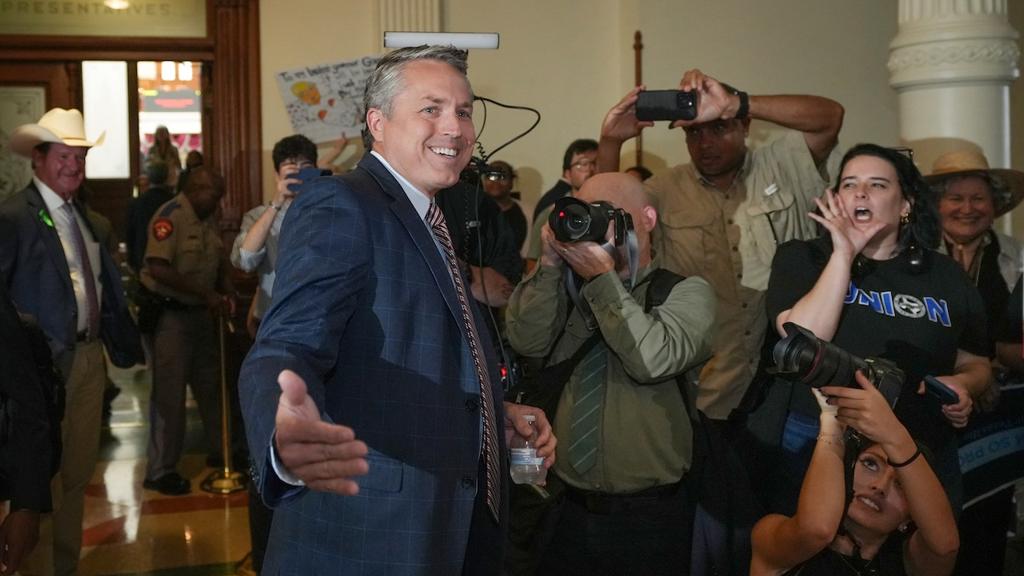
Republican state Rep. Brian Harrison is urging Texas Gov. Greg Abbott to call a special legislative session to restrict the governor’s emergency powers before Democrat Gina Hinojosa assumes office in January. Harrison’s push comes at a pivotal moment for Texas politics, as Republicans prepare to hand over the governorship to a Democrat for the first time in years, sparking a renewed debate over the scope of executive authority in the state.
Explainer Redistricting Battles: How Maps Shape American Political Power
Harrison’s request follows Hinojosa’s election as the next governor of Texas on November 3. Under the Texas Disaster Act of 1975, the governor is granted broad authority to declare states of disaster, issue executive orders with the force of law, and suspend regulations. In addition to these emergency powers, the governor’s office holds significant authority, including the ability to veto legislation, command the state military, and grant pardons or commute sentences. These powers have been the subject of increasing scrutiny, particularly in the wake of the COVID-19 pandemic, when executive actions played a central role in the state’s response.
Harrison’s Legislative Proposal
Harrison is advocating for reforms modeled after House Bill 911, which he previously introduced in 2022. The bill sought to restrict a governor’s ability to suspend or modify laws, require legislative approval for emergency orders lasting beyond 30 days, and allow for judicial review of such orders. Despite Harrison’s efforts, the bill did not receive a committee hearing and ultimately failed to advance.
In response to Hinojosa’s upcoming inauguration, Harrison has launched a petition and is encouraging Texans to sign it, urging Gov. Abbott to convene a special session before Hinojosa is sworn in. Harrison argues that no governor, regardless of party affiliation, should possess such broad emergency authority. He contends that the current laws give the governor powers that extend far beyond what the state constitution intended.
"If these are not revoked, Gina Hinojosa will assume not just the powers our state constitution bestows upon a Governor, but will, in effect, inherit nearly all the powers of a dictator."
— Brian Harrison, Texas state representative
Concerns Over Executive Authority
Harrison has expressed concern that with only 10 weeks left before Democrats take office, Republicans must act swiftly to "protect Texas from near total Democrat rule." He claims that Texas’s current emergency powers laws are "absurd and almost certainly unconstitutional," and warns that Hinojosa will "literally inherit the power to modify laws, ignore laws, or create and enforce laws—including criminal laws—on a whim."
In comments to The Daily Signal, Harrison stated that Hinojosa has already promised to use these executive powers as soon as she takes office. He emphasized that the issue is not about partisan advantage, but about the principle that no governor should have unchecked authority. "No governor, Republican or Democrat, should have these broad emergency powers. Republicans still have power for 10 more weeks. It’s time for Republicans to act like Republicans and get this done," Harrison said.
The debate over the extent of gubernatorial emergency powers in Texas has intensified since the onset of the COVID-19 pandemic. During that period, governors across the country, including in Texas, used emergency declarations to impose restrictions and take actions aimed at controlling the spread of the virus. Critics from both parties have since raised concerns about the potential for unchecked executive action, arguing that such powers should be subject to greater legislative oversight and judicial review.
Next Steps and Response
Gina Hinojosa is scheduled to be sworn in as governor on January 19, 2027, beginning a four-year term. As of publication, Hinojosa and her team have not publicly responded to Harrison’s calls for limiting executive authority. The transition marks a significant shift in Texas politics, and the question of how much power the incoming governor should wield remains a contentious issue.
Whether Gov. Abbott will call a special session to address Harrison’s concerns remains uncertain. The decision could have lasting implications for the balance of power between the executive and legislative branches in Texas. Lawmakers and the public will be closely watching to see if any action is taken before the transition of power, as the debate over emergency powers continues to shape the state’s political landscape.