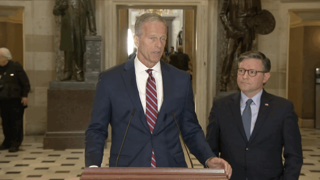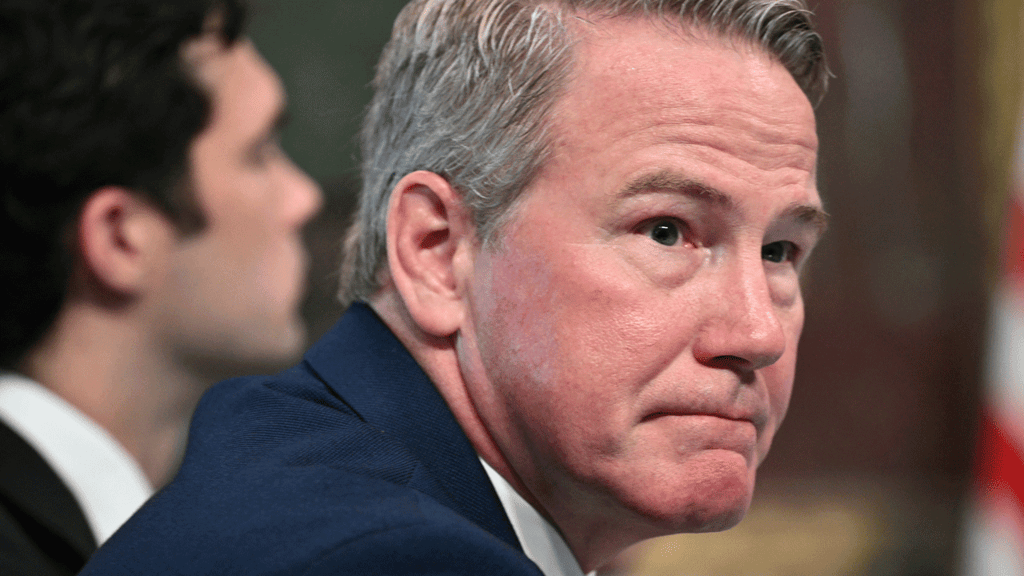
Senate Democrats on Thursday blocked a unanimous consent request from Sen. Jon Husted, R-Ohio, to advance the Ratepayer Protection Act, a bill designed to require data centers to cover the full incremental cost of the electricity infrastructure they use. The move came one day after the House passed the measure by a 417-3 vote, with only three Democrats opposing it and twelve members not voting, according to the official House roll call.
The dispute highlights a growing national debate over who should bear the rising costs of electricity infrastructure as data centers proliferate and energy demand surges. The rapid expansion of data centers, driven by increased demand for cloud computing and artificial intelligence, has put pressure on local and regional power grids. This has led to concerns that ordinary consumers could be forced to subsidize the infrastructure needed by large technology companies.
Husted, who faces a competitive special election in November, introduced the bill in July. He has argued that families, small businesses, and seniors should not be forced to subsidize the energy needs of large tech companies. The Ratepayer Protection Act would direct state utility regulators to consider standards ensuring that large-load customers, such as data centers, pay the full cost of infrastructure required to serve them. "The Ratepayer Protection Act rests on a principle every American understands: Pay your own way," Husted said from the Senate floor.
Senate Block and Competing Proposals
Sen. Martin Heinrich, D-N.M., the top Democrat on the Senate Energy and Natural Resources Committee, objected to Husted’s unanimous consent request. Heinrich argued that Husted’s bill only asks state regulators to consider, rather than require, that data centers pay their own infrastructure costs. Instead, Heinrich promoted his own proposal, the Grid Savings Act, which would mandate such protections and require that large energy users cover the full cost of new infrastructure.
"Working families, small businesses, and senior citizens should not open up their electric bills and discover the pain for the power infrastructure needed by some large tech company in the world or in their neighborhood."
— Jon Husted, U.S. Senator for Ohio
Sen. Bernie Moreno, R-Ohio, objected to Heinrich’s request to advance the Grid Savings Act, stating that the House had already acted decisively on Husted’s bill. Moreno accused Democrats of prioritizing politics over relief for American ratepayers, calling the move "totally depraved." The exchange underscored the partisan divide over how best to address the costs associated with the nation’s growing digital infrastructure.
House Vote and Political Stakes
The Ratepayer Protection Act’s passage in the House saw broad bipartisan support, with only Reps. Summer Lee of Pennsylvania, Delia Ramirez of Illinois, and Rashida Tlaib of Michigan voting against it. The bill’s co-sponsors included Democrats, reflecting cross-party concern about rising utility costs linked to data center expansion. Husted praised House members for "standing up for the American ratepayer" and urged the Senate to follow suit.
The debate comes as data center demand is cited as a factor in rising electricity prices nationwide. Supporters of the bill argue that without legislative action, ordinary consumers will shoulder the costs of new infrastructure needed by large tech firms. Opponents, however, have raised concerns about whether the bill’s language is strong enough to guarantee that data centers will pay their fair share, and whether state regulators should be given more explicit authority.
Election Implications and Broader Context
The standoff in the Senate has immediate political implications. Husted’s opponent in the upcoming Ohio special election, former Sen. Sherrod Brown, has made data center policy a central campaign issue, labeling Husted "the face of data centers" in recent ads. Husted, for his part, has continued to criticize Senate Democrats on social media for blocking the bill, vowing to keep fighting for its passage.
Ohio Gov. Mike DeWine and 22 other Republican governors previously signed a White House pledge in July supporting the principle that data centers should pay their own utility and infrastructure costs. The broader debate over data center expansion, utility rates, and who pays for new infrastructure is expected to remain a flashpoint as energy demand grows and election campaigns intensify.
Heinrich has argued that stronger mandates are needed, while supporters of Husted’s approach say it offers a fair standard without overregulation. Senate Democrats have not indicated when or if they will bring either bill to a full vote. As the debate continues, both parties are likely to use the issue to appeal to voters concerned about rising costs and the influence of large technology companies on local economies and utility rates.