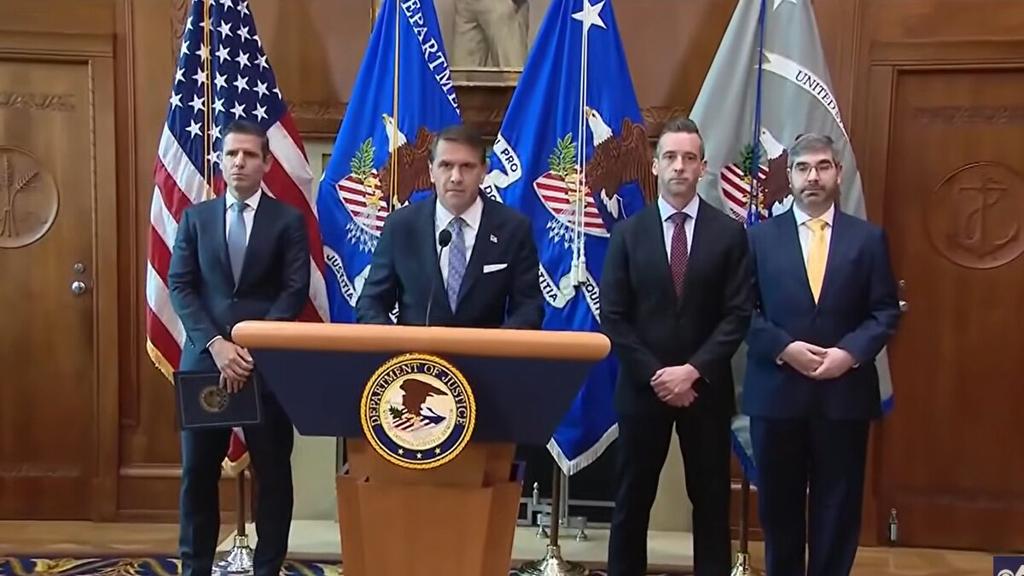
Federal prosecutors in New York have charged 11 individuals with orchestrating a decade-long, nationwide marriage fraud scheme that allegedly arranged more than 1,000 sham weddings, primarily pairing Chinese nationals with U.S. citizens in exchange for green cards. According to an indictment unsealed this week, foreign nationals paid up to $100,000 for a fraudulent marriage, while participating U.S. citizens received as much as $30,000. Recruiters were paid $5,000 per match. The Department of Justice (DOJ) said the network operated for over ten years before being dismantled by federal authorities.
Explainer Understanding the Supreme Court’s Impact on Law and Liberty
The case comes at a time of heightened debate over the boundaries of U.S. citizenship, following a recent Supreme Court decision that reaffirmed birthright citizenship and limited the government’s ability to restrict citizenship acquired by birth on U.S. soil.
Details of the Marriage Fraud Scheme
According to prosecutors, the marriage fraud ring engineered a complex system of payments and paperwork designed to evade detection by U.S. Citizenship and Immigration Services (USCIS) for years. The network allegedly staged milestone payments, created fake joint bank accounts, and fabricated documentation to withstand scrutiny during interviews and site visits by immigration officials. The indictment describes how recruiters and participants structured payments to coincide with each stage of the immigration process, including initial marriage filings, interviews, and the granting of green cards.
The DOJ noted that the network’s financial activities included recurring international wire transfers and suspicious joint filings, which could have triggered earlier detection if monitored more closely. Authorities allege that the scheme was able to operate for over a decade due to the sophistication of its methods and the volume of fraudulent marriages processed.
Attorney General Todd Blanche commented on the case, stating, "This Department of Justice is rooting out fraud everywhere, including in our immigration system." The DOJ emphasized that the defendants are presumed innocent until proven guilty and that the investigation is ongoing, with further arrests or indictments possible.
The indictment charges the defendants under 8 U.S.C. § 1325(c) and 18 U.S.C. § 1546, statutes that criminalize marriage fraud and related immigration offenses. The agency described such schemes as a "deliberate affront to the United States and our laws and will not be tolerated."
Supreme Court Ruling on Birthright Citizenship
The charges were announced just weeks after the Supreme Court’s decision in Trump v. Barbara, which struck down an executive order that would have denied automatic citizenship to children born in the U.S. to parents who are unlawfully or temporarily present. In a 6-3 decision authored by Chief Justice John Roberts, the Court held that the 14th Amendment guarantees citizenship to nearly all children born on U.S. soil, regardless of their parents’ immigration status. This decision effectively makes birthright citizenship constitutionally untouchable without a constitutional amendment.
The Supreme Court’s ruling has closed off one avenue for restricting citizenship, leaving marriage-based and other statutory immigration paths as the remaining areas open to federal enforcement. While birthright citizenship is now constitutionally protected, marriage does not automatically confer citizenship. Instead, marriage to a U.S. citizen makes a foreign national eligible to apply for a green card. After three years as a lawful permanent resident married to a U.S. citizen, an individual may apply for naturalization, but must still pass background checks and meet other requirements.
Ongoing Enforcement and Debate
Attorney General Blanche called for increased vigilance against marriage-based immigration fraud, stating that the tools for detection exist but must be applied proactively. The DOJ’s announcement did not specify whether additional resources would be allocated to investigate similar schemes in the future, but emphasized the importance of maintaining the integrity of the immigration system.
Critics of the Supreme Court’s decision argue that it limits the government’s ability to address certain types of immigration fraud, particularly those involving birthright citizenship. Supporters, however, maintain that birthright citizenship is a constitutional guarantee that should not be subject to executive or legislative changes without a constitutional amendment. The administration has not commented on whether it will pursue a constitutional amendment or other legislative changes in response to the ruling.
The 11 defendants charged in the marriage fraud case face federal charges and await trial in New York. The DOJ said the investigation remains ongoing and did not rule out further arrests or indictments. The case highlights the ongoing tension between statutory and constitutional paths to U.S. citizenship, as federal enforcement adapts to new legal limits following the Supreme Court’s decision.
For more information, see the Department of Justice’s announcement and relevant statutes on marriage fraud.