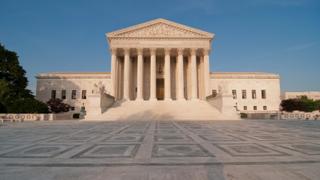
The Supreme Court has agreed to hear challenges to President Donald Trump’s executive order regarding birthright citizenship, a move that has sparked significant debate among legal scholars and political commentators. Critics argue that the Constitution guarantees citizenship to anyone born on U.S. soil, citing the 1898 case United States v. Wong Kim Ark as a precedent. Supporters of the challenges contend that the interpretation of the 14th Amendment in Wong Kim Ark is flawed and should be overturned.
The core tension centers on whether the historical understanding of citizenship should be revised to reflect contemporary views on immigration and national sovereignty. Proponents of the challenges assert that the current interpretation has led to unintended consequences, while opponents maintain that it is a well-established legal principle that protects the rights of individuals born in the U.S.
Wong Kim Ark was born in 1873 to Chinese parents in San Francisco and was later denied re-entry into the United States after a trip to China. The Supreme Court ruled in a 6-2 decision that he was a U.S. citizen at birth because he was born on U.S. soil to parents who were permanent residents. Justice Horace Gray, who wrote the majority opinion, based his reasoning on English common law principles, asserting that the 14th Amendment affirms citizenship by birth within the territory.
Historical Context of the 14th Amendment
Critics of the Wong Kim Ark decision, including legal scholar Edward Erler, argue that the ruling misinterprets the intentions of the framers of the 14th Amendment. Erler contends that the phrase "subject to the jurisdiction" was deliberately chosen to avoid the common law concept of allegiance, which was rooted in English feudal principles. He states, "The framers of the Citizenship Clause intentionally avoided using the word ‘allegiance’ in the clause because they wanted to dispel any idea that citizenship derived from the common law."
The dissenting opinion in Wong Kim Ark also highlighted the inappropriateness of relying on common law to define American citizenship. The dissenters argued that the American Revolution fundamentally rejected the principles of English common law, stating, "When the sovereignty of the Crown was thrown off and an independent government established, every rule of the common law... was abrogated."
Implications of Overturning Wong Kim Ark
If the Supreme Court decides to overturn Wong Kim Ark, it could significantly alter the landscape of birthright citizenship in the United States. Supporters of the challenges argue that the current interpretation has led to a system that allows for citizenship by birth to individuals who may not have a legitimate claim to it. They assert that this could undermine national sovereignty and the rule of law.
However, opponents of the challenges argue that overturning Wong Kim Ark could create legal chaos and undermine the rights of individuals born in the U.S. They maintain that the ruling has been a cornerstone of American citizenship law for over a century and that changing it could have far-reaching consequences.
As the Supreme Court prepares to hear these challenges, the debate over birthright citizenship continues to intensify. Legal experts and political leaders from both sides are closely watching the developments, as the outcome could reshape the understanding of citizenship in America.
The Supreme Court’s decision to review the challenges to Wong Kim Ark underscores the ongoing complexities surrounding immigration and citizenship in the United States. With differing interpretations of the 14th Amendment and its implications for modern society, the court's ruling will likely have lasting effects on the legal framework governing citizenship in the country.