Trump-backed conservatives secured decisive victories in Arizona's Republican primaries on Tuesday, signaling a significant shift in the state's political landscape. According to reporting by The Federalist, House Freedom Caucus member Andy Biggs won over 70 percent of the gubernatorial primary vote, while Jay Feely, also endorsed by former President Donald Trump, captured the GOP nomination for a key congressional seat in Maricopa County. These results underscore a consolidation of conservative support within the Arizona GOP and could have far-reaching implications for the upcoming November general election.
Explainer Voter ID Laws: Securing Elections While Debating Accessibility and Integrity
Arizona has long been recognized as a battleground state, not just between Republicans and Democrats, but also within the Republican Party itself. For years, the state has seen a tug-of-war between its conservative and moderate GOP factions. This internal division has been especially pronounced as Democrats have gained ground, most notably with the election of Governor Katie Hobbs. Hobbs has exercised her executive authority by frequently vetoing Republican-led legislation, reflecting the ongoing partisan and ideological tensions in the state. The latest primary results, however, suggest that the conservative wing of the GOP is gaining the upper hand, potentially ending years of internal strife.
Primary Results and Key Races
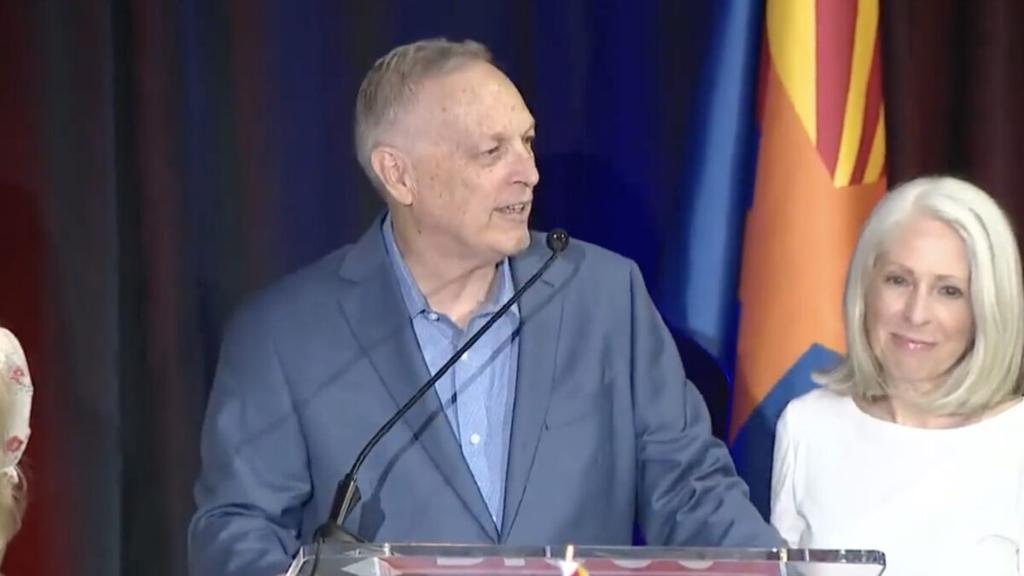
Andy Biggs, who currently serves in Congress and is a prominent member of the House Freedom Caucus, emerged as the clear winner in the Republican gubernatorial primary, securing more than 70 percent of the vote. Biggs's victory is seen by many as a mandate from the party's conservative base. The Arizona Republican Assembly, a group known for its conservative leanings, has also rated Arizona Senate President Warren Petersen—the likely Republican nominee for attorney general—as having the most consistently conservative voting record in the state Senate. This further highlights the growing influence of the conservative faction within the party.
In Maricopa County, Jay Feely's victory in the GOP primary for a critical congressional seat has drawn significant attention. Feely, who received a high-profile endorsement from Trump, is now positioned to compete in a district that analysts consider essential for Republican hopes of controlling the U.S. House of Representatives. The Prickly Pear, a conservative news site in Arizona, described Biggs's win as a decisive moment for the party, stating, "A blowout of that size is a verdict on who owns the party’s base in a true battleground, and the answer was not close."
The importance of Feely's win in Congressional District 1 has also been emphasized by party strategists and local media. The Prickly Pear noted, "The House runs through Scottsdale. In Congressional District 1, Trump-backed Jay Feely won the GOP primary for a seat analysts say neither party can win the House without." This underscores the national significance of Arizona's congressional races and the potential impact on the balance of power in Washington.
Reactions and National Attention
The outcomes of the Arizona Republican primaries have sparked a range of reactions both within the state and nationally. Arizona conservatives have largely celebrated the results, viewing them as a sign of renewed unity and strength within the party. In contrast, national media outlets such as The Hill and NPR have expressed concern about the rise of Trump-aligned candidates. The Hill, for example, warned that "election denialism holds strong" in Arizona, referencing the state's recent history of nominating candidates who have questioned the legitimacy of past election outcomes.
These developments have not gone unnoticed by Republican strategists, who are now focusing their efforts on key races such as Arizona's 1st Congressional District. Feely's victory is seen as pivotal for the GOP's chances of regaining or maintaining control of the House. The attention on Arizona reflects its status as a bellwether state, where local races can have national consequences.
Ongoing Party Divisions and Democratic Response
Arizona's political landscape in recent years has been shaped by deep divisions within the Republican Party. The 2022 gubernatorial race, in which Kari Lake—another Trump-endorsed candidate—failed to secure victory and publicly criticized Republicans aligned with the late Senator John McCain, highlighted the ongoing rift between the party's conservative and moderate wings. This infighting has, at times, benefited Democrats, as evidenced by Governor Hobbs's ability to veto more than 500 bills passed by the Republican-led legislature. Hobbs has also issued executive orders on contentious issues, including public funding for gender-related surgeries, further illustrating the policy divide between the parties.
Despite the significance of the primary results, Democratic officials and supporters have not issued formal responses. National media coverage has instead focused on the potential implications of a more unified and Trump-aligned Arizona GOP, particularly regarding future disputes over election integrity and the direction of state and national policy.
As the general election in November approaches, all eyes will be on Arizona to see whether the newfound conservative unity within the GOP can translate into electoral victories at both the statewide and congressional levels. The outcome could alter the balance of power in a state that, while recently leaning Democratic at the executive level, remains fiercely contested and politically consequential.
For more detailed analysis, see The Federalist's coverage of the Arizona primaries.