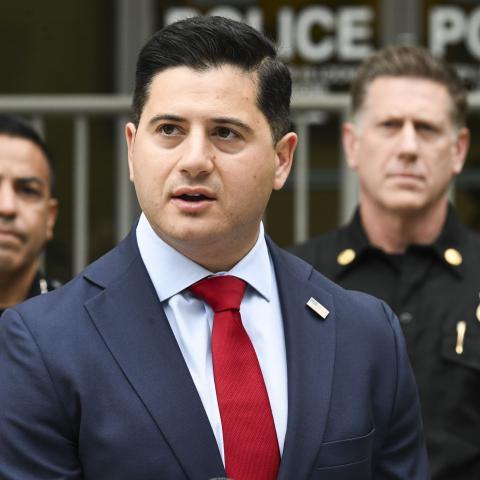
A federal judge on Tuesday ruled that Bill Essayli, the acting U.S. attorney for southern California and a former Republican state lawmaker, was unlawfully serving in his role and disqualified him from overseeing two ongoing criminal prosecutions. The decision stems from a legal challenge to the Trump administration’s efforts to keep Essayli in office without Senate confirmation, raising questions about the limits of presidential authority in appointing top federal prosecutors and the potential impact on ongoing criminal cases.
Explainer Understanding Public Safety Trends: Crime Declines and Rising Challenges for Law Enforcement
Essayli was appointed interim U.S. attorney in April 2025 but was never formally nominated by President Donald Trump, allowing him to lead the office without Senate confirmation. After his interim term ended last July, the administration gave him an “acting” title, and he continued to serve as “first assistant” after a previous court found his appointment unlawful. The Department of Justice has said it intends to appeal the latest ruling, and the order will not immediately take effect.
Judge Seabright’s Decision
U.S. District Judge Michael Seabright issued the ruling, citing a recent federal appellate court decision from Nevada in a similar case as precedent. Seabright found that Essayli was unlawfully serving even under the designations of “special attorney” and “first assistant,” and therefore could not supervise the two prosecutions where defense attorneys had challenged his authority. The judge’s order specifically bars Essayli from any supervisory role in those cases, effectively removing him from any involvement in their management or oversight.
The judge’s decision is significant because it addresses not only Essayli’s original appointment but also the subsequent attempts to keep him in a leadership role through different titles. By referencing the Nevada appellate court ruling, Judge Seabright reinforced the principle that the executive branch cannot circumvent the Senate confirmation process by simply changing an official’s title or designation. The ruling underscores the judiciary’s role in checking executive actions that may conflict with established federal appointment procedures.
Legal and Political Background
The legal battle over Essayli’s appointment is part of a broader series of challenges to the Trump administration’s use of interim and acting appointments for senior Justice Department positions. Critics have argued that bypassing the Senate confirmation process undermines the legitimacy of federal prosecutions and weakens the constitutional checks and balances designed to prevent executive overreach. The use of acting and interim appointments has been a contentious issue, with opponents claiming it allows administrations to install loyalists in key positions without proper oversight.
Essayli, described as an ally of Donald Trump, has faced repeated legal scrutiny since his initial appointment. Courts have previously ruled against similar maneuvers in other states, finding that the administration’s approach to filling top Justice Department roles without Senate approval violates federal law. The ongoing legal challenges reflect broader concerns about the independence and integrity of the Justice Department and the importance of adhering to established appointment procedures.
Supporters of the administration have argued that the president and attorney general should have flexibility in selecting supervisors within the Justice Department, especially during periods of transition or vacancy. However, critics maintain that the confirmation process is essential to ensuring accountability and public trust in federal law enforcement.
Essayli’s Response and Next Steps
In a statement, Essayli said he “respectfully” disagreed with the ruling, arguing that the president and attorney general have “every right to select supervisors within the Justice Department.”
“I respectfully disagree with the ruling, as the president and attorney general have every right to select supervisors within the Justice Department.”
— Bill Essayli, acting U.S. attorney
The Department of Justice has announced plans to appeal the decision. The order does not take immediate effect, leaving the status of the two prosecutions in question as the legal process continues. This means that, for now, Essayli may continue in his role while the appeal is pending, but his ultimate authority over the cases remains uncertain.
Defense attorneys in the affected cases have argued that Essayli’s lack of Senate confirmation undermines the legitimacy of his oversight and could call into question the fairness of the prosecutions. They contend that only properly confirmed officials should have the authority to supervise federal prosecutions, especially in high-profile or sensitive cases. Supporters of the administration have not addressed the criticism directly, focusing instead on the need for executive flexibility in staffing key positions.
The outcome of the appeal and the future of the prosecutions under new supervision remain to be determined. The case is being closely watched as a test of the limits of presidential appointment powers and the role of the courts in enforcing federal law. As the legal process unfolds, the decision could have broader implications for how future administrations fill senior Justice Department positions and for the conduct of federal prosecutions nationwide.