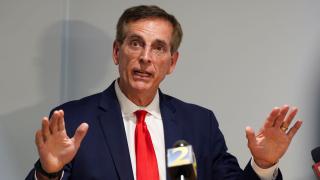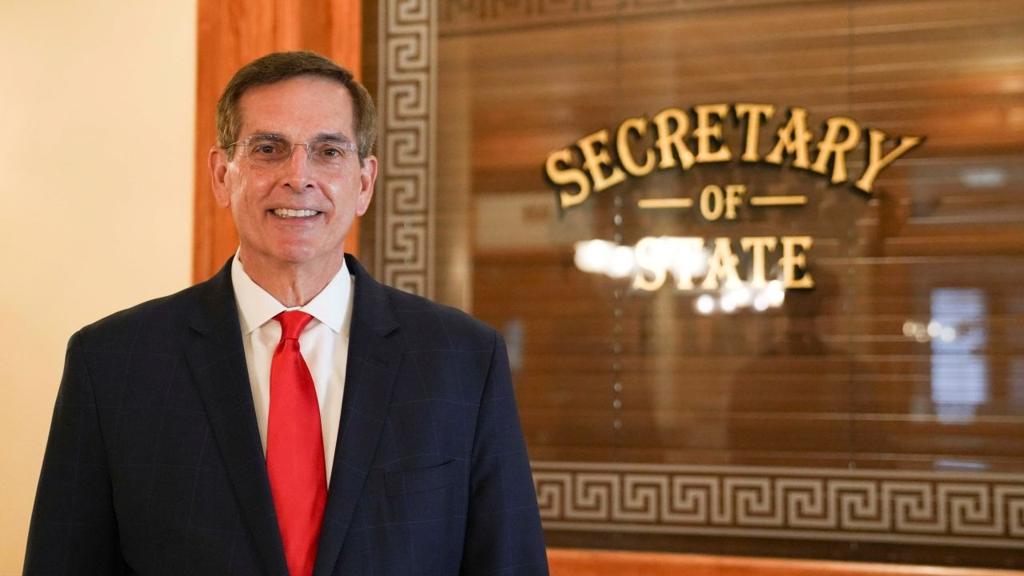
Georgia Secretary of State Brad Raffensperger this week defended the state’s election security measures as the U.S. Department of Justice (DOJ) announced plans to send federal monitors to six counties on Election Day. The move comes as Georgia remains under a national spotlight for its election procedures, with ongoing debates about ballot integrity and voter eligibility.
Explainer Election Integrity in America: Safeguarding Voter Trust and Ballot Security
The DOJ’s decision to deploy observers is part of a broader federal effort to ensure compliance with voting rights laws and to monitor for any potential irregularities. The six counties—Bibb, Chatham, Cobb, DeKalb, Fulton, and Gwinnett—are among Georgia’s most populous and are considered Democratic strongholds. The presence of federal monitors is not new in Georgia, but it underscores the heightened attention on the state’s elections following controversies in recent years.
Raffensperger’s Security Measures
Speaking at an event in Gwinnett County, Raffensperger emphasized the state’s preparations and pointed to increased early voter turnout as evidence of public confidence in the process. “Participation is about 5-7% higher than we had back in 2022, with one less day of voting,” he said. Raffensperger expressed optimism about the state’s readiness, stating that his office is committed to delivering an election “that Georgians can trust.”
To bolster transparency and accuracy, Raffensperger outlined a series of post-election audits. “We’re going to be doing 20 risk-limiting audits, and that’ll be 14 of the congressional [elections] and then six of the statewide [elections],” he explained. Each county will conduct seven risk-limiting audits, with ballot images scanned and tabulated for every race. Observation areas will be available for both Democratic and Republican parties, particularly during the absentee ballot acceptance and tabulation process. These measures are designed to allow for bipartisan oversight and to address concerns about the handling of ballots.
Former U.S. Senator Saxby Chambliss, who serves on Raffensperger’s Election Integrity Task Force, echoed the secretary’s confidence in the system. “The purpose of the task force is to help ensure that the integrity of the voting system around the state is impeccable, and that’s what we’re seeing today,” Chambliss said. The task force, which includes election officials and outside experts, reviews procedures and recommends improvements to further strengthen election security.
DOJ Monitors and Federal Oversight
The DOJ’s plan to send monitors to six Georgia counties is part of a routine practice in jurisdictions with histories of voting rights concerns or where there is significant public interest. Assistant Attorney General Harmeet Dhillon stated that the observers’ primary role is to monitor the conduct of elections and ensure compliance with federal law. The monitors are expected to observe polling places, review procedures, and report any issues that arise.
When asked about the prospect of federal interference, Raffensperger said he was not concerned. “I expect that the DOJ monitors will be professionals like they always have been for all the other previous election cycles,” he said. Raffensperger’s comments suggest a cooperative approach with federal authorities, while maintaining that Georgia’s own safeguards are sufficient.
Ongoing Integrity Debates
Despite assurances from state officials, debates over election integrity in Georgia continue to draw national attention. The state has faced repeated scrutiny since the 2020 presidential election, when allegations of irregularities and fraud were widely circulated. Former President Donald Trump and his allies have been among the most vocal critics, often citing claims of large numbers of ballots being added in 2020, particularly in Fulton County. In a 2021 transcript published by the Washington Post, Trump alleged that “anywhere from 250 to 300,000 ballots [that] were dropped mysteriously into the rolls,” a claim that Raffensperger and state investigators have consistently rejected.
Concerns about voter eligibility have also persisted. A recent investigative report by The Center Square cited elections data analyst Mark Davis, who warned about the risk of illegal ballots cast by individuals no longer living at their registered addresses. According to the report, the state’s elections office “refused to look at data estimating the extent of the problem.” These claims have fueled calls from some quarters for additional audits and reforms.
Raffensperger addressed another area of concern—noncitizens on the voter rolls—by highlighting steps his office has taken to verify citizenship. “I did the first citizenship verification in the entire country in ’22,” he said, referencing both the initial effort and subsequent checks in later years. He also cited an outside audit by the Department of Audits, which found that the state’s voter list was “clean” and “99.9% accurate.”
Supporters of Georgia’s current system, including Raffensperger and Chambliss, argue that the state’s election safeguards are robust, transparent, and subject to continuous improvement. They point to the use of risk-limiting audits, bipartisan observation, and external reviews as evidence of a secure process. Nevertheless, critics continue to press for further scrutiny, citing concerns about ballot security, voter eligibility, and the potential for errors or fraud.
As Election Day approaches, Georgia’s election officials say they are prepared to address any issues that arise and to work with federal monitors to ensure a fair and transparent process. The ongoing debates highlight the challenges of balancing public confidence, transparency, and security in one of the nation’s most closely watched battleground states.