Federal officials are investigating allegations that interpreters at Lewiston City Hall in Maine improperly assisted Somali-speaking voters during early voting, potentially violating state election laws. U.S. Attorney for Maine Andrew B. Benson confirmed his office is reviewing security footage and complaints related to the conduct of interpreters, who were reportedly affiliated with local NGOs.
Explainer Wisconsin Elections: Understanding Recent Changes and Challenges
The probe centers on whether interpreters crossed legal boundaries by influencing voters' choices or filling out ballots, raising questions about the integrity of the voting process in a closely watched election.
The investigation follows the release of 140 hours of security footage obtained by The Maine Wire under the state's Freedom of Access Act. The footage allegedly shows interpreters assisting more than 200 non-English-speaking voters, with some interpreters appearing to point at ballot choices or fill out ballots themselves. Maine law prohibits anyone from instructing another on how to mark a ballot, except under limited circumstances, and bars influencing voters within 250 feet of a polling place, according to Title 21-A, §682 and §672.
DOJ and State Response
U.S. Attorney Benson stated, “We review all evidence concerning complaints of voter intimidation and election interference, including the video from Lewiston’s early voting at City Hall. We will not tolerate threats to the integrity of our elections, and we look forward to working with the Attorney General’s Office and the Secretary of State’s office to defend our democracy.”
Lewiston City Clerk Kathy Montejo reported that her office has forwarded complaints of both voter intimidation and electioneering to Maine Secretary of State Shenna Bellows. Montejo said, “It is important that this be addressed so voters feel safe and comfortable and confident when they’re going into their voting place to be able to vote.”
"We will not tolerate threats to the integrity of our elections, and we look forward to working with the Attorney General’s Office and the Secretary of State’s office to defend our democracy."
— Andrew B. Benson, U.S. Attorney for Maine
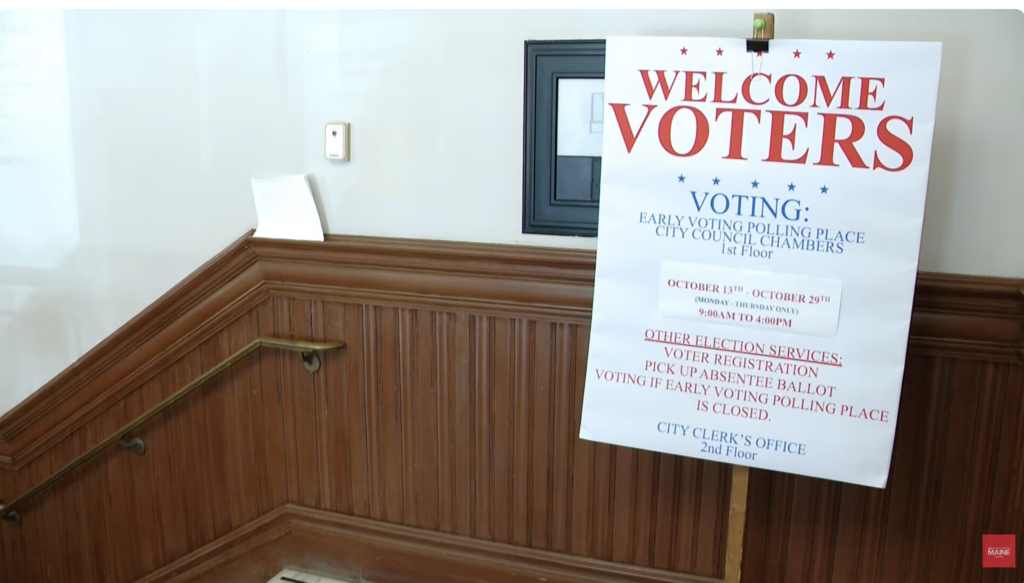
In response to the controversy, election officials posted signs at voting sites reminding assistants that they may only read the ballot and mark it according to the voter’s wishes.
Allegations and Community Reaction
Investigative reporter Steve Robinson of The Maine Wire claimed the footage documents repeated violations of election law by a small group of political activists assisting Somali voters. In one instance, a translator was seen stepping into a voting booth while the voter stood aside.
Janet Beaudoin, a Republican candidate for the Maine House, alleged that an interpreter offered to tell a voter to support her if she identified as a Democrat, which she declined to do. The Maine People’s Alliance and other progressive groups have accused critics of voter intimidation and harassment, arguing that Somali Americans have the legal right to vote and should not be targeted.
Jodi Cohen Hayashida, a Unitarian minister and organizer with Maine People’s Alliance, told News Center Maine, “They felt very unsafe. They definitely felt threatened. We’re talking about citizens. So these are people who have the legal right to vote.”
Election Law and Broader Context
Maine law allows voters who are unable to read or mark the ballot due to disability, illiteracy, or religious faith to request assistance, but prohibits assistants from influencing the voter’s choices. The law also restricts any attempt to influence voters within the polling place or within 250 feet of its entrance.
The controversy comes amid heightened scrutiny of election procedures in Maine and other states, with officials and advocacy groups divided over how best to ensure both access and integrity. Secretary of State Bellows has called for stronger restrictions on tracking potential misconduct during early voting and said there will be “zero tolerance” for questioning voters’ eligibility at the polls. Federal monitors are expected to be present in Portland and Lewiston for the upcoming election.
The Public Interest Legal Foundation has separately identified thousands of potentially problematic registrations in Maine’s voter database, including nearly 3,200 deceased voters and 693 duplicates, according to Fox News Digital. Bellows has acknowledged that “some noncitizens” remain on the voter rolls but has not provided an estimate.