The United Auto Workers (UAW) union has reportedly spent nearly $100 million on political contributions since 2017, with a substantial portion directed toward leftist groups and candidates, according to a report from the American Accountability Foundation (AAF). This financial support has sparked concerns among Republicans who have previously aligned with the union.
The report highlights a growing tension between UAW's political activities and the interests of its Republican members, who may feel their dues are being used to support causes they oppose. Critics argue that the union's left-leaning agenda undermines the values of many of its members.
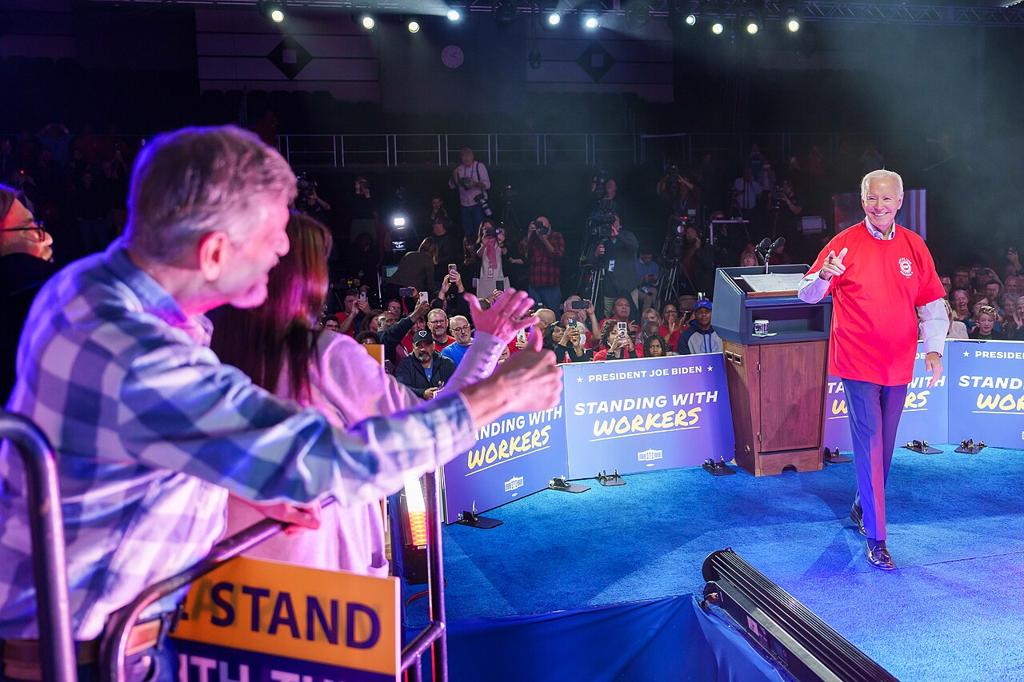
Since its founding in 1935, UAW has never endorsed a Republican presidential candidate. Instead, it has consistently backed Democratic candidates, including Kamala Harris for the 2024 election. The AAF claims that UAW has endorsed candidates who advocate for policies contrary to those of the Trump administration, including positions on immigration and social issues.
Background and Reactions
The AAF report details UAW's endorsements of several prominent leftist figures, including New York City Mayor Zohran Mamdani and New York State Representative Claire Valdez, who identifies as a “proud democratic socialist.” The union's leadership, particularly under President Shawn Fain, is described as openly critical of capitalism and supportive of leftist movements.
"UAW has betrayed its members, positioned itself as the primary union antagonist to the Trump administration, wasted hundreds of millions of dollars, lined their own pockets, all while funding Democratic institutions, candidates, and organizations," the AAF claims.
Despite the reported political spending, UAW did not respond to inquiries from The Federalist regarding its endorsements and financial contributions. This silence has left some members feeling alienated from the union's leadership.
Corruption and Leadership Issues
The report also references past corruption scandals within UAW, including a federal investigation that led to multiple convictions among its leadership. Prior to Fain's tenure, one executive was found to have embezzled funds for personal luxuries, while another scandal involved lavish spending on retreats.
These issues have compounded the concerns of Republican members who feel their interests are not represented. The AAF argues that many UAW members support conservative values and have been misrepresented by the union's political stance.
Republican Responses
Republican figures like Senator Josh Hawley and JD Vance have previously supported UAW workers, advocating for their demands for higher wages. Vance, who has criticized Fain's opposition to the Trump administration, stated, "Their message is pretty simple, and I hear it loud and clear, which is, ‘look, 10 years ago the auto industry was in a state of crisis. We took it on the chin. We accepted lower wages so the industry could prosper. Now that the industry is prospering, it’s fair for us to share in some of the gain.’ I think it’s totally reasonable."
However, both Vance and Hawley have faced backlash from UAW for their affiliations with the Republican Party, which the union has labeled as detrimental to workers. In 2025, Vance was met with protests during a visit to Michigan, where demonstrators expressed their discontent with his political stance.
While Vance and Hawley have shown support for UAW workers during strikes, their alignment with the union's leftist political spending remains a contentious issue. The AAF report suggests that Republicans risk alienating their base by collaborating with a union that is perceived as promoting a Democratic agenda.
As the political landscape evolves, the UAW's influence and spending habits may continue to be a point of contention, particularly among its Republican members who feel their interests are not being prioritized. The ongoing debate over labor rights and political affiliations will likely shape future interactions between the union and political leaders.