The U.S. Supreme Court is preparing to hear two consolidated cases in its upcoming term that directly challenge the legality of bans on AR-15s and similar semiautomatic rifles. Legal experts say the outcome could have sweeping implications for Americans’ gun rights and the future of firearm regulation in the United States.
Explainer Understanding the Supreme Court’s Impact on Law and Liberty
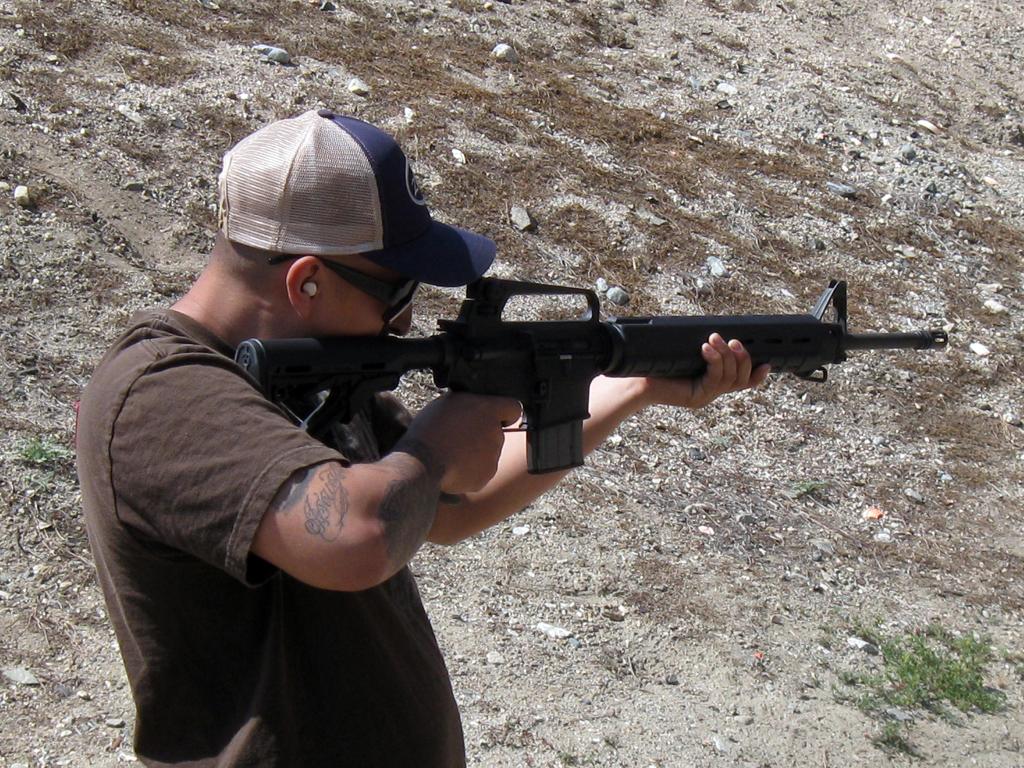
At the heart of these cases is the question of whether the Second and Fourteenth Amendments guarantee the right to possess AR-15 platform and similar semiautomatic rifles. The Court’s decision is expected to clarify the scope of constitutional protections for these widely owned firearms, which have been the subject of intense national debate.
The cases, known as Viramontes v. Cook County and Grant v. Higgins, will test whether state and local bans on certain semiautomatic weapons are consistent with Supreme Court precedent, particularly the 2022 decision in New York State Rifle & Pistol Association v. Bruen. That ruling established a new framework for evaluating gun restrictions, requiring courts to consider whether modern regulations are consistent with the nation’s historical tradition of firearm regulation.
Legal Arguments and Circuit Split
During a recent Federalist Society forum, Notre Dame Law Professor Haley Proctor and American Suppressor Association General Counsel Michael Williams discussed the stakes and legal arguments in the upcoming cases. Williams argued that lower courts, including the 2nd and 7th Circuits, have not properly applied the two-step test set out in Bruen.
Williams pointed out that the 7th Circuit, in its decision in Viramontes, halted its analysis at the first step by equating AR-15s with automatic weapons, which are generally not protected under existing Supreme Court precedent. He contrasted this with the 2nd Circuit’s approach in Grant, where the court focused on historical analogues, referencing past bans on knives and machine guns. Williams noted that this approach moved toward a framework previously rejected by the Supreme Court, raising questions about consistency in lower court rulings.
Williams also suggested that the Supreme Court may address restrictions on magazine capacity, given the close relationship between AR-15 rifles and their standard 30-round magazines. He said, "It’s really kind of hard to separate the magazine out from the firearm to the extent that an AR-15 comes with a standard magazine; it’s generally a 30-round magazine." However, Proctor expressed uncertainty about whether the Court would address magazine bans in this term, noting the existence of a circuit split on the issue and the possibility that the justices could remand that question to lower courts for further review.
Implications for State Laws and Future Cases
Both Proctor and Williams indicated that, even if the Supreme Court rules against AR-15 bans, states may seek ways to circumvent the decision. They drew a comparison to historical resistance to landmark rulings such as Brown v. Board of Education, which faced significant pushback from some states. Williams remarked, "It would be frankly shocking to me if there were not attempts by these states after ... a likely, hopeful victory here for AR-15s to get around by just making it difficult."
The panelists also pointed to other gun-related legal battles that could reach the Supreme Court in the near future. These include challenges to restrictions on firearm possession for individuals aged 18 to 20, felons, and regulations on firearm suppressors. Proctor highlighted ongoing disputes over the definition of "arms" and the application of the Bruen test in lower courts, particularly in cases involving magazine capacity such as the 9th Circuit’s decision in the Duncan case. These future cases could further shape the landscape of gun rights and regulation in the United States.
Background on Supreme Court Precedent
The Supreme Court’s 2022 ruling in NYSRPA v. Bruen was a significant moment in Second Amendment jurisprudence. The decision established that Americans have a constitutional right to carry firearms outside the home for self-defense and set a two-step test for evaluating gun regulations. Under this framework, courts must determine whether a challenged regulation is consistent with the nation’s historical tradition of firearm regulation.
More recently, in Wolford v. Lopez, the Court struck down Hawaii’s restrictions on concealed-carry holders, reinforcing its stance that state gun control measures must not undermine the core protections of the Second Amendment. These decisions have set the stage for the current challenges to AR-15 and semiautomatic rifle bans.
A date for oral arguments in Viramontes and Grant has not yet been announced. Supporters of the bans have not publicly responded to the legal specialists’ criticisms of the lower courts’ handling of the cases. The Supreme Court’s eventual ruling is expected to have a major impact on the future of gun regulation and the rights of firearm owners across the country.