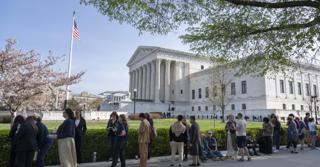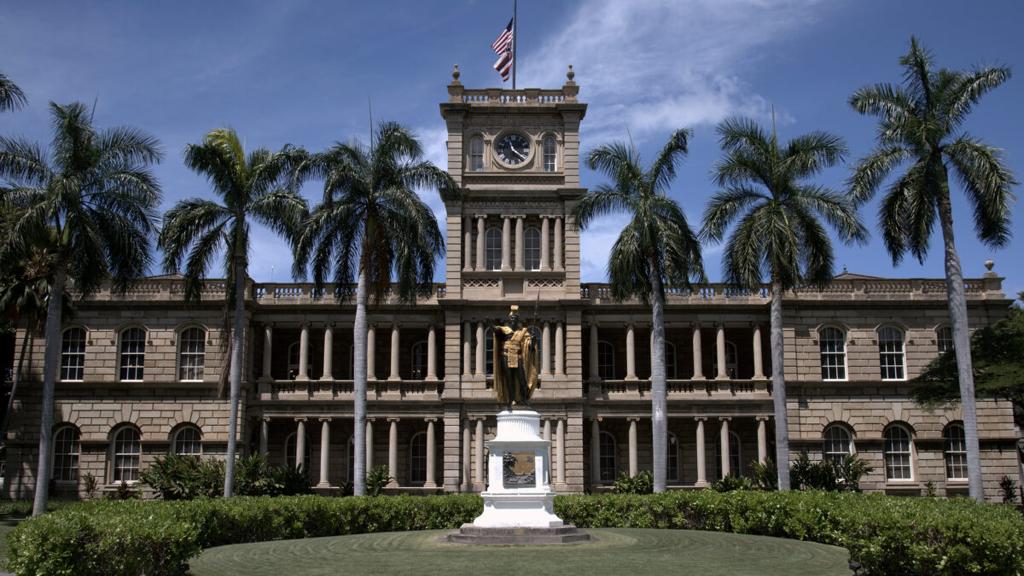
The Hawaii Supreme Court has issued an unusually direct rebuke of the U.S. Supreme Court, using its opinion in Granillo v. State to reject federal precedent and accuse the nation's highest court of undermining due process and promoting racial bias.
The dispute highlights growing friction between state and federal courts over constitutional interpretation, with Hawaii's justices openly challenging the authority and legitimacy of recent Supreme Court rulings.
The conflict follows a June decision by Justice Samuel Alito, writing for the U.S. Supreme Court, that overturned a Hawaii Supreme Court ruling which had invoked the "spirit of Aloha" to justify restrictions on Second Amendment rights. Alito wrote that the Constitution "cannot give way to 'the spirit of Aloha.'" The Hawaii court's latest opinion, issued July 15, grants a new trial to a man convicted in 1990 based on now-discredited FBI hair-and-fiber evidence, but then pivots to a sweeping critique of the Supreme Court's recent jurisprudence.
Hawaii Court's Criticism of SCOTUS
In the 91-page Granillo v. State opinion, the Hawaii Supreme Court majority spends eight pages sharply criticizing the U.S. Supreme Court after resolving the case at hand. The opinion states, "we take no guidance on the meaning of due process from a court that gutted due process protections in Dobbs," referencing the Supreme Court's decision to overturn Roe v. Wade.
The Hawaii justices further accuse the Supreme Court of reviving the "work of 1857" and "the work of 1896," alluding to the infamous Dred Scott and Plessy v. Ferguson decisions, and claim the current Court "does not honor the work of 1954," a reference to Brown v. Board of Education. The opinion asserts that the Roberts Court is "seeing only white" and describes its approach as "white sight, by design."
"ALOHA means hello, goodbye and evidently judicial insurrection. The Hawaii Supreme Ct just published a political manifesto masquerading as a judicial opinion. It calls SCOTUS racist, treats its rulings as 'white noise' and declares itself beyond federal instruction."
— Eric Schmitt, former Missouri attorney general
The majority opinion also dismisses several recent Supreme Court decisions—including Dobbs, Shelby County, Bruen, Rucho, Citizens United, and Loper Bright—as a "greatest hits" of center-right jurisprudence, characterizing them as political rather than legal judgments.
Reaction and Broader Implications
Legal experts and public officials have criticized the Hawaii Supreme Court's approach. Eric Wessan, Iowa's solicitor general, described the opinion as an "unhinged attack on the legitimacy of the Supreme Court" and warned that it could encourage other state courts to defy federal precedent. Former Missouri attorney general Eric Schmitt called the ruling "judicial insurrection."
A concurring justice on the Hawaii Supreme Court urged restraint, arguing that the court could have resolved the case without such broad criticism of the Supreme Court. The majority, however, continued with its critique, raising concerns about the appearance of politicized judging.
The opinion acknowledges that state constitutions can provide broader protections than the federal Constitution, a phenomenon explored by Chief Judge Jeffrey Sutton of the U.S. Court of Appeals for the Sixth Circuit. However, critics argue that Hawaii's justices crossed a line by attacking the Supreme Court's motives and legitimacy rather than offering a reasoned legal argument.
Context: State vs. Federal Judicial Authority
Tensions between state and federal courts over constitutional interpretation have intensified in recent years, particularly on issues such as gun rights and abortion. The U.S. Supreme Court's recent decisions, including those overturning longstanding precedents, have prompted some state courts to assert their own constitutional standards more aggressively. The Hawaii Supreme Court's opinion in Granillo v. State marks one of the most explicit rejections of Supreme Court authority by a state high court in recent memory.
The U.S. Supreme Court's June decision overturning Hawaii's earlier gun rights ruling, and the subsequent response from Hawaii's justices, signal a deepening divide over the balance of power between state and federal courts. The Hawaii Supreme Court has not issued further comment on whether it will continue to disregard U.S. Supreme Court precedent in future cases.